


U.S. Lock & Dam #1 Pool
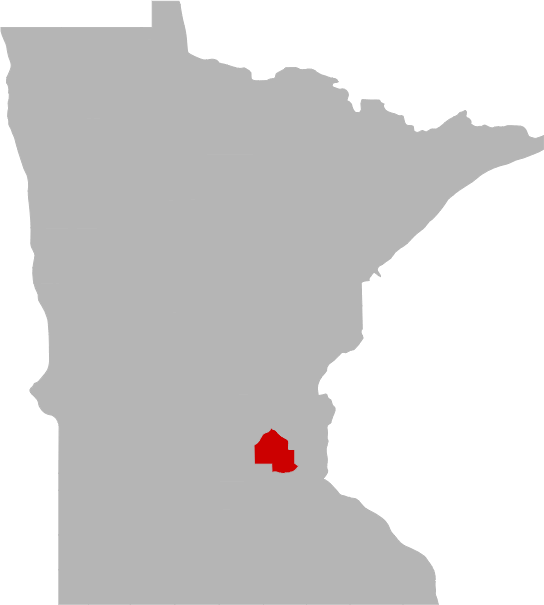
Hennepin County, Minnesota

Share Your Catch & Win!

Frequently Asked Questions About U.S. Lock & Dam #1 Pool, MN
- How big is U.S. Lock & Dam #1 Pool?
- How deep is U.S. Lock & Dam #1 Pool?
- What kind of fish can you catch in U.S. Lock & Dam #1 Pool?
- Are there fishing guides or charters for U.S. Lock & Dam #1 Pool?
- What are the closest cities to U.S. Lock & Dam #1 Pool?
- Are there places to stay in the U.S. Lock & Dam #1 Pool area?
- Are there boat launches on U.S. Lock & Dam #1 Pool?
- Are there places to eat and drink near U.S. Lock & Dam #1 Pool?
- What is the average air temp for U.S. Lock & Dam #1 Pool?
- Are there any state parks near U.S. Lock & Dam #1 Pool?
How big is U.S. Lock & Dam #1 Pool?
How deep is U.S. Lock & Dam #1 Pool?
What kind of fish can you catch in U.S. Lock & Dam #1 Pool?
Other fish species in the lake include Freshwater Drum, Green Sunfish, Highfin Carpsucker, Northern Hog Sucker, Quillback, River Redhorse, Shorthead Redhorse, Silver Redhorse, Smallmouth Buffalo and White Sucker.
Are there fishing guides or charters for U.S. Lock & Dam #1 Pool?


What are the closest cities to U.S. Lock & Dam #1 Pool?
Are there places to stay in the U.S. Lock & Dam #1 Pool area?
More Lodging Options
Are there boat launches on U.S. Lock & Dam #1 Pool?
Are there places to eat and drink near U.S. Lock & Dam #1 Pool?
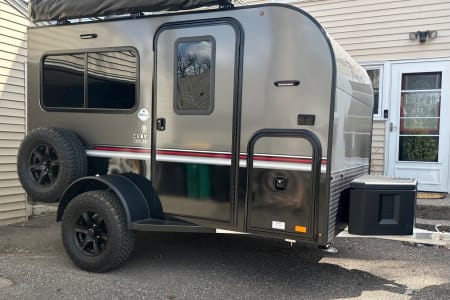
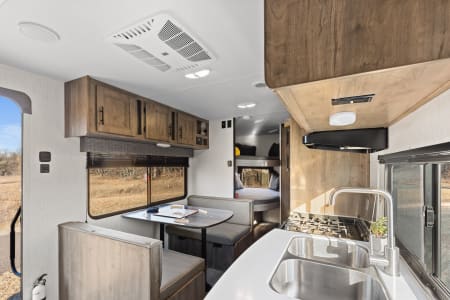
Explore the U.S. Lock & Dam #1 Pool area in a RV
Are you looking for an adventurous vacation option that won't break the bank? Look no further than renting an RV! Contrary to popular belief, the process is much simpler than you might imagine. With just a few easy steps, you'll soon be experiencing the ultimate freedom and convenience of exploring the open road in your very own recreational vehicle. And the best part? RV travel can save you up to 60% compared to other types of vacations! With the money you'll save, you'll be able to travel even more and create unforgettable memories along the way. So why wait? Start planning your next adventure today with an RV rental. Learn more about renting a RV.


What aquatic invasive species are found in U.S. Lock & Dam #1 Pool?
Join us in the fight to prevent the spread of invasive species These sneaky creatures can hitch a ride on boats, clinging onto propellers, anchor lines, and trailers. They can even survive in hidden places like bilge water and ballast tanks, or disguise themselves in dirt and sand that sticks to nets, buckets, anchors, and waders. But don't worry, we have the power to stop them in their tracks with just a few simple steps. So let's do our part and protect our waters from these unwanted invaders.
History & Status of the Fishery
Pool 1 of the Mississippi River is a short, impounded reach beginning at the Lower St. Anthony Falls Lock & Dam (LSAF), extending 5.6 miles downstream to Lock & Dam #1 (LD1) between Minneapolis and St. Paul. Commercial barge traffic through LD1 and LSAF virtually ceased following the permanent closure of the Upper St. Anthony Falls Lock (USAF) in 2015 as there is no barge loading/unloading facilities within Pool 1 or the LSAF Pool. Lockage through LD1 and LSAF is still possible on a limited basis and is largely limited to tour boats and smaller recreational and government vessels. After the USAF lock was closed, the U.S. Army Corps of Engineers (USACE) initiated disposition studies to evaluate the fate and ownership of USAF, LSAF, and LD1 structures and property given the cessation of commercial barge traffic. This Pool 1 fish survey was conducted to provide background information on species present, quality of the fishery, and compare to past surveys within Pool 1 and neighboring pools.
Almost 43% of the fish sampled by boat electrofishing were game species which included Smallmouth Bass, Bluegill, Channel Catfish, Walleye, Flathead Catfish, Largemouth Bass, and Northern Pike. Almost 87% of the game fish were Smallmouth Bass which is comparable to findings in the 2009 survey. Catch per hour (CPH) for the four most abundant species sampled was 84.07 for Smallmouth Bass, 24.41 for Shorthead Redhorse, 23.73 for Highfin Carpsucker, and 18.31 for Common Carp.
The proportion of larger Smallmouth Bass increased from 2009 to 2022. Proportional Size Distribution (PSD) increased from 33 to 60 and PSD14 increased from 10 to 20. The two largest Smallmouth Bass sampled were both over 18 inches and 3 pounds. The Smallmouth Bass fishery appears to be the best angling opportunity in Pool 1, has been improving, and is a dominant component of the fishery with a quality size structure. Catch rates and size structure are better when compared to a 2008 Pool 2 survey as well. This should not come as a surprise as the fishing pressure and harvest is extremely limited on Pool 1 with no public boat access available within the pool.
Much of the standard boat electrofishing sample that was not Smallmouth Bass consisted of various species in the sucker family such as Shorthead Redhorse, Highfin Carpsucker, Bigmouth Buffalo, and River Carpsucker, with lower numbers of River Redhorse, Silver Redhorse, Smallmouth Buffalo, and Quillback. These eight sucker species accounted for just over 36% of the standard boat electrofishing sample. The large size of Highfin Carpsuckers stood out as the average length was 15.96 inches with 24 (68.6%) measuring at least 17 inches. While Common Carp were relatively common comprising about 8% of the fish sampled, they accounted for a far less percentage as compared to the 2009 Pool 1 (29.1%) and 2008 Pool 2 (16.8%) summer electrofishing surveys. Improving water quality and limited spawning habitat are the likely contributing factors to lower Common Carp abundance.
This was the second time a targeted Flathead Catfish survey was conducted on Pool 1 utilizing low frequency (15 Hz) electrofishing and the first-time pectoral spines were removed to age the fish. The 2022 survey was conducted in mid-June and collected 14 Flathead Catfish at a rate of 7.02 fish per hour. As a comparison, Pool 2 surveys yielded 13.57 Flathead Catfish per hour in 2008 and 9.64 per hour in 2017. Even though this survey improved upon the 2011 numbers, it was still disappointing as more and larger Flathead Catfish are known to inhabit Pool 1. Thirteen of the 14 pectoral spines were able to be aged and ages ranged from 2-14 years old. Length-at-age was comparable, and sometimes below average when compared to Flathead Catfish that have been aged in Pool 2 over the last 12 years. The average length of the 14 Flathead Catfish sampled in this survey was 13.61 inches with the two largest being 19.65 inches, 3.2 pounds and 14 years old, and 19.88 inches, 3.14 pounds and only 6 years old.
Trap nets and variable mesh gill nets were used to supplement the electrofishing data. Three trap nets caught 27 fish represented by seven species. Six Black Crappie were collected and ranged from 5.12-11.61 inches and was the only additional fish species collected that was not observed electrofishing. Ten Bluegill were collected which was four more than boat electrofishing sampled, although they were all relatively small, less than six inches. Three gill net sets only sampled 22 fish and five species. Seven Channel Catfish were sampled in the gill nets, which is one more than was sampled by electrofishing. The two largest Channel Catfish were quality size measuring 25.67 and 33.27 inches long. Three Walleyes were sampled in the gill nets and ranged from 11.81-13.58 inches. The low catch in the gill nets is not surprising as there are few locations where nets can be set unaffected by the current. Nets are set parallel to the river flow to reduce the effects of currents impacting the net set which also reduces the likelihood of fish encountering the net.
Near-shore seining and backpack electrofishing were used to collect small fish species in near shore habitats that the other gears typically miss. Seining collected 159 fish represented by six species plus one unidentified species. About 66% of the fish collected seining were Bluntnose Minnows and 15.7% were Emerald Shiners. Backpack electrofishing sampled 43 fish represented by seven species plus one unidentified species, with Bluntnose Minnows and Spotfin Shiners the two most common species sampled. The seining and backpack electrofishing sampled five additional species not sampled with the other gears (Blackside Darter, Bluntnose Minnow, Brook Silverside, Johnny Darter, and Orangespotted Sunfish).
The fish assemblage within Pool 1 is comparable to other Mississippi River pools however, there are some noticeable differences. The habitat within Pool 1 is not as diverse as lower pools as it is short, lacks backwater habitat, islands, and side channels. Fish residing in Pool 1 must self-sustain within the 5.6 miles between dams. Fish movement is restricted by the lock and dam system. The only way for fish to pass upstream from Pool 2 is through the lock at LD1. The reduced usage of that lock further restricts fish passage. A fish telemetry study that started in 2013 has shown very limited movement past LD1. Thirty-eight fish were implanted with transmitters in Pool 1 which included Common Carp, Flathead Catfish, Freshwater Drum, and Smallmouth Buffalo. Much of the movement past LD1 was by fish leaving the pool never to return. Not a single Gizzard Shad, Sauger, or White Bass were sampled in this survey and only one White Bass was sampled in the 2009 survey. Those three species are common to abundant below LD1. Freshwater Drum exist in Pool 1, but at much lower levels and smaller sizes when compared to the lower pools.
The sport fishery in Pool 1 is primarily Smallmouth Bass. The catfish population is likely better than this survey indicates. Self-sustaining Channel Catfish and Flathead Catfish populations exist with quality sizes present. Low levels of Walleye, Bluegill, Black Crappie, Largemouth Bass, and Northern Pike are present, but probably not at levels that would attract many anglers to specifically target them. Nongame species that would provide recreational opportunities to anglers include Common Carp and redhorse species and what could likely be viewed as a trophy population of Highfin Carpsuckers.
What is the average air temp for U.S. Lock & Dam #1 Pool?
Are there any state parks near U.S. Lock & Dam #1 Pool?
For more Minnesota State Park information see our State Park Guide.
More Nearby Lakes To Explore
There's more lake's to explore around U.S. Lock & Dam #1 Pool...| DISTANCE | ACRES | MAX DEPTH | |
| Lake Hiawatha | 1.7 mi | 53 | 33 ft |
| Lake Nokomis | 2.0 mi | 201 | 33 ft |
| Snelling Lake | 2.5 mi | 103 | 10 ft |
| Crosby Lake | 2.6 mi | 69 | 19 ft |
| Taft Lake | 2.8 mi | 14 | 45 ft |
| Powderhorn Lake | 3.2 mi | 11 | 24 ft |
| Gun Club Lake | 3.3 mi | 316 | |
| Diamond Lake | 3.4 mi | 52 | 6 ft |
| Lemay Lake | 3.7 mi | 15 | |
| Unnamed Lake | 4.0 mi | 15 |


