


Lake Limestone
Leon County, Texas

Today's Fishing Forecast
Fishing looks to be moderately active with peak fishing times around 9-10 AM and 2-3 PM and 4-6 PM. SEE MORE

Gently sloping banks, flooded timber, and an abundance and variety of aquatic vegetation offer anglers plenty of diverse cover to fish. Numerous boat houses and docks offer additional cover. Five freshwater fish reefs were added to this lake. Anglers may use GPS in conjunction with a fish finder to locate these reefs.
See online map view
Get downloadable file
During February and April, anglers find largemouth bass in the middle of their spawn. Any of the major creeks can be productive for bass in the spring, but look for the ones with the warmest water. Fish the backs of the creeks and protected main lake coves with vegetation on the northern shoreline. Large willow leaf spinner baits in white or chartreuse, or jig and pork combinations in black/blue and black/chartreuse are excellent baits for springtime bass. From May through September, bass anglers are most successful fishing off points on the main lake around vegetation or submerged timber. Points bordering deep water are best. Plastic worms, spinner baits, buzz baits, and chugger type baits can all be good during summer months. From October through December, many bass migrate to the backs of the creeks, often in the same areas where they were concentrated in the spring. Plastic worms and spinner baits are good choices throughout the fall.
All three catfish species can be caught year-round, but fishing is best in May and June when they are spawning. Most spawning occurs in shallow coves or along cut banks in submerged timber or sparse, large rock, with adjacent deep water. Channels and blues can be caught in warmer weather by drift fishing across shallow main lake flats with cut shad, shrimp, worms, or commercial dough or dip baits. Flatheads generally prefer live bait, but very fresh cut bait can be used. Flathead anglers should target areas with timber and brush piles along cut banks at night. Trotlining is a popular and effective method for catching all three species, and is generally more productive in the upper parts of the lake.
Crappie fishing can be great in spring when fish are in shallow water for spawning. Most spawn in shallow coves and in the backs of creeks. During summer, fishing can be good as crappie gather around large solitary trees in the mouths of creeks and on main lake points, suspending 10 to 20 feet deep. Medium-sized minnows and small marabou or tube jigs are good choices. White bass migrate up the Navasota river to spawn in early spring. They can be found schooling on windy main lake points throughout most of the year. Tail spinners, spoons, and small jigs are good bait choices. Sunfish anglers can enjoy limited success in April and May by fishing spawning beds in shallow coves with sandy bottoms with crickets, mealworms, or garden worms.
During February and April, anglers find largemouth bass in the middle of their spawn. Any of the major creeks can be productive for bass in the spring, but look for the ones with the warmest water. Fish the backs of the creeks and protected main lake coves with vegetation on the northern shoreline. Large willow leaf spinner baits in white or chartreuse, or jig and pork combinations in black/blue and black/chartreuse are excellent baits for springtime bass. From May through September, bass anglers are most successful fishing off points on the main lake around vegetation or submerged timber. Points bordering deep water are best. Plastic worms, spinner baits, buzz baits, and chugger type baits can all be good during summer months. From October through December, many bass migrate to the backs of the creeks, often in the same areas where they were concentrated in the spring. Plastic worms and spinner baits are good choices throughout the fall.
All three catfish species can be caught year-round, but fishing is best in May and June when they are spawning. Most spawning occurs in shallow coves or along cut banks in submerged timber or sparse, large rock, with adjacent deep water. Channels and blues can be caught in warmer weather by drift fishing across shallow main lake flats with cut shad, shrimp, worms, or commercial dough or dip baits. Flatheads generally prefer live bait, but very fresh cut bait can be used. Flathead anglers should target areas with timber and brush piles along cut banks at night. Trotlining is a popular and effective method for catching all three species, and is generally more productive in the upper parts of the lake.
Crappie fishing can be great in spring when fish are in shallow water for spawning. Most spawn in shallow coves and in the backs of creeks. During summer, fishing can be good as crappie gather around large solitary trees in the mouths of creeks and on main lake points, suspending 10 to 20 feet deep. Medium-sized minnows and small marabou or tube jigs are good choices. White bass migrate up the Navasota river to spawn in early spring. They can be found schooling on windy main lake points throughout most of the year. Tail spinners, spoons, and small jigs are good bait choices. Sunfish anglers can enjoy limited success in April and May by fishing spawning beds in shallow coves with sandy bottoms with crickets, mealworms, or garden worms.
Lake Limestone offers some of the best fishing of any central Texas lake. Because it is located off the beaten path, anglers will find they have little competition, particularly during the week. Solitude and good fishing for many species combine to make Lake Limestone a winner. Spring is the best time to catch good numbers of quality size largemouth bass, but these fish can be caught year round. Three catfish species are present: blue, channel, and flathead, with channel catfish being the most common. Crappie and white bass fishing can be fine in spring when these species spawn. Sunfish of quality size are few and far between.
Share your catch!
We want to see what you've caught on Lake Limestone.Frequently Asked Questions About Lake Limestone, TX
- How big is Lake Limestone?
- How deep is Lake Limestone?
- What kind of fish can you catch in Lake Limestone?
- Are there places to stay in the Lake Limestone area?
- Are there places to eat and drink near Lake Limestone?
- What is the average air temp for Lake Limestone?
- Are there any state parks near Lake Limestone?
How big is Lake Limestone?
How deep is Lake Limestone?
What kind of fish can you catch in Lake Limestone?
Other fish species in the lake include Crappie and Sunfish.
Are there places to stay in the Lake Limestone area?
More Lodging Options
Are there places to eat and drink near Lake Limestone?
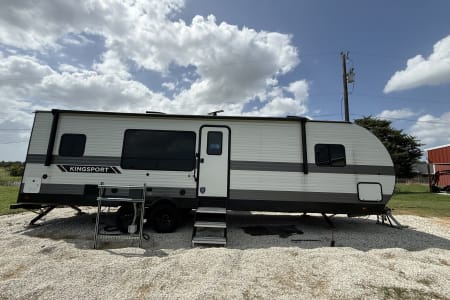
Explore the Lake Limestone area in a RV
Are you looking for an adventurous vacation option that won't break the bank? Look no further than renting an RV! Contrary to popular belief, the process is much simpler than you might imagine. With just a few easy steps, you'll soon be experiencing the ultimate freedom and convenience of exploring the open road in your very own recreational vehicle. And the best part? RV travel can save you up to 60% compared to other types of vacations! With the money you'll save, you'll be able to travel even more and create unforgettable memories along the way. So why wait? Start planning your next adventure today with an RV rental. Learn more about renting a RV.



Controling Authority
Route 3, Box 89A
Thornton, Texas 76687
(903) 529-2141
[email protected]
What is the average air temp for Lake Limestone?
Are there any state parks near Lake Limestone?
For more Texas State Park information see our State Park Guide.
More Nearby Lakes To Explore
There's more lake's to explore around Lake Limestone...| DISTANCE | ACRES | |
| Clear Lake | 6.3 mi | 15 |
| Kennedy Lake | 7.3 mi | 51 |
| Jack Brown Lake | 8.0 mi | 37 |
| Rush Lake | 8.7 mi | 55 |
| Duck Pond | 9.8 mi | 34 |
| Flag Pond | 10.2 mi | 106 |
| Alligator Pond | 10.5 mi | 17 |
| Hunt Ranch Lake Number 2 | 11.2 mi | 15 |
| Rose Lake | 11.6 mi | 28 |
| Karnei Lake | 12.1 mi | 18 |
