


Upper Maple Lake
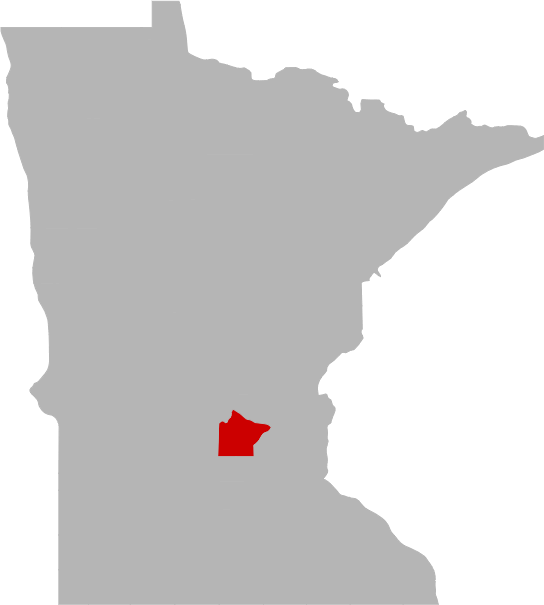
Wright County, Minnesota

Today's Fishing Forecast
Fishing looks to be moderately active with peak fishing times around 3-5 PM. SEE MORE

Share Your Catch & Win!
Frequently Asked Questions About Upper Maple Lake, MN
- How big is Upper Maple Lake?
- How deep is Upper Maple Lake?
- What kind of fish can you catch in Upper Maple Lake?
- What are the closest cities to Upper Maple Lake?
- Are there places to stay in the Upper Maple Lake area?
- Are there boat launches on Upper Maple Lake?
- Are there places to eat and drink near Upper Maple Lake?
- What are the fishing regulations for Upper Maple Lake?
- What is the average air temp for Upper Maple Lake?
How big is Upper Maple Lake?
How deep is Upper Maple Lake?
What kind of fish can you catch in Upper Maple Lake?
Other fish species in the lake include Banded Killifish, Blackchin Shiner, Blacknose Shiner, Bluntnose Minnow, Common Shiner, Golden Shiner, Greater Redhorse, Green Sunfish, Hybrid Sunfish, Iowa Darter, Johnny Darter, Least Darter, Mimic Shiner, Pugnose Shiner, Spottail Shiner and White Sucker.
What are the closest cities to Upper Maple Lake?
Are there places to stay in the Upper Maple Lake area?
More Lodging Options
Are there boat launches on Upper Maple Lake?
Are there places to eat and drink near Upper Maple Lake?
What are the fishing regulations for Upper Maple Lake?
 There are specific fishing regulations Upper Maple Lake that you need to know. For complete fishing regulations visit the Minnesota Department of Natural Resources. To report a violation call (800) 652-9093. Need a Minnesota fishing license?
Explore the Upper Maple Lake area in a RV
Are you looking for an adventurous vacation option that won't break the bank? Look no further than renting an RV! Contrary to popular belief, the process is much simpler than you might imagine. With just a few easy steps, you'll soon be experiencing the ultimate freedom and convenience of exploring the open road in your very own recreational vehicle. And the best part? RV travel can save you up to 60% compared to other types of vacations! With the money you'll save, you'll be able to travel even more and create unforgettable memories along the way. So why wait? Start planning your next adventure today with an RV rental. Learn more about renting a RV.
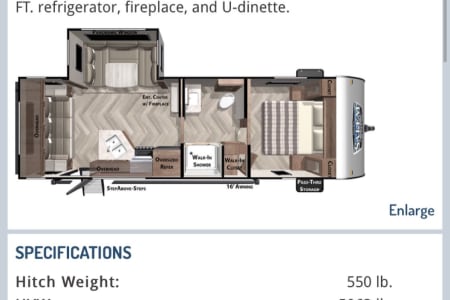

2020 Wildwood X-lite 24RLXL: Couples luxury escape or fun family getaway
Monticello, MN


What aquatic invasive species are found in Upper Maple Lake?
Join us in the fight to prevent the spread of invasive species These sneaky creatures can hitch a ride on boats, clinging onto propellers, anchor lines, and trailers. They can even survive in hidden places like bilge water and ballast tanks, or disguise themselves in dirt and sand that sticks to nets, buckets, anchors, and waders. But don't worry, we have the power to stop them in their tracks with just a few simple steps. So let's do our part and protect our waters from these unwanted invaders.
History & Status of the Fishery
Maple Lake is a 739 acre lake located near the City of Maple Lake in Wright County. The lake has a maximum depth of 76 feet and a small watershed comprised primarily of cultivated crops, open water, pasture, and forest. The lake is highly developed and has good water quality. Public accesses are located on the northeast and southwest ends of the lake. The lake is primarily managed for Largemouth Bass and Walleye, but anglers can also experience good fishing for crappies, sunfish, and pike. A lake survey was completed in 2020 to update fisheries data last collected in 2015.
Emergent and floating-leaf vegetation was not mapped in 2020, but is common along the shoreline, primarily cattail, white waterlily, and arrowhead. In 2015, submerged vegetation was surveyed and found plants growing to a depth of 15 feet. The most common species found were coontail, star duckweed, and northern milfoil. Maple Lake is infested with three (3) aquatic invasive species: Eurasian milfoil in 2007, flowering rush in 2015, and zebra mussels in 2019. Users should be careful not to spread these invasive plants to other lakes.
Walleye are a primary managed species in the lake and the population is sustained through fingerling stocking during even numbered years. Walleye catches have historically been low and 2020 was no exception. While the Walleye catch was low, it was similar to 2015 and within the range of expected values for the lake. Walleye lengths ranged from eight (8) to 22 inches with an average length and weight of 18 inches and two (2) pounds. Walleye ages ranged from one (1) to 15 years with most fish being less than six (6) years old. While Walleye abundance is low, growth is fast, reaching 17 inches in three (3) years. An abundant Northern Pike population likely hinder the survival of stocked Walleye due to predation.
Northern Pike are abundant, but small. Only 8% of the pike sampled were 26 inches or longer and 1% were longer than 30 inches. Anglers have the opportunity for good Northern Pike fishing and are encouraged to harvest small pike (<22 inches) and release the medium-sized pike (>26 inches) to help shift the population size structure. Northern Pike sampled in 2020 ranged in length from 11 to 31 inches with an average length and weight of 21 inches and two (2) pounds.
Largemouth Bass electrofishing was not conducted in 2020 due to safety concerns over the COVID-19 pandemic. Spring electrofishing is the preferred sampling method used to describe Largemouth Bass populations. Largemouth Bass were sampled via spring electrofishing in 2015 at a rate of 74/hour which was the same as the Sauk Rapids Area average. Largemouth Bass sampled in 2015 ranged in length from five (5) to 20 inches with an average length of 12 inches. The size structure of the Largemouth Bass population was favorable as 52% of the bass sampled were longer than 12 inches and 21% were longer than 15 inches.
Bluegill abundance is average for the lake class, but the average size tends to be small. The catch in 2020 was similar to 2015 and within the range of expected values for similar lakes. Bluegill sampled ranged in length from three (3) to eight (8) inches with an average length of five (5) inches. Only 29% of the Bluegill sampled were longer than six (6) inches, but none were longer than eight (8) inches. Bluegill sampled ranged in age from three (3) to eight (8) with 57% of the sample being from the 2015 and 2016 year classes. Growth is slow taking five (5) years to reach six (6) inches.
Anglers have the opportunity for good crappie fishing. The Black Crappie catch rates were similar to 2015 and within the range of expected values for similar lakes. Black Crappie sampled ranged in length from four (4) to 11 inches and averaged eight (8) inches. Sixty-one percent of the Black Crappie sampled were longer than eight (8) inches and 11% were longer than 10 inches.
Yellow Perch abundance has historically been low in Maple Lake. Only two (2) Yellow Perch were sampled in 2020 and none were sampled in the previous two (2) surveys in 2015 and 2009. Only in 1980 and 1994 did any significant number of Yellow Perch appear in the surveys. The low Yellow Perch abundance is likely correlated to the high Northern Pike abundance.
Other species sampled included: Black, Brown, and Yellow Bullhead, Bowfin (Dogfish), Green Sunfish, Hybrid Sunfish, and Pumpkinseed.
What is the average air temp for Upper Maple Lake?
More Nearby Lakes To Explore
There's more lake's to explore around Upper Maple Lake...| DISTANCE | ACRES | MAX DEPTH | |
| Unnamed Lake | 0.9 mi | 17 | |
| Mud Lake | 1.2 mi | 114 | |
| Sullivan Lake | 1.3 mi | 71 | 58 ft |
| Lake Mary | 1.8 mi | 196 | 102 ft |
| Ramsey Lake | 2.2 mi | 317 | 80 ft |
| Unnamed Lake | 2.4 mi | 10 | |
| Unnamed Lake | 2.5 mi | 10 | |
| Unnamed Lake | 2.6 mi | 15 | |
| Light Foot Lake | 3.0 mi | 69 | 22 ft |
| North Twin Lake | 3.0 mi | 49 | 58 ft |
