


Cedar Lake
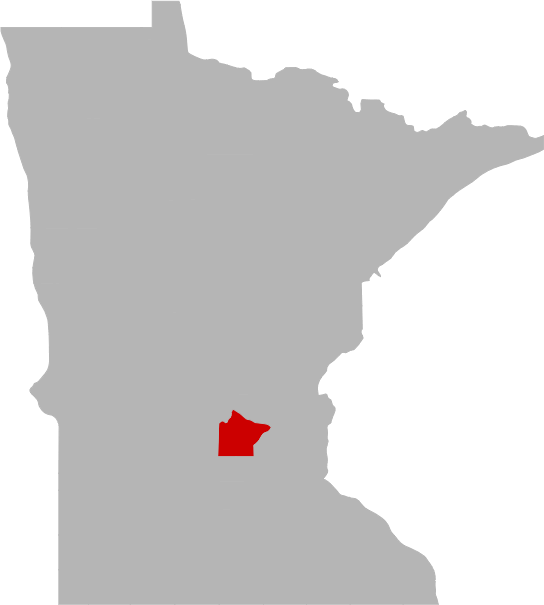
Wright County, Minnesota

Today's Fishing Forecast
Fishing looks to be moderately active with peak fishing times around 8-9 AM and 3-5 PM. SEE MORE

Share Your Catch & Win!
Frequently Asked Questions About Cedar Lake, MN
- How big is Cedar Lake?
- How deep is Cedar Lake?
- What kind of fish can you catch in Cedar Lake?
- What are the closest cities to Cedar Lake?
- Are there places to stay in the Cedar Lake area?
- Are there boat launches on Cedar Lake?
- Are there places to eat and drink near Cedar Lake?
- What is the average air temp for Cedar Lake?
How big is Cedar Lake?
How deep is Cedar Lake?
What kind of fish can you catch in Cedar Lake?
Other fish species in the lake include Banded Killifish, Blacknose Shiner, Bluntnose Minnow, Brook Silverside, Cisco (Tullibee), Emerald Shiner, Fathead Minnow, Golden Shiner, Green Sunfish, Hybrid Sunfish, Spottail Shiner and White Sucker.
What are the closest cities to Cedar Lake?
Are there places to stay in the Cedar Lake area?
More Lodging Options
Are there boat launches on Cedar Lake?
Are there places to eat and drink near Cedar Lake?
Explore the Cedar Lake area in a RV
Are you looking for an adventurous vacation option that won't break the bank? Look no further than renting an RV! Contrary to popular belief, the process is much simpler than you might imagine. With just a few easy steps, you'll soon be experiencing the ultimate freedom and convenience of exploring the open road in your very own recreational vehicle. And the best part? RV travel can save you up to 60% compared to other types of vacations! With the money you'll save, you'll be able to travel even more and create unforgettable memories along the way. So why wait? Start planning your next adventure today with an RV rental. Learn more about renting a RV.
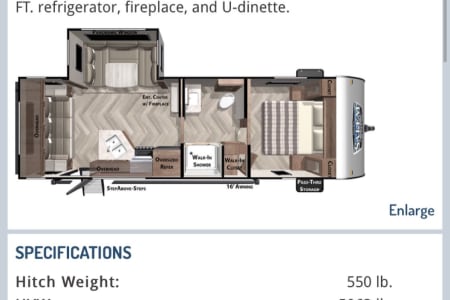

2020 Wildwood X-lite 24RLXL: Couples luxury escape or fun family getaway
Monticello, MN

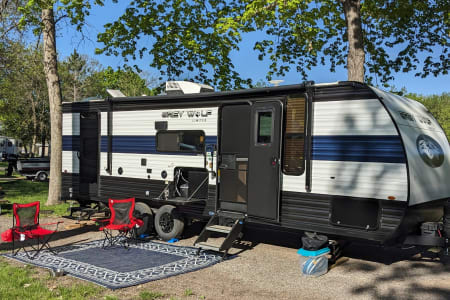
Dog friendly! Delivery Only-2024 Forest River Cherokee Grey Wolf 23DBH
Annandale, MN
What aquatic invasive species are found in Cedar Lake?
Join us in the fight to prevent the spread of invasive species These sneaky creatures can hitch a ride on boats, clinging onto propellers, anchor lines, and trailers. They can even survive in hidden places like bilge water and ballast tanks, or disguise themselves in dirt and sand that sticks to nets, buckets, anchors, and waders. But don't worry, we have the power to stop them in their tracks with just a few simple steps. So let's do our part and protect our waters from these unwanted invaders.
History & Status of the Fishery
A targeted survey was conducted on Cedar Lake during the week of August 19, 2019 by Fisheries Lake Index of Biological Integrity (FIBI) program staff. Sampling methods targeted nearshore, small-bodied fish and included seining and backpack electrofishing. Fourteen sampling stations were evenly spaced around the lake and each was sampled by backpack electrofishing and seining with a 50-foot or 15-foot seine, where possible. Backpack electrofishing was completed at all fourteen stations, however one station was sampled from the boat due to site conditions. A 50-foot seine was used to sample twelve stations, a 15-foot seine was used at one station, and dense emergent vegetation and soft substrate prevented the use of a seine at one site. Nearshore sampling captured a diverse assemblage with 23 native species of fish including six species that are intolerant of habitat disturbance (Banded Killifish, Blackchin Shiner, Blacknose Shiner, Iowa Darter, Least Darter and Pugnose Shiner) and two that are tolerant of disturbance (Green Sunfish and Fathead Minnow).
Data from this targeted nearshore survey is combined with data from a standard gill net and trap net survey from July 2019 to calculate a Fish-based Index of Biological Integrity (FIBI) score that describes the overall health of the lake. The FIBI uses fish community data to measure a lake's health, and the types of fish species present can help identify stressors that may be negatively affecting the lake environment. In Minnesota lakes, certain fish species cannot survive without clean water and a healthy habitat (e.g. Banded Killifish, Blackchin Shiner and Least Darter), while other species are tolerant of degraded conditions (e.g. Green Sunfish and Fathead Minnow). The FIBI score, composed of several fish community diversity and composition metrics, indicates the overall health of a lake by comparing it to what is expected for a healthy lake. For additional information on the FIBI, search for "lake index of biological integrity" on the mndnr.gov website.
Data from this survey will contribute biological information about the health of the fish community to the Mississippi River - St. Cloud Watershed assessment process in coordination with MN Pollution Control Agency.
What is the average air temp for Cedar Lake?
More Nearby Lakes To Explore
There's more lake's to explore around Cedar Lake...| DISTANCE | ACRES | MAX DEPTH | |
| Mink Lake | 1.8 mi | 280 | 39 ft |
| Somers Lake | 1.9 mi | 151 | 21 ft |
| Unnamed Lake | 2.3 mi | 12 | |
| Sandy Lake | 2.5 mi | 74 | |
| Indian Lake | 2.9 mi | 139 | 31 ft |
| Pleasant Lake | 3.0 mi | 597 | 74 ft |
| Sugar Lake | 3.3 mi | 1,014 | 69 ft |
| Clearwater Lake | 3.4 mi | 3,187 | 73 ft |
| Unnamed Lake | 3.5 mi | 10 | |
| Millstone Lake | 3.5 mi | 200 | 9 ft |


