


Sauk Lake
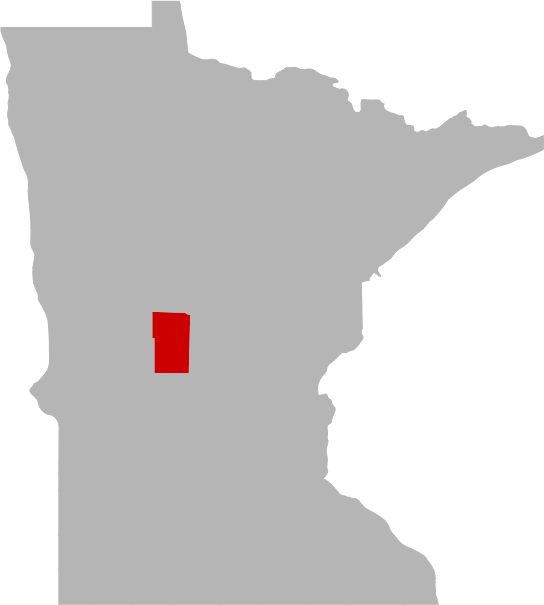
Todd County, Minnesota

Share Your Catch & Win!
Frequently Asked Questions About Sauk Lake, MN
- How big is Sauk Lake?
- How deep is Sauk Lake?
- What kind of fish can you catch in Sauk Lake?
- What are the closest cities to Sauk Lake?
- Are there places to stay in the Sauk Lake area?
- Are there boat launches on Sauk Lake?
- Are there places to eat and drink near Sauk Lake?
- What is the average air temp for Sauk Lake?
- Are there any state parks near Sauk Lake?
How big is Sauk Lake?
How deep is Sauk Lake?
What kind of fish can you catch in Sauk Lake?
Other fish species in the lake include Banded Killifish, Blacknose Shiner, Bluntnose Minnow, Central Mudminnow, Cisco (Tullibee), Common Shiner, Emerald Shiner, Fathead Minnow, Golden Shiner, Green Sunfish, Hybrid Sunfish, Iowa Darter, Johnny Darter, Least Darter, Logperch, Shorthead Redhorse, Spotfin Shiner, Spottail Shiner, Tadpole Madtom and White Sucker.
What are the closest cities to Sauk Lake?
Are there places to stay in the Sauk Lake area?
More Lodging Options
Are there boat launches on Sauk Lake?
Are there places to eat and drink near Sauk Lake?
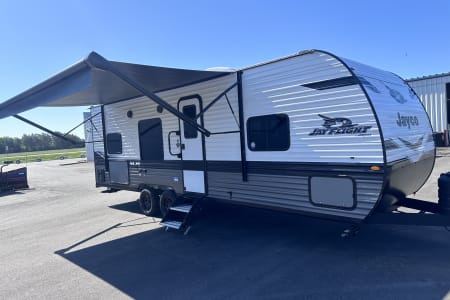
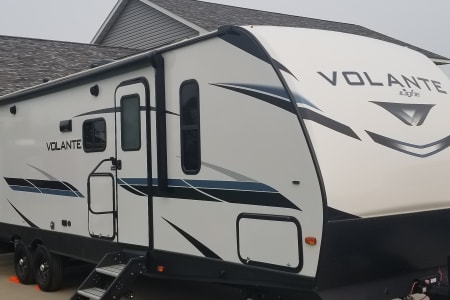
Explore the Sauk Lake area in a RV
Are you looking for an adventurous vacation option that won't break the bank? Look no further than renting an RV! Contrary to popular belief, the process is much simpler than you might imagine. With just a few easy steps, you'll soon be experiencing the ultimate freedom and convenience of exploring the open road in your very own recreational vehicle. And the best part? RV travel can save you up to 60% compared to other types of vacations! With the money you'll save, you'll be able to travel even more and create unforgettable memories along the way. So why wait? Start planning your next adventure today with an RV rental. Learn more about renting a RV.


What aquatic invasive species are found in Sauk Lake?
Join us in the fight to prevent the spread of invasive species These sneaky creatures can hitch a ride on boats, clinging onto propellers, anchor lines, and trailers. They can even survive in hidden places like bilge water and ballast tanks, or disguise themselves in dirt and sand that sticks to nets, buckets, anchors, and waders. But don't worry, we have the power to stop them in their tracks with just a few simple steps. So let's do our part and protect our waters from these unwanted invaders.
History & Status of the Fishery
A standard survey using 15 gill nets and 16 trap nets as well as spring and fall electrofishing was completed on Big Sauk Lake during the months of May, August, and September 2023. Survey netting and electrofishing techniques are standardized and replicated for each survey. All sampling stations are completed in the same locations during the same time of year from survey to survey in order to minimize variability and allow reasonable data comparisons. In summary, Walleye and Northern Pike abundance estimates are similar to what they were in 2019 and Yellow Perch abundance may have decreased slightly. Data from electrofishing indicate that bass abundance is variable, but size structure is good and has remained similar since 2019. Vegetation growth especially around the lake's perimeter was noted throughout the survey and young-of-year sunfish and crappies were found in these areas. The apparent increase in plant density represents a change from the past, especially the mid-2000s. Whether this portends expansions in panfish, bass, and pike populations remains to be seen.
Big Sauk Lake supports a productive Walleye fishery. Catch rates (relative abundance) continue to be some of the highest in the Little Falls Management Area. Several age classes are typically represented in gill net samples, but age-2 (13-14 inches) are typically most common for Sauk Lake. Anglers may have noticed a high number of smaller Walleyes (less than 15 inches) this past season and our gill netting bears this out as close to 60% of the sample measured between 10 and 15 inches. Recruitment to larger sizes can be reasonably expected for 2024 and 2025 so angler satisfaction should improve. Walleye fry have been stocked annually since 2009 with the exception of 2020 (pandemic) and 2023 which was intentional in order to measure natural reproduction. Both stocked and non-stocked years result in good catches of juvenile Walleye which is important to remember because there are very few lakes in the Little Falls Area that support natural reproduction of Walleyes to a level that can sustain a fishery. Walleye growth rates are regularly analyzed on Sauk Lake, and they are consistently described as excellent, with age-2, 3, 4 and 5 year-old fish equal to 13.6, 16.7, 17.7 and 20.3 inches, respectively.
Northern Pike abundance is low in Sauk Lake which is generally regarded as beneficial in central Minnesota lakes managed for Walleye. With the exception of an occasional fish over 30 inches, size structure of the pike population is below expectations despite an abundant and diverse prey base. Mean pike length in 2023 was 20.2 inches and the largest individual captured was only 29.4 inches. Age and growth were not measured in 2023 so the smaller size structure observed may be due to a younger age class of fish dominating the sample. However, large pike have been historically uncommon in Sauk Lake and past surveys bear this out. Various reports in the past documented a major reduction in vegetation throughout the reservoir beginning in 2007. Recent increases in near-shore vegetation may result in the expansion of Northern Pike.
Yellow Perch numbers have been rising steadily since 2007. At this time, the abundance of perch in Sauk Lake is considerably above average when compared to other lakes similar in character. The majority of fish measure between 5 and 9 inches so while there isn't much of a fishery, the forage they provide to predator fish is ample and appears to be staying that way. Cisco, while not common in Big Sauk, are still sustaining their own as one was captured in this survey.
Largemouth and Smallmouth Bass (black bass) are both present in Sauk Lake. Largemouth are more abundant but both species show good representation of several size classes in our electrofishing catches. Maximum lengths found for Largemouth Bass are occasionally around 20 inches while similar-sized smallmouths have also been sampled. As mentioned in this report, the apparent expansion in aquatic vegetation may lead to future expansions in black bass abundance.
Crappie remain abundant in Big Sauk. Length frequency data for crappie are similar to 2019, mean length of crappies was 9 inches and maximum length was 12.4 inches. Though still relatively low in number Bluegill size structure is excellent. Mean length was 7.2 inches and maximum length was 10.1 inches. A good proportion of Bluegills exceed 9 inches. The apparent increase of aquatic vegetation noted this year could provide habitat that otherwise has been much less available since the mid-2000s. Young-of-year sunfish were commonly observed during electrofishing and may indicate better year classes are forthcoming.
What is the average air temp for Sauk Lake?
Are there any state parks near Sauk Lake?
For more Minnesota State Park information see our State Park Guide.
More Nearby Lakes To Explore
There's more lake's to explore around Sauk Lake...| DISTANCE | ACRES | MAX DEPTH | |
| North Twin Lake | 1.1 mi | 12 | |
| South Twin Lake | 1.7 mi | 54 | |
| Long Lake | 2.4 mi | 230 | 36 ft |
| Fairy Lake | 2.7 mi | 307 | 37 ft |
| Lily Lake | 2.8 mi | 66 | 38 ft |
| Long Lake | 3.1 mi | 107 | 35 ft |
| Deer Lake | 3.1 mi | 12 | |
| Mud Lake | 3.4 mi | 44 | 0 ft |
| Spier Lake | 3.5 mi | 15 | |
| Unnamed Lake | 3.7 mi | 17 |


