


Camp Lake
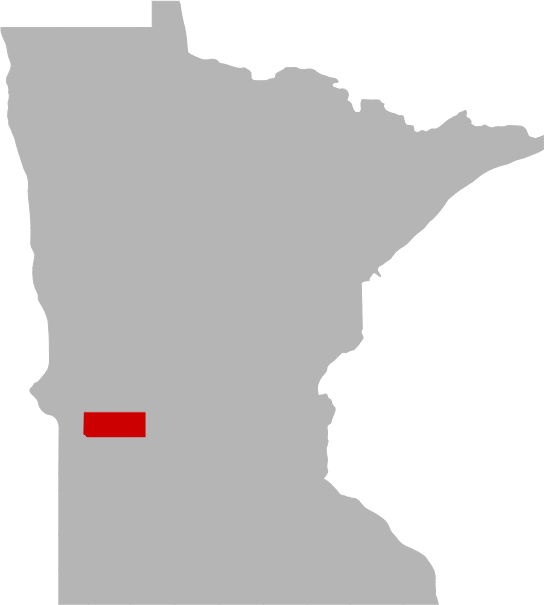
Swift County, Minnesota

Today's Fishing Forecast
Fishing looks to be very active with peak fishing times around 7-8 AM and 3-5 PM. SEE MORE
Share your catch!
We want to see what you've caught on Camp Lake.Frequently Asked Questions About Camp Lake, MN
- How big is Camp Lake?
- How deep is Camp Lake?
- What kind of fish can you catch in Camp Lake?
- Are there places to stay in the Camp Lake area?
- Are there boat launches on Camp Lake?
- Are there places to eat and drink near Camp Lake?
- Are there any state parks near Camp Lake?
How big is Camp Lake?
How deep is Camp Lake?
What kind of fish can you catch in Camp Lake?
Other fish species in the lake include Golden Shiner, Green Sunfish, Hybrid Sunfish, Shorthead Redhorse, Tadpole Madtom and White Sucker.
Are there places to stay in the Camp Lake area?
More Lodging Options
Are there boat launches on Camp Lake?
Are there places to eat and drink near Camp Lake?
History & Status of the Fishery
A standard survey was conducted on Camp Lake during late June of 2019. A targeted survey is generally used for sampling a specific kind of fish or time of year (i.e. spawning season, fall season, etc.) unlike a standard survey which samples a wider range of fish species during the summer months using standard methodology (i.e. standard time of year, set sampling stations, taking water clarity readings and oxygen/temperature profiles, etc.) and gears (i.e. lake survey gillnets, trapnets and possibly spring electrofishing for Largemouth Bass). A targeted survey was conducted by Fall Electrofishing for young of year "YOY" Walleye in 2019.
Camp is a small (230 acres), moderately deep (26 feet maximum), and productive lake located in Swift County. Camp is a popular fishing lake for local residents. Development is limited to a few farm sites (south and northwest) and 35 homes (2015 survey) along the northeast shoreline area. Undeveloped hardwood stands compose the majority of the immediate shoreline. Water quality and clarity are variable in Camp. Water clarity was fair during on June 24, 2019 (secchi=8.0 feet). Submergent vegetation (coontail, northern milfoil, various pondweeds, etc.) is abundant in the littoral areas (< 15 feet deep), but emergent vegetation (i.e. bulrush, cattails, etc.) is limited in Camp. Total phosphorus levels were low to moderate (0.025 ppm) in June of 2015. Dissolved oxygen levels were low (< 2.4 ppm) at depths greater than 25 feet during the 2019 survey. High water conditions have resulted in flooding of the public access, excess erosion of the shorelines, and poor water quality due to runoff in Camp during previous years. Water levels were above normal in 2019. The public access road and parking lot almost flooded in the 2019 spring. Camp Lake can flow out over an outlet rock structure during high water into a wetland adjacent to the west side of the access. Water from this wetland can flow through a private road culvert, continuing thru an above ground channel and eventually into a tile system to the East Branch of the Chippewa River. There are numerous small inlets that drain water primarily from agricultural row crop fields into Camp Lake. The immediate watershed is varied with hardwoods, wetlands, agricultural row crops, turkey barns, feedlots, grasslands, and minimal number of residential homes. Neascus "black spot" is common parasite on the outside skin of some gamefish species in Camp, although not harmful if eaten when properly cooked. The DNR Spicer Fisheries Office manages Camp for Largemouth Bass, Bluegill, Northern Pike, Black Crappie, Yellow Perch and Walleye. Although invasive species such as Eurasian watermilfoil (Scandinavian and Gilchrist) Zebra Mussels (Gilchrist) are present in nearby lakes, none have been reported in Camp.
Black Crappie numbers were low in 2019 (0.50 fish/gillnet and 0.22 fish/trapnet). The Black Crappie historical average catch rates are 2.90 fish/gillnet and 1.41 fish/trapnet. The 2019 Black Crappie average size was large (0.86 pounds and 11.46 inches) from gillnets. Black Crappie population numbers were higher in the late 1990's and early 2000's. Anglers usually target Black Crappie during the spring and winter months.
Bluegill numbers were high in 2019 (86.78 fish/trapnet) and above the historical average catch rate (48.44 fish/trapnet), but the average size was small (0.09 pounds and 4.59 inches) from trapnets. A few Bluegill over 9.00 inches were captured in the 2019 trapnets. Stunting or slow growth of Bluegill occasionally occurs in Camp.
Largemouth Bass spring electrofishing survey was not conducted in 2019. The previous 2015 Largemouth Bass catch rate (45.23 fish/hour) was moderate, but the lowest recorded spring electrofishing value for Camp Lake. The Largemouth Bass average size was large (2.45 pounds and 15.80 inches) from the 2015 spring electrofishing survey. Camp has excellent Largemouth Bass angling opportunities for both numbers and large sized fish.
Northern Pike numbers were abundant in 2019 (12.00 fish/gillnet). The Northern Pike historical average catch rate is 8.40 fish/gillnet. The 2019 Northern Pike average size was moderate (3.31 pounds and 24.85 inches) from gillnets, but there were no fish captured greater than 30.00 inches. Northern Pike grow rates were slow. The 2014 year class comprised 33% of the 2019 Northern Pike gillnet and trapnet catch. Northern Pike possession limit regulations for Camp Lake in the North-central Zone are as follows: anglers can keep 10 Northern Pike, but not more than two pike longer than 26 inches; and all from 22 to 26 inches must be released. Northern Pike taken by spearing follow the same rules except one pike may be between 22 and 26 inches or two larger than 26 inches.
Walleye numbers were low in 2019 (2.00 fish/gillnet). The Walleye historical average catch rate is 5.71 fish/gillnet. The 2019 Walleye average size was large (3.70 pounds and 20.83 inches) from gillnets. Walleye growth rates were excellent. The majority (67%) of Walleye captured were 10 years or older in the 2019 survey. Occasional Walleye natural reproduction has been documented in Camp during high water periods, especially when the access gravel parking lot and road have flooded. Recent Walleye stockings occurred in 2011 (21,978 marked frylings), 2013 (119,755 fry), 2015 (103,802 fry), 2016 (99,788 fry), 2017 (98,358 fry; 2,608 fingerlings, 207 pounds; 460 yearlings, 238 pounds; 4 adults, 7 pounds), 2019 (2,700 fingerlings, 300 pounds). Abundant numbers of YOY Walleye were captured in 2011 (124.00 YOY/hour, 6.03 inches) and 2013 (49.66 YOY/hour, 6.77 inches) fall electrofishing surveys. Low YOY Walleye numbers (<7.00 YOY/hour) were captured in the 2015-17 fall electrofishing surveys. The 2019 YOY Walleye catch rate was also low (2.86 YOY/hour, 7.09 inches). Walleye angling can be good for larger sized fish during some years.
Yellow Perch numbers were moderate in 2019 (18.50 fish/gillnet) compared to similar lakes, but below historical average catch rate (42.99 fish/gillnet) for Camp. The 2019 Yellow Perch average size was small (0.13 pounds and 6.54 inches) from gillnets. Neascus parasite is commonly found on Yellow Perch in Camp.
Other notable fish species captured or not captured in the 2019 survey nets included moderate numbers of Pumpkinseed Sunfish (5.00 fish/trapnet) and White Sucker (3.00 fish/gillnet); low numbers of Black Bullhead (0.11 fish/trapnet); and no Common Carp. Historical average catch rates were 1.38 Pumpkinseed Sunfish/trapnet, 2.05 White Sucker/gillnet, 14.17 Black Bullhead/trapnet and 0.00 Common Carp/gillnet for Camp Lake.
Current fish management activities on Camp include protecting the important aquatic habitats such as emergent and submergent vegetation through the permit process, assisting aquatic plant management and enforcement personnel in educating boaters and monitoring access sites for potential invasive species introductions, encouraging land owners to implement best management practices in the watershed, and stocking Walleye as warranted. All fish species will be sampled in 2024.
Are there any state parks near Camp Lake?
For more Minnesota State Park information see our State Park Guide.
More Nearby Lakes To Explore
There's more lake's to explore around Camp Lake...| DISTANCE | ACRES | MAX DEPTH | |
| Sather Lake | 1.6 mi | 20 | |
| Unnamed Lake | 1.7 mi | 10 | |
| Unnamed Lake | 1.9 mi | 15 | |
| Unnamed Lake | 2.0 mi | 15 | |
| Unnamed Lake | 2.5 mi | 84 | |
| Unnamed Lake | 3.3 mi | 27 | |
| Unnamed Lake | 3.4 mi | 96 | |
| Unnamed Lake | 3.5 mi | 32 | |
| Scandinavian Lake | 3.8 mi | 417 | 49 ft |
| Goose Lake | 3.9 mi | 324 | 17 ft |
