


McQuade Lake
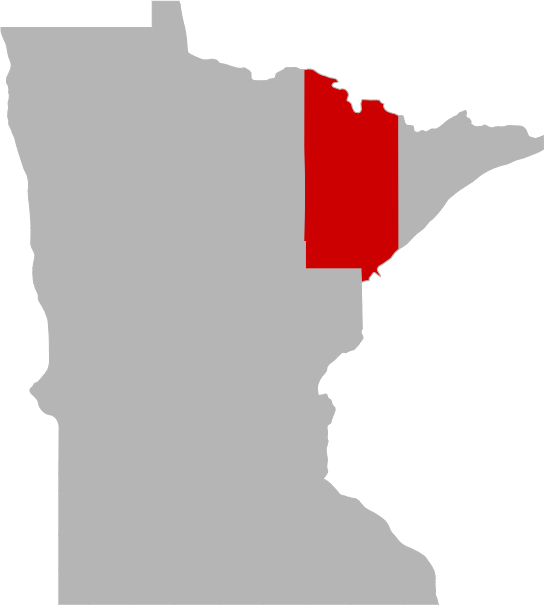
St. Louis County, Minnesota

Today's Fishing Forecast
Fishing looks to be moderately active with peak fishing times around 3-5 PM. SEE MORE
Share your catch!
We want to see what you've caught on McQuade Lake.Frequently Asked Questions About McQuade Lake, MN
- How big is McQuade Lake?
- How deep is McQuade Lake?
- What kind of fish can you catch in McQuade Lake?
- What are the closest cities to McQuade Lake?
- Are there places to stay in the McQuade Lake area?
- Are there boat launches on McQuade Lake?
- Are there places to eat and drink near McQuade Lake?
- What is the average air temp for McQuade Lake?
- Are there any state parks near McQuade Lake?
How big is McQuade Lake?
How deep is McQuade Lake?
What kind of fish can you catch in McQuade Lake?
Other fish species in the lake include Blacknose Shiner, Common Shiner, Golden Shiner, Iowa Darter, Johnny Darter, Shorthead Redhorse and White Sucker.
What are the closest cities to McQuade Lake?
Are there places to stay in the McQuade Lake area?
More Lodging Options
Are there boat launches on McQuade Lake?
Are there places to eat and drink near McQuade Lake?
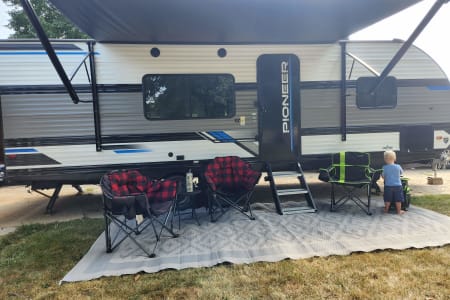
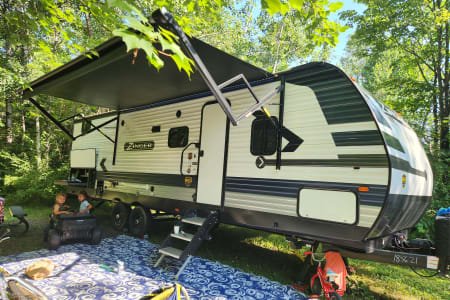
Explore the McQuade Lake area in a RV
Are you looking for an adventurous vacation option that won't break the bank? Look no further than renting an RV! Contrary to popular belief, the process is much simpler than you might imagine. With just a few easy steps, you'll soon be experiencing the ultimate freedom and convenience of exploring the open road in your very own recreational vehicle. And the best part? RV travel can save you up to 60% compared to other types of vacations! With the money you'll save, you'll be able to travel even more and create unforgettable memories along the way. So why wait? Start planning your next adventure today with an RV rental. Learn more about renting a RV.


History & Status of the Fishery
McQuade Lake is a small lake located about eight miles east of Hibbing, Minnesota off County Road #592. McQuade Lake is 164 acres with a littoral area of 157 acres (96%) and a maximum depth of 21 feet. It has very hard water (alkalinity=148) and high phosphorus fertility (0.071 ppm). The water has a slight bog stain and Secchi disk readings of four to five feet. The lake receives water from a creek and outlets to the St. Louis River.
The Minnesota Pollution Control Agency has calculated a Carlson Trophic Status Index of 59 from data collected from 2003 to 2017, indicating a eutrophic state (cf.pca.state.mn.us). Eutrophic lakes often produce algae blooms that may be a nuisance for landowners and recreators. MPCA listed the overall condition as "Not always suitable for swimming and wading due to low clarity or excessive algae caused by the presence of nutrients such as phosphorus in the water".
The fisheries lake management plan (LMP) was last revised in 2014. Northern Pike and Black Crappie were considered primary management species because they were well suited to the lake. Walleye and Bluegill were considered secondary species because they were less well suited but popular with anglers. Increasing the Walleye gill net catch to the lake class median value of 2.6 per gill net was among plan objectives. To meet this objective, Walleye fry stocking was recommended, and Pike River Walleye fry were stocked in the springs of 2015, 2017, and 2019. A targeted survey using 5 gill nets was conducted in July of 2021 to evaluate the status of the fish community, determine suitability for Walleye management and evaluate recent Walleye fry stocking.
Walleye were initially stocked in McQuade Lake in the 1980s with hopes of producing a self-sustaining population. Walleye have occurred in low numbers since that time. It should be noted that lakes with similar habitats to McQuade do not typically produce large Walleye populations. The 2021 catch rate of 2.2 per net was the highest observed for the lake but remained below the lake class median and failed to achieve the management plan goal of 2.6 fish per net. Like previous surveys, most Walleye were relatively large, suggesting poor recruitment. Walleye ranged from 14 to 23.8 inches and averaged 19.6 inches. Too few Walleyes were captured to confidently determine age and growth but only 3 of 10 aged fish appeared to correspond to a fry stocked year class. The presence of fish from non-stocked years suggests a small population is maintained via natural reproduction.
The Walleye population in McQuade Lake remained low despite three fry stocking efforts and it appeared that conditions for Walleye management were poor. Low oxygen below eight feet limits summer habitat. Northern Pike numbers have increased in McQuade Lake over time and high pike densities likely limit Walleye through competition and predation. Northern Pike were generally sampled in low numbers prior to a 2000 survey but catches exceeded the lake class median in the past three surveys. The catch of 13.2 per net in 2021 was above the typical range for similar lakes and the highest observed for McQuade Lake. Size structure was moderate, as lengths ranged from 15.8 to 30.2 inches with an average of 21.4 inches.
The prey base may also limit the Walleye fishery. Yellow Perch have declined over time and were near or below the lake class first quartile value in four of the last five surveys. The improved catch of 8 per net in 2021 was near the lake class median and was the highest observed since 1977. A catch of 8 per net is generally considered adequate for Walleye management but may be an anomaly in McQuade Lake. Young White Sucker and Shorthead Redhorse appear to be important prey species in McQuade Lake but captured fish have generally been too large to be prey for Walleye.
What is the average air temp for McQuade Lake?
Are there any state parks near McQuade Lake?
For more Minnesota State Park information see our State Park Guide.
More Nearby Lakes To Explore
There's more lake's to explore around McQuade Lake...| DISTANCE | ACRES | MAX DEPTH | |
| Little McQuade Lake | 0.8 mi | 32 | |
| Mesaba Park Lake | 2.1 mi | 40 | |
| Scott Lake | 2.4 mi | 17 | 19 ft |
| Carey Lake | 2.7 mi | 145 | 14 ft |
| Carey Lake (Dupont) | 2.7 mi | 145 | 14 ft |
| Carey Lake | 2.7 mi | 145 | 13.5 ft |
| Six Mile Lake | 2.8 mi | 98 | 14 ft |
| Unnamed Lake | 3.5 mi | 37 | |
| Unnamed Lake | 4.0 mi | 15 | |
| Judson Mine Pit | 4.6 mi | 20 | 64 ft |
