


Lake Emily
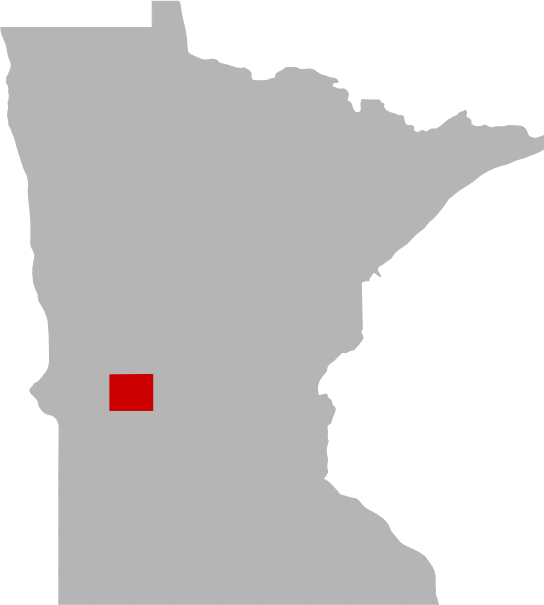
Pope County, Minnesota

Today's Fishing Forecast
Fishing looks to be moderately active with peak fishing times around 3-5 PM. SEE MORE
Share your catch!
We want to see what you've caught on Lake Emily.Frequently Asked Questions About Lake Emily, MN
- How big is Lake Emily?
- How deep is Lake Emily?
- What kind of fish can you catch in Lake Emily?
- What are the closest cities to Lake Emily?
- Are there places to stay in the Lake Emily area?
- Are there boat launches on Lake Emily?
- Are there places to eat and drink near Lake Emily?
- What is the average air temp for Lake Emily?
- Are there any state parks near Lake Emily?
How big is Lake Emily?
How deep is Lake Emily?
What kind of fish can you catch in Lake Emily?
Other fish species in the lake include Banded Killifish, Blackside Darter, Bluntnose Minnow, Brook Stickleback, Common Shiner, Emerald Shiner, Fathead Minnow, Freshwater Drum, Hornyhead Chub, Johnny Darter, Orangespotted Sunfish, Quillback, Sand Shiner, Shorthead Redhorse, Slenderhead Darter, Spotfin Shiner, Spottail Shiner, Tadpole Madtom and White Sucker.
What are the closest cities to Lake Emily?
Are there places to stay in the Lake Emily area?
More Lodging Options
Are there boat launches on Lake Emily?
Are there places to eat and drink near Lake Emily?
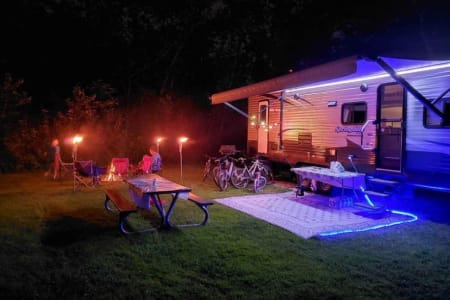
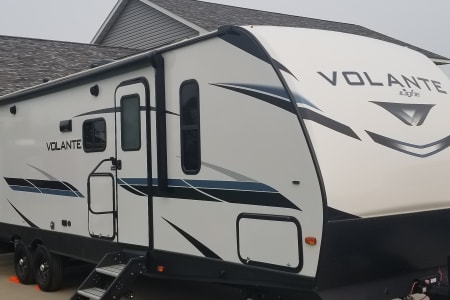
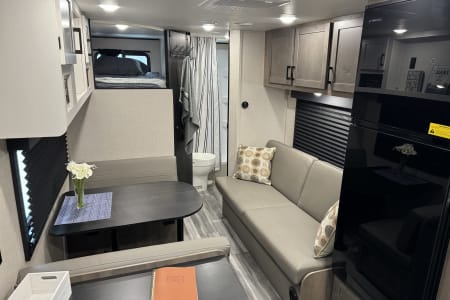
Explore the Lake Emily area in a RV
Are you looking for an adventurous vacation option that won't break the bank? Look no further than renting an RV! Contrary to popular belief, the process is much simpler than you might imagine. With just a few easy steps, you'll soon be experiencing the ultimate freedom and convenience of exploring the open road in your very own recreational vehicle. And the best part? RV travel can save you up to 60% compared to other types of vacations! With the money you'll save, you'll be able to travel even more and create unforgettable memories along the way. So why wait? Start planning your next adventure today with an RV rental. Learn more about renting a RV.

What aquatic invasive species are found in Lake Emily?
Join us in the fight to prevent the spread of invasive species These sneaky creatures can hitch a ride on boats, clinging onto propellers, anchor lines, and trailers. They can even survive in hidden places like bilge water and ballast tanks, or disguise themselves in dirt and sand that sticks to nets, buckets, anchors, and waders. But don't worry, we have the power to stop them in their tracks with just a few simple steps. So let's do our part and protect our waters from these unwanted invaders.
History & Status of the Fishery
Lake Emily is a shallow 2,377-acre, highly-productive basin located in southwestern Pope County. Maximum depth is 6 feet. Despite a low average depth, winterkill events have been rare. Groundwater exchange, springs, and combined stream flows in the Little Chippewa River and from Lake Minnewaska help sustain adequate dissolved oxygen levels to support fish life during winter months. Notable habitat changes are evident in Lake Emily in probable response to infestations of aquatic invasive species that include curly-leaf pondweed, Eurasian water milfoil, and zebra mussels. Water transparency has increased to exceed 3 feet in recent years. Eurasian water milfoil can form dense stands in the east end of the lake and a great expansion of submergent plants within western portions of the basin has occurred as well. Such habitat changes have potential to reshape fish community structure. In June 2022 a standard fish survey was completed to gain current information on the Lake Emily fish community. Walleye remained moderately abundant. Gill net catches averaged 6.7 Walleye/net, which is similar to the last survey in 2016, but lower than average for Lake Emily. Average size of sampled Walleye was over 16 inches with a maximum length of 24 inches. Growth was rapid with Walleye reaching 16 inches by age 3. Walleye fry are stocked in even-numbered years to supplement the fishery. However, aging analysis determined that at least 82% of the Walleye caught during the 2022 survey were from non-stocked years, indicating natural recruitment is currently driving this fishery. Also, while fish movement in and out of Lake Emily definitely occurs, it appears Walleye movement downstream from Lake Minnewaska is likely minimal. Large year classes are sporadic in both systems and large year classes observed in Lake Minnewaska do not show up in Lake Emily. An example of this occurred recently. A large year class of Walleye from 2019 has been observed in several surveys in Lake Minnewaska, and this year class currently dominates the Walleye population in Lake Minnewaska. At the same time, the large and dominant year class in Lake Emily is from 2020. While Walleye fishing reports have recently improved in both of these systems, it is not a result of Walleye movement, but instead separate success of different year classes in each system. Largemouth Bass and Bluegill abundance is increasing in Lake Emily likely due to changing habitat conditions that include increasing water transparency and submergent vegetation. Catch rates for both species were much higher than any previous surveys. Most of the bass ranged from 12 to 17 inches, with the largest being 18 inches. Most of the Bluegill were younger and smaller fish. Only a few Bluegill over 8 inches were sampled, but growth rates are fast and many of those smaller fish should be over 8 inches within two years. Lake Emily supports both Black and White Crappie populations and some hybridization of crappies has also been documented. Black Crappie were sampled in moderate numbers. Captures averaged 11 inches. White Crappie were less abundant. Only one White Crappie was captured during the survey. Both species grow fast in Lake Emily and can reach impressive sizes. A few crappies over 15 inches were observed in many surveys. Northern Pike catches remain modest. Pike captures averaged 27 inches and the largest Northern Pike measured was almost 33 inches. Lake Emily also supports a unique fishery within the Glenwood Fisheries Management Area, as it is the only lake that supports a fishable population of Channel Catfish. Channel Catfish and an occasional White Bass have been documented in Lake Emily for a long time, but Channel Catfish catch rates have increased over the last several surveys. Average size of Channel Catfish was 23 inches and over 4 pounds. No White Bass were observed in the 2022 survey. White Bass have maintained a low population abundance in Lake Emily. Lake Emily is designated as infested with Eurasian watermilfoil and zebra mussels. Eurasian watermilfoil was first found in Lake Emily in 2014. The lake is downstream of Lake Minnewaska and was thus added to the infested waters list for zebra mussels in 2012. Significant habitat changes are occurring following these infestations. Anglers are reminded to drain boats and equipment prior to moving between bodies of water to minimize risk of transferring aquatic invasive species to other lakes.
What is the average air temp for Lake Emily?
Are there any state parks near Lake Emily?
For more Minnesota State Park information see our State Park Guide.
More Nearby Lakes To Explore
There's more lake's to explore around Lake Emily...| DISTANCE | ACRES | MAX DEPTH | |
| Unnamed Lake | 2.7 mi | 20 | |
| Unnamed Lake | 2.7 mi | 12 | |
| Unnamed Lake | 4.0 mi | 27 | |
| Unnamed Lake | 4.9 mi | 15 | |
| Unnamed Lake | 5.6 mi | 10 | |
| Paulson Lake | 5.6 mi | 20 | |
| Signalness Lake | 6.0 mi | 41 | 14 ft |
| Gundar Lake | 6.0 mi | 22 | |
| Swan Lake | 6.4 mi | 59 | |
| Unnamed Lake | 6.6 mi | 124 |
