


Lake Imogene
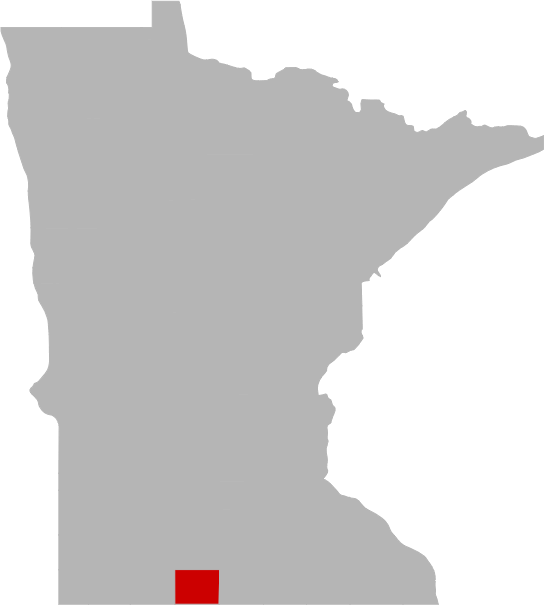
Martin County, Minnesota

Share Your Catch & Win!
Frequently Asked Questions About Lake Imogene, MN
- How big is Lake Imogene?
- How deep is Lake Imogene?
- What kind of fish can you catch in Lake Imogene?
- What are the closest cities to Lake Imogene?
- Are there places to stay in the Lake Imogene area?
- Are there boat launches on Lake Imogene?
- Are there places to eat and drink near Lake Imogene?
- What is the average air temp for Lake Imogene?
How big is Lake Imogene?
How deep is Lake Imogene?
What kind of fish can you catch in Lake Imogene?
Other fish species in the lake include Fathead Minnow, Freshwater Drum, Golden Shiner, Green Sunfish, Orangespotted Sunfish and Tadpole Madtom.
What are the closest cities to Lake Imogene?
Are there places to stay in the Lake Imogene area?
More Lodging Options
Are there boat launches on Lake Imogene?
Are there places to eat and drink near Lake Imogene?
History & Status of the Fishery
Imogene Lake is a 185-acre lake located four miles east of the City of Fairmont in Martin County. The lake has a maximum depth of 6.0 ft. and typically has turbid water (Secchi depth 0.6 ft.) and dense algae blooms. Imogene Lake is managed primarily for Northern Pike and Yellow Perch and secondarily for Walleye. A standard survey was conducted the week of July 19, 2021 to monitor fish populations using gill nets and trap nets.
Since 2003, Northern Pike catch rates have varied from 0.0 to 7.5 per gill net and have averaged 2.7 per gill net. In 2021, one 27.1 inch Northern Pike was sampled in trap nets and zero were sampled in gill nets. Prior to 2021, Northern Pike have not been stocked since 2014, indicating that they are not able to sustain their population through natural reproduction. While Imogene Lake does not have your typical Northern Pike habitat, it is susceptible to winterkill which is the main driver towards Northern Pike management. We expect to stock Northern Pike in order maintain a presence in Imogene Lake as a large predator that is more tolerant of low dissolved oxygen during winter. During the fall of 2021, 284 Northern Pike fingerlings were stocked to supplement the population.
The Yellow Perch catch rate decreased from 17.0 per gill net in 2015 to 1.5 per gill net in 2021 and was below the expected range of catch rates for similar lakes (2.7 to 25.0 per gill net). Lengths of Yellow Perch in gill nets and trap nets ranged from 4.6 to 10.6 inches and averaged 7.2 inches. The yellow Perch population in Imogene Lake should continue to be monitored for adverse effects from the newly introduced Yellow Bass population. The low abundance of Yellow Perch may be a byproduct of a record catch of Walleye.
Prior to 2021, Walleye catch rates varied from 0.0 per gill net in 2003 to 1.5 per gill net in 2009. In 2021, Walleye were captured at a rate of 16.0 per gill net, which is near the upper end of expected catch rates for similar lakes (18.1 per gill net). Four year classes of Walleye were sampled including ages 1, 2, 5, and 7. Age-1 Walleye were likely the result of natural reproduction because fry or fingerlings were not stocked in 2020. These naturally reproduced Walleye from 2020 compose a small percentage of the catch, it is important to recognize the habitat in some year on Imogene Lake is sufficient. The other year classes correspond to fingerling and yearling stockings. Mean length at age-2 was 14.4 inches, which indicates fast growth. Walleye lengths ranged from 10.9 to 24.7 inches and averaged 17.2 inches. Fingerling, yearling, and adult stocking appears to maintain a quality Walleye population in Imogene Lake, which should provide anglers with a good fishing experience.
Within the last couple of years, anglers have submitted photos of Yellow Bass that were caught at Imogene Lake. The 2021 survey was the first time that MNDNR has sampled Yellow Bass in Imogene Lake. The 2021 Yellow Bass catch rate was 8.5 per gill net. Two year classes of Yellow Bass were present, age-1's and age-2's. Lengths of Yellow Bass ranged from 6.1 to 9.3 inches and averaged 7.1 inches. Yellow Bass appear to be growing fast, as mean length at age-1 was 6.5 inches and at age-2 was 9.1 inches. The Yellow Bass population should continue to be monitored as diet studies have suggested that they may compete with Yellow Perch and other native species of fish. Although it is physically possible for Yellow Bass to swim into Imogene Lake given the connectivity of the outlet to Center Creek (Outlet of Fairmont Chain of Lakes), there is the belief that Yellow Bass were likely illegally stocked by an angler. Anglers should not move or introduce new species to a lake, as this may have adverse effects on game fish populations.
The Black Crappie catch rate in 2021 was 10.3 per trap net, which exceeds the long term average of 5.9 per trap net at Imogene Lake. Black Crappie were large, ranging in length from 5.7 to 12.2 inches and averaging 9.2 inches. Thirty-six percent of Black Crappie were 10.0 inches or larger. Despite not being managed for Black Crappie, a quality crappie fishery exists in Imogene Lake.
Channel Catfish were sampled at a rate of 3.5 per gill net, ranging in length from 7.3 to 20.9 inches and averaging 16.8 inches. This is the first time that Channel Catfish have been sampled in Imogene Lake. Other species sampled included Bigmouth Buffalo, Black Bullhead, Common Carp, White Crappie, and Yellow Bullhead.
What is the average air temp for Lake Imogene?
More Nearby Lakes To Explore
There's more lake's to explore around Lake Imogene...| DISTANCE | ACRES | MAX DEPTH | |
| Halls Lake | 0.8 mi | 40 | |
| Unnamed Lake | 4.2 mi | 30 | |
| Unnamed Lake | 4.5 mi | 17 | |
| Unnamed Lake | 5.0 mi | 17 | |
| Budd Lake | 5.0 mi | 228 | 23 ft |
| Sisseton Lake | 5.2 mi | 138 | 19 ft |
| Hall Lake | 5.3 mi | 548 | 27 ft |
| George Lake | 5.3 mi | 83 | 11 ft |
| Canright Lake | 5.9 mi | 40 | |
| Amber Lake | 5.9 mi | 182 | 19 ft |


