


Cedar Lake
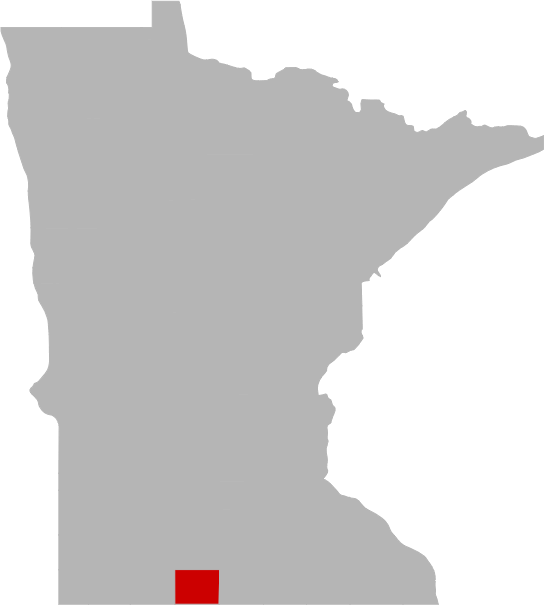
Martin County, Minnesota
Share your catch!
We want to see what you've caught on Cedar Lake.Frequently Asked Questions About Cedar Lake, MN
- How big is Cedar Lake?
- How deep is Cedar Lake?
- What kind of fish can you catch in Cedar Lake?
- What are the closest cities to Cedar Lake?
- Are there places to stay in the Cedar Lake area?
- Are there boat launches on Cedar Lake?
- Are there places to eat and drink near Cedar Lake?
- What is the average air temp for Cedar Lake?
- Are there any state parks near Cedar Lake?
How big is Cedar Lake?
How deep is Cedar Lake?
What kind of fish can you catch in Cedar Lake?
Other fish species in the lake include Common Shiner, Emerald Shiner, Fathead Minnow, Freshwater Drum, Golden Shiner, Green Sunfish, Orangespotted Sunfish, Quillback, Spotfin Shiner, Spottail Shiner and White Sucker.
What are the closest cities to Cedar Lake?
Are there places to stay in the Cedar Lake area?
More Lodging Options
Are there boat launches on Cedar Lake?
Are there places to eat and drink near Cedar Lake?
History & Status of the Fishery
Cedar Lake is a shallow (maximum depth of 7.0 ft.), 710-acre lake located near Trimont in Martin County. Cedar Lake has two basins (North Cedar and South Cedar) that are separated by a road, but connected by a large culvert that allows fish passage. Cedar Lake has a history of winterkill, with the most recent occurring during the winter of 2013-2014. Cedar Lake's connectivity to other waterbodies (Fish Lake, Buffalo Lake, Little Twin Lake, several small wetlands) during high water events allows fish to repopulate the lake relatively quickly following a winterkill, and provides favorable spawning habitat for Northern Pike. Cedar Lake is managed primarily for Northern Pike and secondarily for crappie, Walleye and Yellow Perch. Cedar Lake was surveyed the week of June 6, 2022 to monitor fish populations using three gill nets and 12 trap nets.
Cedar Lake has historically been a productive Northern Pike fishery, as catch rates have varied from 0.0 per gill net in 2014 (following a winterkill) to 16.7 per gill net in 2004, and have averaged 6.5 per gill net since 1986. In 2022, the Northern Pike catch rate was 7.0 per gill net, which is near the upper end of the expected range of catch rates for similar lakes (1.1 to 8.0 per gill net). Northern Pike ranged in length from 17.7 to 31.5 inches and averaged 24.4 inches. While the Northern Pike population in Cedar Lake is sustained mostly through natural reproduction in connected lakes and wetlands, supplemental stocking has occurred sporadically when extra Northern Pike are available (2014 and 2021). Mean relative weight of Northern Pike was 80, indicating that pike are in good condition and are foraging successfully. Cedar Lake is within the "southern zone" of the Northern Pike zone regulations, so two Pike longer than 24 inches can be harvested. Northern Pike under 24 inches must be released.
The 2022 Walleye catch rate was 3.7 per gill net, which is within the expected range of catch rates for similar lakes (2.3 to 18.1 per gill net), but was a decrease from the 2018 catch rate of 9.3 per gill net. Historically, Walleye catch rates have varied from 3.3 per gill net in 2014 to 9.3 per gill net in 2018, and have averaged 5.5 per gill net since 1995. Three year classes of Walleye were sampled including Walleye from the 2015, 2018, and 2020 year classes. 2020 was a non-stocked year for all lakes in Minnesota due to COVID limitations, thus the 2020 year class was from natural reproduction. Growth of Walleye in Cedar Lake is fast when compared to Walleye growth in other similar lakes across Minnesota, as mean length at age-2 was 12.9 inches and at age-4 was 17.9 inches. Along with fast growth, condition of Walleye was good, as mean relative weight was 89, suggesting that prey resources are abundant. The management goal of providing a secondary Walleye fishing opportunity has been achieved through stocking Walleye fry every other year (2022, 2024, 2026?).
Yellow Perch catch rates have steadily declined from 49.0 per gill net in 2010, to 31.3 per gill net in 2014, to 13.0 per gill net in 2018. The decline continued in 2022 as the catch rate of Yellow Perch was 2.7 per gill net, which is below the long term average of 21.0 per gill net and is near the lower end of the expected range of catch rates for similar lakes (2.6 to 25.0 per gill net). Lengths of Yellow Perch ranged from 5.6 to 11.5 inches and averaged 7.1 inches. Condition of Yellow Perch was good, as relative weight was 89, suggesting that prey is available.
Cedar Lake's Black Crappie population has been highly cyclical, where catch rates were low for several years (lower than 5.0 per trap net; 1986 to 1995), then high for several years (higher than 23.0 per trap net; 2000 to 2010), then low again for a few years (2014 to 2018). Cedar Lake Black Crappie appear to be in the uptick of the cycle, as the 2022 catch rate was 19.6 per trap net, which exceeds the long term average of 13.9 per trap net, and is near the upper end of the expected range of catch rates for similar lakes (1.2 to 20.5 per trap net). Lengths of Black Crappie ranged from 5.2 to 13.1 inches and averaged 7.9 inches. Black Crappie that were 10.0 inches or larger comprised 25 percent of the sample and should provide a great fishery. Black Crappie condition was high, as mean relative weight was 99, indicating that they are foraging successfully.
White Crappie catch rates have been highly variable, ranging from 0.3 per trap net in 2014 to 50.2 per trap net in 1986, averaging 10.3 per trap net since 1986. The 2022 White Crappie catch rate was 4.9 per trap net, which is near the upper end of the expected range of catch rates for similar lakes (0.3 to 5.9 per trap net). White Crappie lengths ranged from 6.4 to 14.1 inches and averaged 11.4 inches. Cedar Lake provides a unique opportunity, as 67 percent of the White Crappie were 12.0 inches or larger. Mean relative weight of White Crappie was high at 88, suggesting that food is available.
The 2022 Black Bullhead catch rate was 182.7 per gill net, exceeding the long-term average of 107.0 per gill net and exceeding the expected range of catch rates for similar lakes (30.3 to 150.6 per gill net). Lengths of Black Bullhead ranged from 4.8 to 12.6 inches and averaged 7.4 inches. The Common Carp catch rate was the highest ever recorded on Cedar Lake at 41.0 per gill net. Lengths of Common Carp ranged from 10.3 to 30.6 inches and averaged 14.9 inches. Based on the lengths of the Common Carp in the gill net it would appear that a majority of them sampled were from 1 year class of fish. Channel Catfish have still not been sampled since the winterkill of 2013-2014. Other species sampled included Bigmouth Buffalo, Bluegill, Freshwater Drum, Golden Shiner, White Sucker, Quillback, and Yellow Bullhead.
What is the average air temp for Cedar Lake?
Are there any state parks near Cedar Lake?
For more Minnesota State Park information see our State Park Guide.
More Nearby Lakes To Explore
There's more lake's to explore around Cedar Lake...| DISTANCE | ACRES | MAX DEPTH | |
| North Lake | 2.2 mi | 126 | |
| Little Twin Lake | 2.5 mi | 68 | 9 ft |
| Buffalo Lake | 3.0 mi | 101 | |
| Big Twin Lake | 3.1 mi | 461 | 18 ft |
| Fish Lake | 4.1 mi | 156 | 5 ft |
| Clam Lake | 4.5 mi | 71 | 8 ft |
| Watkins Lake | 4.9 mi | 259 | |
| Lake Seymour | 5.4 mi | 47 | |
| Round Lake | 5.9 mi | 42 | |
| Irish Lake | 6.6 mi | 168 |


