


Green Lake
Kandiyohi County, Minnesota
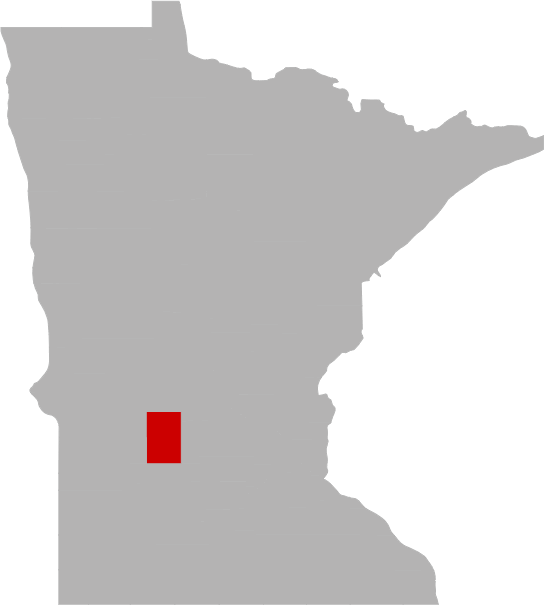
The lake has a maximum depth of 110 feet and an average depth of 21 feet. It is surrounded by forests and rolling hills, which provide a picturesque backdrop for water-based activities such as boating, fishing, and swimming. The lake is home to a variety of fish species, including walleye, northern pike, bass, and panfish, which are popular targets for anglers.
Green Lake is also an important ecological resource, providing habitat for a variety of plant and animal species. The lake is managed by the Minnesota Department of Natural Resources to protect and conserve the area's natural resources.
In addition to its natural beauty and recreational opportunities, Green Lake is surrounded by several parks, campgrounds, and resorts, making it a popular vacation destination. The area also offers hiking and biking trails, hunting opportunities, and other outdoor activities for visitors to enjoy.

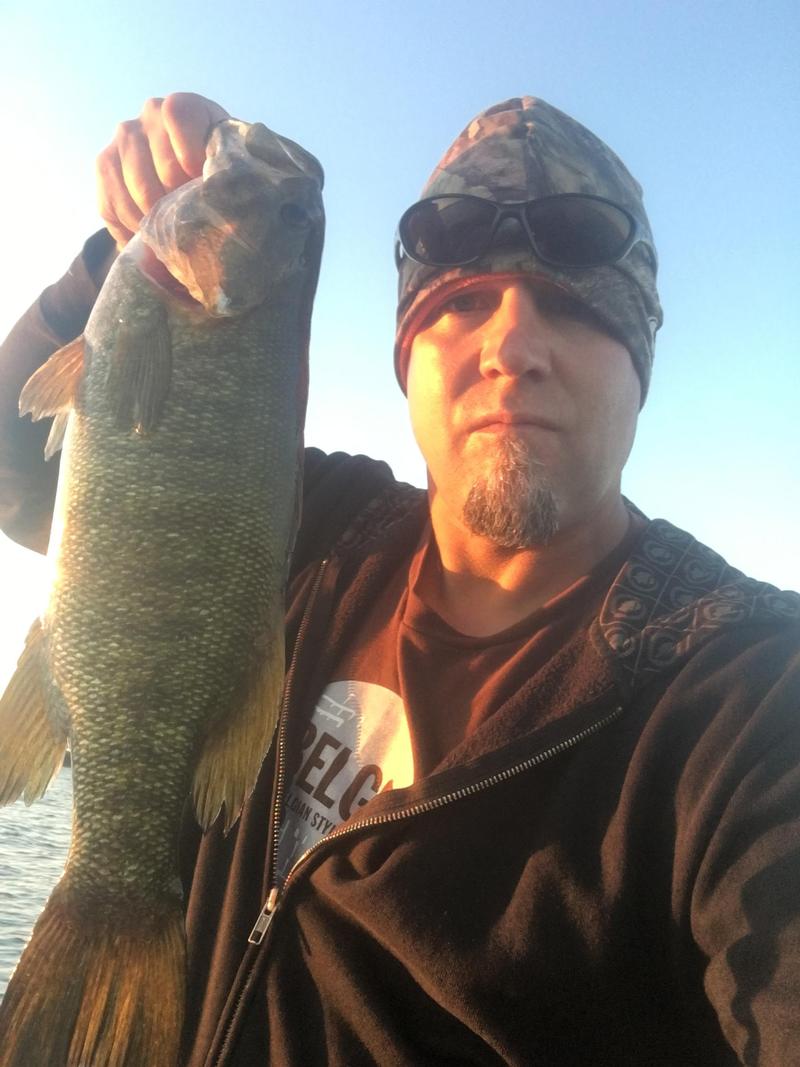
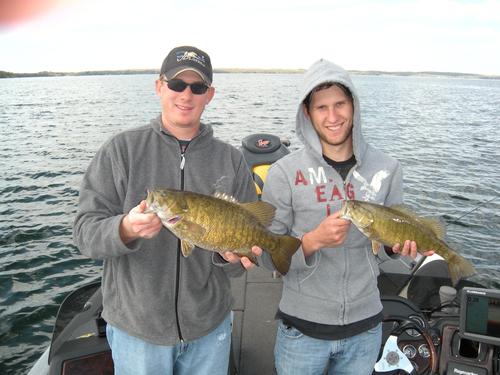
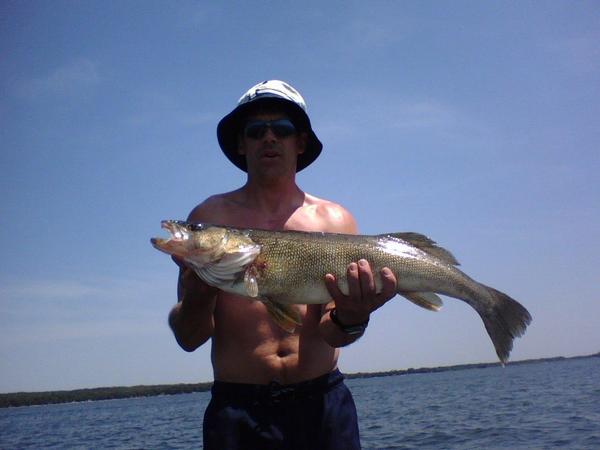
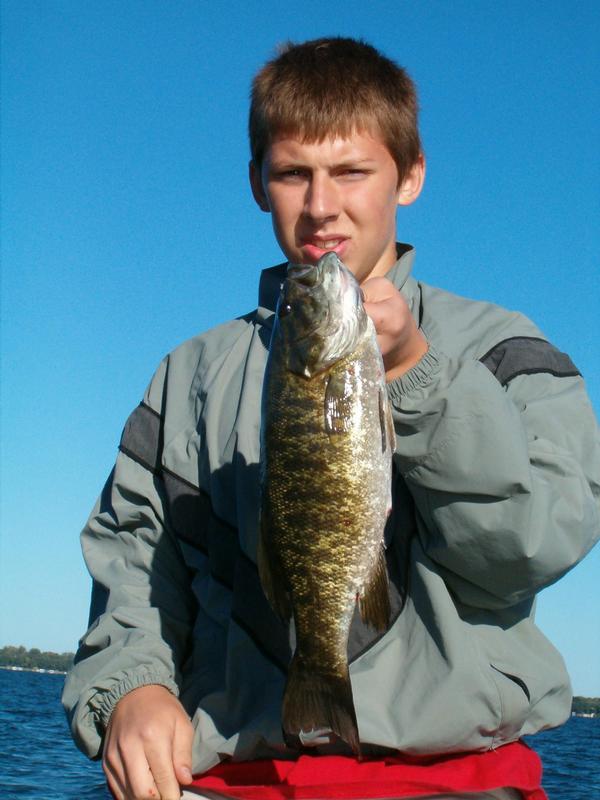
Share Your Catch & Win!
Frequently Asked Questions About Green Lake, MN
- How big is Green Lake?
- How deep is Green Lake?
- What kind of fish can you catch in Green Lake?
- What are the closest cities to Green Lake?
- Are there places to stay in the Green Lake area?
- Are there topographical lake maps available Green Lake?
- Are there boat launches on Green Lake?
- Are there places to eat and drink near Green Lake?
- What are the fishing regulations for Green Lake?
- What is the average air temp for Green Lake?
- Are there any state parks near Green Lake?
How big is Green Lake?
How deep is Green Lake?
What kind of fish can you catch in Green Lake?
Other fish species in the lake include Banded Killifish, Blackchin Shiner, Bluntnose Minnow, Brook Silverside, Brook Stickleback, Cisco (Tullibee), Common Shiner, Fathead Minnow, Golden Shiner, Green Sunfish, Hybrid Sunfish, Iowa Darter, Johnny Darter, Logperch, Longnose Dace, Orangespotted Sunfish, Pugnose Shiner, Shorthead Redhorse, Spottail Shiner, Tadpole Madtom, Trout-Perch and White Sucker.
What are the closest cities to Green Lake?
Are there places to stay in the Green Lake area?
More Lodging Options
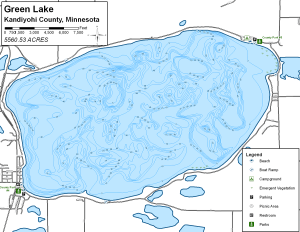
Are there topographical lake maps available Green Lake?
Are there boat launches on Green Lake?
Are there places to eat and drink near Green Lake?
What are the fishing regulations for Green Lake?
 There are specific fishing regulations Green Lake that you need to know. For complete fishing regulations visit the Minnesota Department of Natural Resources. To report a violation call (800) 652-9093. Need a Minnesota fishing license?
Explore the Green Lake area in a RV
Are you looking for an adventurous vacation option that won't break the bank? Look no further than renting an RV! Contrary to popular belief, the process is much simpler than you might imagine. With just a few easy steps, you'll soon be experiencing the ultimate freedom and convenience of exploring the open road in your very own recreational vehicle. And the best part? RV travel can save you up to 60% compared to other types of vacations! With the money you'll save, you'll be able to travel even more and create unforgettable memories along the way. So why wait? Start planning your next adventure today with an RV rental. Learn more about renting a RV.

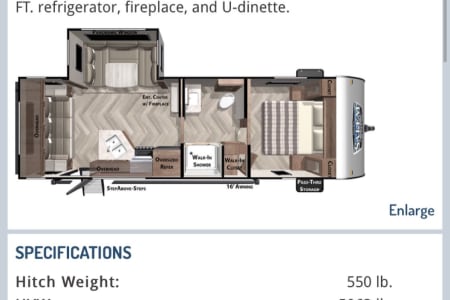
Spacious Family Camper: 5+ People, Fully Furnished, 1/2T towable
New London, MN


What aquatic invasive species are found in Green Lake?
Join us in the fight to prevent the spread of invasive species These sneaky creatures can hitch a ride on boats, clinging onto propellers, anchor lines, and trailers. They can even survive in hidden places like bilge water and ballast tanks, or disguise themselves in dirt and sand that sticks to nets, buckets, anchors, and waders. But don't worry, we have the power to stop them in their tracks with just a few simple steps. So let's do our part and protect our waters from these unwanted invaders.
History & Status of the Fishery
A targeted survey of Tullibee (Cisco) in Green Lake was conducted during mid-late November of 2023 at four lake survey special gillnet stations. A targeted survey is generally used for sampling a specific kind of fish or time of year (i.e. spawning season, fall season, etc.) unlike a standard survey which samples a wider range of fish species during the summer months using standard methodology (i.e. standard time of year, set sampling stations, taking water clarity readings and oxygen/temperature profiles, etc.) and gears (i.e. lake survey gillnets, trapnets and possibly spring electrofishing for Largemouth Bass).
Green is a large (5,561 acres), and deep (110 feet maximum) lake located in Kandiyohi County. Green is currently infested with invasive species such as Curly-leaf Pondweed, Eurasian Watermilfoil and Zebra Mussels. A standard survey (summer gillnets and trapnets) of Green Lake was also conducted during mid-September of 2023. A fall electrofishing survey was conducted on October 8, 2023 to evaluate young of year "YOY" (fingerling sized) Walleye abundance in Green Lake.
Tullibee were believed to be initially introduced into Green and Koronis during the 1880's. Koronis is the only other Spicer Area lake with a self-sustaining Tullibee population. Tullibee spawn in 3-6 feet of water over bottom substrates consisting of large rock during late November to early December when the water temperature reaches 41 degrees Fahrenheit "F" or less. Spawning substrates in both Green and Koronis during recent years have been covered by periphyton/filamentous algae except in shallow (<1 foot) windswept shoal areas. Increased phosphorus inputs or availability often result in greater blue-green and filamentous algae blooms. Climate changes (e.g. warmer temperatures, additional growing days, increased storm/runoff activity, etc.) coupled with continued nutrient inputs and Zebra Mussel impacts may be negatively affecting Tullibee natural reproduction and recruitment success in these lakes due to degrading spawning habitat and increasing numbers of warm water fish species (e.g. Rock Bass, Pumpkinseed, Smallmouth Bass, Largemouth Bass, etc.) which prey upon Tullibee eggs, fry or fingerlings.
Adult Tullibee are susceptible to summerkill in Green Lake if oxygen levels drop (<2 ppm) in the cooler deeper areas (<74 F) of the lake for an extended time (1-3 weeks) during late July to early August. Young Tullibee can tolerate warmer water temperatures than adult Tullibee. The last reported summerkill on Green prior to 2011 was a minor event during 1995. Low dissolved oxygen (<2 ppm) levels were present at depths where preferred adult Tullibee water temperatures (<74 F) occurred for a short time period in the 2010 late summer. Although no summerkill of Tullibee was reported for Green, a minor summerkill of adult Tullibee occurred in Koronis during 2010. A major summerkill of Tullibee occurred in Koronis during 2011, but only a minor kill occurred in Green during the 2011 summer. Drought conditions and extremely high air temperatures were the norm for the Spicer Area during July and early August of 2012. There were no apparent summerkills in Green or Koronis during 2012, but adult numbers were so low that summerkill events may not have been recognizable, especially due to the large numbers of pelicans living on Lake Koronis' islands. A narrow band (1-3 feet) of marginal water temperatures (<74 F) and dissolved oxygen levels (1-3 ppm) was present in depths of 25-30 feet in Green during late July and early August of 2012. Dissolved oxygen levels and water temperatures in Green were at potential summerkill levels of 2 ppm and 74 F on both July 30th and August 9th of 2012. Summer temperature and oxygen conditions were more conducive for Tullibee survival during 2013-2019. The month of June had warmer air temperatures (up to 90 F) and drier (< 2 inches of rain) than normal conditions during 2020-2022. July air temperatures were below or near normal during those same years. The 2023 summer was warmer and drier than normal overall especially for June, but no tullibee summerkills were observed in Green or Koronis. Adequate water temperatures and dissolved oxygen levels were present from 20 feet depth (73 F, 8 ppm) to 40 feet depth (60 F, 3 ppm) for tullibee survival on July 28, 2023.
Zebra Mussels were first observed in Green Lake in 2014. Presently, Zebra Mussels are abundant within the lake. It is unknown the extent Zebra Mussels will affect Tullibee and the corresponding forage base. Green was the only lake in the Spicer Area open to the public for fall gillnetting of Tullibee during late November or early December each year from the late 1980's to 2011. Green Lake has been closed for Tullibee gillnetting since 2012 due to the low numbers sampled in recent years. Tullibee are an important forage fish for trophy northern pike in both Green and Koronis.
Tullibee eggs were collected using a 300 foot gillnet (2.25-2.5 bar mesh) on November 18, 2022 at Lake Koronis for a doctoral research project. A total of 88 tullibee were captured in the overnight gillnet set. Approximately 2 quarts were stripped from 15 females and fertilized with 30 plus males on Koronis. One third of these eggs were immediately shipped to the University of Ohio-Miami. The remaining eggs were incubated in Muskellunge jars at the New London Hatchery for several weeks at 40 F river water and later shipped to the same research facility. The objective of the study was to evaluate the effects of UV light on cisco egg hatching and fry survival. The hatch rate was moderately successful. Local tullibee propagation (incubation, hatching and rearing to fryling stage) is possible at the New London Hatchery using a recirculation system and a dry diet regime until fish can be stocked in the spring following ice out.
Tullibee were present (0.67 fish/gillnet, 9.65 inches average length) in the 2023 summer survey. Low numbers of Tullibee were caught in 2021 (0.17 fish/gillnet) and 2022 (0.08 fish/gillnet). Tullibee were not present in the 2017-2020 summer standard survey catches. The Tullibee historical average August/September catch rate is 1.70 fish/gillnet for Green Lake.
Tullibee numbers were low in 2023 November survey (4.00 fish/gillnet, 10.77 inches). Tullibee numbers were also low in 2019 (1.75 fish/gillnet, 13.94 inches) and 2017 (0.50 fish/gillnet, 11.25 inches) November surveys. Tullibee abundance was higher in the 2012 (8.33 fish/gillnet, 13.61 inches) and 2015 (10.33 fish/gillnet, 13.66 inches) November surveys. The highest recorded tullibee catch was 195.17 fish/gillnet on Green during 1994. Low tullibee numbers (5.00 fish/gillnet, 16.41 inches) were also caught in Koronis during 2023. Moderate numbers of Tullibee were captured in nearby Lake Koronis in 2019 (27.50 fish/gillnet, 15.75 inches) and 2015 (19.67 fish fish/gillnet, 14.17 inches), but low numbers in 2017 (10.33 fish/gillnet, 14.41 inches). The fall Tullibee historical average catch rate and average length are 64.89 fish/gillnet and 12.48 inches for Green Lake. Tullibee growth rates were good for ages 1-4 in the 2023 November survey gillnet catches. The 2020 and 2018 year classes comprised 56% and 38% respectively of the 2023 November Tullibee survey catch. The inconsistency of Tullibee natural reproduction and inadequate adult Tullibee numbers on the spawning grounds as sampled by the DNR is not a good indication for the long term sustainability of the Tullibee populations in Green and Koronis. Hopefully, consecutive cool summers will continue to occur periodically, which may result in a good hatch, recruitment and survival of Tullibee to maintain a long-term population in Green.
Improving and maintaining good water quality in Green is the key for Tullibee numbers to survive and flourish. Tullibee propagation is an option for maintaining a viable population. Other sampling methodology such as fall electrofishing and summer vertical gillnetting may better sample Tullibee populations in Green and Koronis. Public fall gillnetting season will probably be postponed until the adult population rebounds to adequate levels. Current fish management activities on Green include monitoring the fish population on a periodic basis, assisting aquatic plant management and enforcement personnel with invasive species monitoring and education, protecting aquatic vegetation through the permit process, participating in local watershed initiatives, and stocking various fish species as warranted. The Green Lake fishery will be sampled during mid-September of 2024 summer for all fish species. Tullibee will be sampled by vertical gillnetting and hydroacoustic methods in June of 2024, and November gillnetting in 2025 for both Green and Koronis.
What is the average air temp for Green Lake?
Are there any state parks near Green Lake?
For more Minnesota State Park information see our State Park Guide.
Green Lake Reviews
Below is the word on street about Green Lake.Have you been to Green Lake? Why not share your personal reveiw with others?
Submit Review
rhonda

More Nearby Lakes To Explore
There's more lake's to explore around Green Lake...| DISTANCE | ACRES | MAX DEPTH | |
| Jesse Lake | 1.8 mi | 74 | |
| Woodcock Lake | 1.8 mi | 101 | |
| Woodcock Lake | 2.5 mi | 180 | |
| Unnamed Lake | 2.8 mi | 257 | |
| Alvig Lake | 2.8 mi | 69 | |
| Unnamed Lake | 2.9 mi | 54 | |
| Nest Lake | 3.0 mi | 969 | 40 ft |
| Unnamed Lake | 3.1 mi | 15 | |
| Carlson Lake | 3.2 mi | 27 | |
| Elkhorn Lake | 3.4 mi | 79 | 41 ft |


