


George Lake
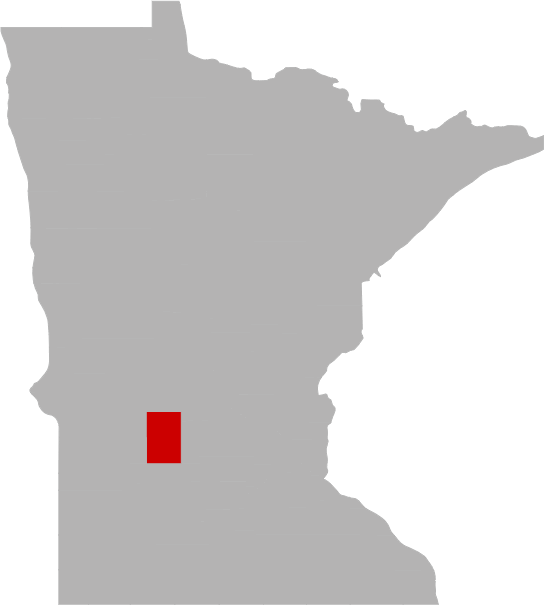
Kandiyohi County, Minnesota

Share Your Catch & Win!
Frequently Asked Questions About George Lake, MN
- How big is George Lake?
- How deep is George Lake?
- What kind of fish can you catch in George Lake?
- What are the closest cities to George Lake?
- Are there places to stay in the George Lake area?
- Are there boat launches on George Lake?
- Are there places to eat and drink near George Lake?
- What are the fishing regulations for George Lake?
- What is the average air temp for George Lake?
- Are there any state parks near George Lake?
How big is George Lake?
How deep is George Lake?
What kind of fish can you catch in George Lake?
Other fish species in the lake include Banded Killifish, Bluntnose Minnow, Brook Silverside, Common Shiner, Fathead Minnow, Golden Shiner, Green Sunfish, Hybrid Sunfish, Iowa Darter, Johnny Darter, Spotfin Shiner, Spottail Shiner and White Sucker.
What are the closest cities to George Lake?
Are there places to stay in the George Lake area?
More Lodging Options
Are there boat launches on George Lake?
Are there places to eat and drink near George Lake?
What are the fishing regulations for George Lake?
 There are specific fishing regulations George Lake that you need to know. For complete fishing regulations visit the Minnesota Department of Natural Resources. To report a violation call (800) 652-9093. Need a Minnesota fishing license?
Explore the George Lake area in a RV
Are you looking for an adventurous vacation option that won't break the bank? Look no further than renting an RV! Contrary to popular belief, the process is much simpler than you might imagine. With just a few easy steps, you'll soon be experiencing the ultimate freedom and convenience of exploring the open road in your very own recreational vehicle. And the best part? RV travel can save you up to 60% compared to other types of vacations! With the money you'll save, you'll be able to travel even more and create unforgettable memories along the way. So why wait? Start planning your next adventure today with an RV rental. Learn more about renting a RV.


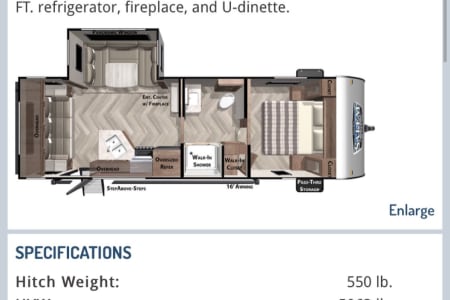
Spacious Family Camper: 5+ People, Fully Furnished, 1/2T towable
New London, MN

What aquatic invasive species are found in George Lake?
Join us in the fight to prevent the spread of invasive species These sneaky creatures can hitch a ride on boats, clinging onto propellers, anchor lines, and trailers. They can even survive in hidden places like bilge water and ballast tanks, or disguise themselves in dirt and sand that sticks to nets, buckets, anchors, and waders. But don't worry, we have the power to stop them in their tracks with just a few simple steps. So let's do our part and protect our waters from these unwanted invaders.
History & Status of the Fishery
A standard survey was conducted on George Lake during late June of 2023. A nearshore fish survey was also conducted in July of 2023. A targeted survey is generally used for sampling a specific kind of fish or time of year (i.e. spawning season, fall season, etc.) unlike a standard survey which samples a wider range of fish species during the summer months using standard methodology (i.e. standard time of year, set sampling stations, taking water clarity readings and oxygen/temperature profiles, etc.) and gears (i.e. lake survey gillnets, trapnets and possibly spring electrofishing for Largemouth Bass).
George is a small (231 acres), moderately deep (34 feet maximum), and low to moderately productive lake located in Kandiyohi County. The shoreline is composed of primarily residential homes (99 homes), in addition to hardwood trees, a bible camp and adjacent wetland areas. The immediate watershed is composed of residential homes, hardwood trees, wetlands, grasslands and agricultural row crops. Agricultural row crop inputs into George Lake are minimal. There are three small inlets that drain into George and an outlet that connects to Nest Lake during high water. The Nest Lake connection may flow either way depending upon water levels in both lakes. Late ice out (late April-early May) occurred on area lakes in 2023. The water clarity was good on June 27, 2023 (secchi=12.2 feet). Dissolved oxygen levels were above 8.0 ppm down to 25 feet deep during the 2023 survey. Total phosphorus was low (0.013 ppm) in early June of 2013. Water levels were slightly below normal during the 2023 survey. Submergent vegetation species (muskgrass, various pondweeds, water moss, northern milfoil, bladderwort, and filamentous algae) are moderately abundant within the lake. Emergent vegetation is limited to small stands of hardstem bulrush along the northeast and southeast areas. Zebra Mussels were found in George during 2017. Shoalwater substrates consist mostly of sand, gravel, and rubble. George is a popular fishing lake for Bluegill, Black Crappie, Largemouth Bass and Northern Pike. Quality Sunfish Initiative "QSI" was recently enacted during 2021. Special regulations for several area lakes (Nest, Long, Diamond, George and Florida) including George Lake entail reduced bag limits (i.e., 5 or 10 fish) for Sunfish in five lakes and Crappie in one lake. Special regulations for George entail reduced bag limits of five fish for Sunfish and five fish for Crappie. These regulations are evaluated by special sampling in May with standard lake survey trapnets. The Bluegill and Black Crappie populations in George Lake were last sampled in May of 2021.
Black Crappie abundance in 2023 (5.00 fish/gillnet) was above the 75th quartiles for George Lake (25th=0.80, 50th=2.00, 75th=4.00 fish/gillnet) and Lake Class 31 lakes (75th=3.50 fish/gillnet). The Black Crappie gillnet historical average catch rates are 5.77 fish/gillnet and 1.39 fish/trapnet. Low numbers of Black Crappie were caught in the 2023 trapnets (1.10 fish/trapnet). The 2023 Black Crappie average length was 7.47 inches from gillnets. The historical average length is 7.96 inches from gillnets. The Black Crappie average weights were 0.24 pounds and 0.27 pounds from 2023 gillnets and trapnets respectively. The 2023 Black Crappie catch rate of quality size (8.00 inches plus) was poor (1.33 fish/gillnet, 0.40 fish/trapnet). Black Crappie growth rates were below the Spicer Area 25th quartiles for ages 1-6. The 2019 year class comprised 77% of the 2023 Black Crappie catch. Black Crappie adults (1,344 fish, 336 pounds) were last stocked into George during 2010.
Northern Pike abundance in 2023 (13.00 fish/gillnet) was above the 75th quartiles for George Lake (25th=1.80, 50th=5.20, 75th=7.20 fish/gillnet) and Lake Class 31 lakes (75th=10.50/gillnet. The historical average catch rate is 5.70 fish/gillnet. The 2023 Northern Pike average weight and length were 1.23 pounds and 16.52 inches from gillnets. The Northern Pike historical average weight is 2.68 pounds from gillnets. The 2023 Northern Pike catch rate of quality size (21.00 inches plus) Northern Pike was 2.00 fish/gillnet. The 2023 Northern Pike catch rate of preferred size (28.00 inches plus) was 0.67 fish/gillnet. Northern Pike possession limit regulations for George in the North-central Zone are as follows: anglers can keep 10 Northern Pike, but not more than two pike longer than 26.0 inches; and all from 22.0 to 26.0 inches must be released. Northern Pike taken by spearing follow the same rules except one pike may be between 22.0 and 26.0 inches or two larger than 26.0 inches.
Yellow Perch abundance in 2023 (0.00 fish/gillnet, 0.40 fish/trapnet) was low. The Yellow Perch historical average catch rates are 5.48 fish/gillnet and 0.56 fish/trapnet. The 2023 Yellow Perch average weight and length were 0.10 pounds and 6.04 inches from trapnets.
Walleye abundance in 2023 (2.67 fish/gillnet) was slightly above the 25th quartile for George Lake (25th=2.00, 50th=5.00, 75th=6.80 fish/gillnet) and near the 50th quartile (2.50 fish/gillnet) for Lake Class 31 lakes. The Walleye historical catch rate is 4.93 fish/gillnet for George. The 2023 Walleye average weight and length were 1.96 pounds and 17.96 inches from gillnets. The Walleye historical average weight and length were 1.60 pounds and 16.25 inches respectively from gillnets. The 2023 Walleye catch rate of quality size (15.00 inches plus) was 2.67 fish/gillnet. Walleye growth rates were near the Spicer Area 25th quartiles for ages 1-8. The 2022 and 2019 year classes comprised 33% and 27% respectively of the 2023 Walleye catch. Walleye (yearlings, adults, fingerlings) were stocked recently in 2010 (61 adult/yearlings, 58 pounds; 3,704 fingerlings, 347 pounds), 2012 (16,29 yearlings, 435 pounds), 2013 (221 yearlings, 96 pounds), 2014 (77 adults, 102 pounds; 1,412 yearlings, 321 pounds), 2016 (133 adults, 173 pounds; 326 yearlings, 151 pounds), 2017 (137 adults, 231 pounds; 614 yearlings, 144 pounds; 18 fingerlings, 2 pounds), 2019 (11 yearlings, 4 pounds; 3,445 fingerlings, 335 pounds), 2020 (36 adults, 72 pounds; 270 yearlings, 180 pounds), 2022 (2,775 fingerlings, 185 pounds) and 2023 (243 yearlings, 147 pounds; 60 fingerlings; 15 pounds; 70 adults, 112 pounds).
Largemouth Bass abundance was low (1.00 fish/gillnet) in the 2023 survey. The Largemouth Bass average weight and length were 1.02 pounds and 12.09 inches from 2023 gillnets. A boat electrofishing survey was not conducted for Largemouth Bass in 2023. Largemouth Bass (post spawn) numbers were abundant (58.86 fish/hour) in the previous 2018 mid-June night electrofishing survey. The 2018 Largemouth Bass average weight and length were 0.69 pounds and 10.55 inches from spring electrofishing. The 2018 catch rate of quality size (12.00 inches plus) Largemouth Bass was 18.86 fish/hour. The 2018 catch rate of preferred size (15.00 inches plus) Largemouth Bass was 0.00 fish/hour. Post spawn electrofishing surveys generally catch greater numbers of smaller or younger Largemouth bass than previous electrofishing surveys conducting during the spawning season. Largemouth Bass also tend to be found near docks, downed trees in the water or within submergent vegetation adjacent to deep water during post spawn conditions versus shallow spawning bay areas often containing bulrush.
Bluegill abundance in 2023 (28.50 fish/trapnet) was near the 25th quartile for George Lake (25th=26.60, 50th=31.40, 75th=63.63 fish/trapnet) and above the 50th quartile (21.50 fish/trapnet) for Lake Class 31 lakes. The Bluegill historical average catch rate is 47.06 fish/trapnet for George Lake. The 2023 Bluegill gillnet catch rate was 14.00 fish/gillnet, which was above the historical average (9.55 fish/gillnet). The 2023 Bluegill average weight and length were 0.16 pounds and 5.76 inches from trapnets. The 2023 Bluegill average weight and length were 0.19 pounds and 6.06 inches from gillnets. The Bluegill historical average weights are 0.20 and 0.13 pounds from gillnets and trapnets respectively. The 2023 Bluegill catch rate of quality size (6.00 inches plus) (14.75 fish/trapnet) was above the historical average (9.34 fish/trapnet). The 2023 Bluegill catch rate of preferred size (8.00 inches plus) was low (0.10 fish/trapnet). Bluegill growth rates in George Lake were near or below the Spicer Area 25th quartiles for ages 1-8. The 2016 and 2018 year classes comprised 24% and 23% of the 2023 Bluegill catch.
Pumpkinseed Sunfish abundance in 2023 (3.00 fish/trapnet) was at the 50th quartile for George (25th=2.17, 50th=3.00, 75th=4.20 fish/trapnet) but below the 50th quartile (4.17 fish/trapnet) for Lake Class 31 lakes. The 2023 Pumpkinseed Sunfish gillnet catch rate was 15.67 fish/gillnet. The Pumpkinseed Sunfish historical average catch rates are 3.20 fish/gillnet and 3.80 fish/trapnet for George. The 2023 Pumpkinseed Sunfish average weights were 0.20 and 0.25 pounds from gillnets and trapnets respectively.
Hybrid Sunfish abundance in 2023 (1.60 fish/trapnet) was below historical average (5.91 fish/trapnet). The 2023 Hybrid Sunfish average weight and length were 0.19 pounds and 5.84 inches from trapnets. The Hybrid Sunfish historical average weight and length are 0.18 pounds and 5.80 inches from trapnets.
Black Bullhead abundance in 2023 (2.33 fish/gillnet) was near the 75th quartile for George Lake (25th=0.44, 50th=1.40, 75th=2.40 fish/gillnet) and near the 50th quartile for Lake Class 31 lakes (50th=2.29 fish/gillnet). The Black Bullhead historical average catch rate is 1.86 fish/gillnet. Black Bullhead abundance was low in the 2023 trapnets (0.40 fish/trapnet). The 2023 Black Bullhead average length was 10.93 inches from gillnets and trapnets combined. The Black Bullhead historical average length is 11.56 inches from gillnets and trapnets combined.
Yellow Bullhead abundance in 2023 (21.00 fish/gillnet) was above the 75th quartiles for George (25th=0.60, 50th=3.00, 75th=7.00 fish/gillnet) and Lake Class 31 lakes (10.50 fish/gillnet). The Yellow Bullhead historical average catch rate is 5.44 fish/gillnet. The 2023 Yellow Bullhead average weight was 0.53 pounds from gillnets. The Yellow Bullhead historical average weight is 0.65 pounds from gillnets.
A nearshore fish survey was also conducted from July 18-19, 2023. Seine hauls were conducted at 10 Fish-based Index of Biologic Integrity "FIBI" stations. Sampling stations site were evenly spaced around the lake and each was sampled by either or both back-pack electrofishing and seining. Approximately 16 different fish species (13 species from back-pack electrofishing, and 15 species from seining) were captured from electrofishing and seining combined. Low species numbers of intolerant habitat disturbance (Banded Killifish, Blackchin Shiner and Iowa Darter) were captured in George Lake. Tolerant fish species captured included Black Bullhead and Green Sunfish. The nearshore data were combined with trap net and gill net data from a standard survey to describe the fish community and provide a Fish-based IBI (FIBI) score. FIBI tool 4 was used for scoring and resulted in an FIBI score of 34 which is below the impairment threshold (38).
The nearshore data were combined with trap net and gill net data from a June 2023 standard survey to describe the fish community and provide a Fish-based IBI (FIBI) score. The FIBI uses fish community data to measure a lake's health, and the types of fish species present can help identify any stressors that may be negatively affecting the lake environment. In Minnesota lakes, certain fish species cannot survive without clean water and a healthy habitat (e.g. Blackchin Shiner, Iowa Darter, and Rock Bass), while other species are tolerant of degraded conditions (e.g. Green Sunfish). The FIBI score, composed of several fish community diversity and composition metrics, indicates the overall health of a lake by comparing it to what is expected for a healthy lake. For additional information on the FIBI, search for "lake index of biological integrity" on the mndnr.gov website. Data from this survey will contribute biological information about the health of the fish community to the North Fork Crow River Watershed assessment process in coordination with MN Pollution Control Agency.
Current fish management activities on George include monitoring the fish population on a periodic basis, protecting native aquatic vegetation through the permit process, preventing and educating about the spread of invasive species, participating in local watershed initiatives, and stocking various fish species as warranted. The George Lake fishery is scheduled for sampling in the 2028 spring and summer for all fish species.
What is the average air temp for George Lake?
Are there any state parks near George Lake?
For more Minnesota State Park information see our State Park Guide.
More Nearby Lakes To Explore
There's more lake's to explore around George Lake...| DISTANCE | ACRES | MAX DEPTH | |
| Henderson Lake | 0.9 mi | 75 | 57 ft |
| Unnamed Lake | 1.0 mi | 54 | |
| East Twin Lake | 1.3 mi | 146 | |
| West Twin Lake | 1.5 mi | 72 | |
| Woodcock Lake | 1.5 mi | 180 | |
| Nest Lake | 1.5 mi | 969 | 40 ft |
| Ringo Lake | 1.7 mi | 735 | 10 ft |
| Carlson Lake | 1.8 mi | 27 | |
| Carlson Lake | 1.8 mi | 35 | |
| Norstedt Lake | 2.7 mi | 82 |


