


Rice Lake
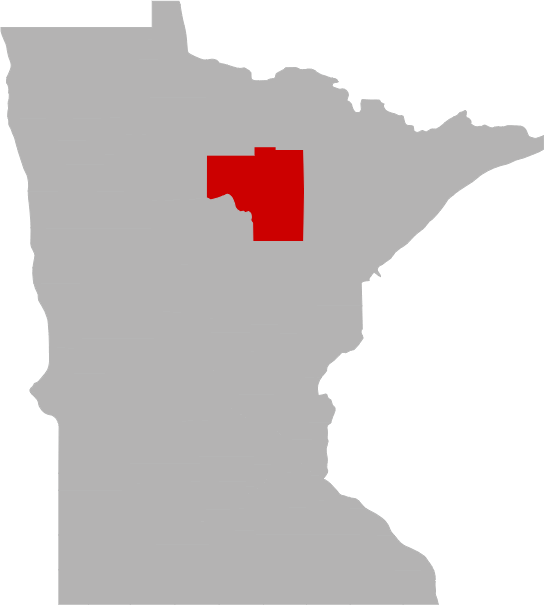
Itasca County, Minnesota

Today's Fishing Forecast
Fishing looks to be moderately active with peak fishing times around 3-5 PM. SEE MORE
Share your catch!
We want to see what you've caught on Rice Lake.Frequently Asked Questions About Rice Lake, MN
- How big is Rice Lake?
- How deep is Rice Lake?
- What kind of fish can you catch in Rice Lake?
- What are the closest cities to Rice Lake?
- Are there places to stay in the Rice Lake area?
- Are there boat launches on Rice Lake?
- Are there places to eat and drink near Rice Lake?
- What is the average air temp for Rice Lake?
- Are there any state parks near Rice Lake?
How big is Rice Lake?
How deep is Rice Lake?
What kind of fish can you catch in Rice Lake?
Other fish species in the lake include White Sucker.
What are the closest cities to Rice Lake?
Are there places to stay in the Rice Lake area?
More Lodging Options
Are there boat launches on Rice Lake?
Are there places to eat and drink near Rice Lake?
Explore the Rice Lake area in a RV
Are you looking for an adventurous vacation option that won't break the bank? Look no further than renting an RV! Contrary to popular belief, the process is much simpler than you might imagine. With just a few easy steps, you'll soon be experiencing the ultimate freedom and convenience of exploring the open road in your very own recreational vehicle. And the best part? RV travel can save you up to 60% compared to other types of vacations! With the money you'll save, you'll be able to travel even more and create unforgettable memories along the way. So why wait? Start planning your next adventure today with an RV rental. Learn more about renting a RV.


2025 Forest River Cherokee Grey Wolf - Family Friendly & Adventure Ready!
Bemidji, MN
History & Status of the Fishery
A targeted survey of the nearshore fish community in Rice Lake was conducted by Fisheries Index of Biological Integrity (IBI) Program Staff from 26 July - 3 August 2023. Fourteen sampling sites were evenly spaced around the lake and each was sampled by backpack electrofishing and seining with a 15-foot or 50-foot seine, where possible. Backpack electrofishing was completed at all 14 sites with two sites sampled from the boat. A 50-foot seine was used to sample seven sites, a 15-foot seine was used at five sites, and soft sediments with abundant vegetation and deep water prevented the use of seines at two sampling sites. Nearshore sampling captured 18 native species of fish including seven species that are intolerant of disturbance (Banded Killifish, Blackchin Shiner, Blacknose Shiner, Iowa Darter, Least Darter, Mimic Shiner, and Rock Bass) and no species that are tolerant of disturbance.
A concurrent summer trap net and gill net survey was conducted on 31 July - 3 August 2023 by IBI Program Staff. Twelve trap nets were set along the shoreline that encompassed multiple habitat types and 12 gill nets were set according to protocol. Bluegill and other sunfish were the most abundant numbers in the trap net catch while Bluegill, Bowfin, and Largemouth Bass comprised the most biomass. Bluegill, Northern Pike, Largemouth Bass, and Black Crappie comprised much of the gill net catch by number and Northern Pike, Largemouth Bass, Bluegill and Bowfin represented the four greatest species by biomass.
Bluegill comprised the greatest numbers and biomass in the trap nets. The Bluegill catch rate in these was just above average for similar lakes (Lake Class 27) at 22.8/ trap net. They ranged in lengths from 2.9 to 8.3 inches with an average of 5.8 inches. While Bluegill captured in the gill nets ranged in lengths from 3.6 to 8.9 inches with an average length of 6.7 inches.
Black Crappie were captured in the gill nets at a higher rate than expected for similar lakes in the state (2.75/net) and ranged in sizes from 5.4 to 12.0 inches with an average length of 8.4 inches. They were captured in the trap nets at a rate of 0.33/net and ranged from 8.0 to 10.6 inches in length with an average length of 9.2 inches across those 4 fish.
The Northern Pike catch rate was lower than average compared to similar lakes at 3.25/net. Northern Pike captured in the gill nets ranged in length from 14.4 to 34.3 inches and averaged 21.7 inches. Northern Pike management changed in 2018 when the north central pike zone regulation was implemented. This regulation requires anglers to release Northern Pike from 22-26-inches long but allows increased harvest of small Northern Pike by allowing a 10 fish bag limit. Only two Northern Pike exceeding 26 inches may be in possession (note-regulations for spearing differ, please consult the fishing regulations synopsis for more information). It is hoped that this regulation will result in improved size quality of Northern Pike.
Largemouth Bass were captured in the gill nets at a higher rate (2.75/net) when compared to similar lakes and the average weight was about average at 0.9 pounds. The catch rate of Largemouth Bass in the trap nets was average compared to similar lakes and the average weight was 1.35 pounds.
Cisco, also known as Tullibee, were captured at a rate of 1.33/net which is typical for similar lakes to Rice Lake. They ranged in lengths from 10.3 to 13.3 inches with an average length of 12.0 inches. Cisco is an important prey species and benefits the production of large predators such as Northern Pike.
There is a diverse large-bodied fish community in Rice Lake. Other species captured in the trap nets or gill nets include Bowfin, Brown Bullhead, Pumpkinseed, Rock Bass, Walleye, Yellow Bullhead, and Yellow Perch.
A temperature-dissolved oxygen profile was collected in the deepest basin on Rice Lake on July 31, 2023, to evaluate the amount of cold, oxygenated water (i.e., oxythermal habitat) available to Cisco, also known as Tullibee. Based on the profile, the top of the thermocline (i.e., the location in the water column with the sharpest transition from warm to cold water) occurred at approximately 20 feet. Dissolved oxygen decreased to below 3.0 mg/L at 22.2 feet, which was within the thermocline, at the time of sampling. The temperature at which dissolved oxygen decreased to below 3.0 mg/L (i.e., TDO3, a single variable to characterize oxythermal habitat) was 13.1?C (55.6?F).
TDO3 values cooler than 21.5?C indicate that oxythermal conditions are favorable for Cisco. Dissolved oxygen concentrations within the thermocline indicate that suitable oxythermal habitat for Cisco was available across a relatively narrow range of depths at the time of sampling during the summer of 2023. Data collected in 2002-2018 further indicate suitable oxythermal habitat in most years, with the least favorable conditions recorded in 2002 with a TDO3 of 20.7. When adequate oxythermal habitat is available, Cisco are not squeezed into unfavorable, warmer water conditions and therefore do not experience higher levels of stress.
The nearshore, trap net, and gill net data from this survey were combined to describe the fish community and provide a Fish-based IBI (FIBI) score. The FIBI uses fish community data to measure a lake's health, and the types of fish species present can help identify any stressors that may be negatively affecting the lake environment. In Minnesota lakes, certain fish species cannot survive without clean water and a healthy habitat (e.g., Blackchin Shiner, Iowa Darter, and Rock Bass), while other species are tolerant of degraded conditions (e.g., Black Bullhead, Fathead Minnow, and Green Sunfish). The FIBI score, composed of several fish community diversity and composition metrics, indicates the overall health of a lake by comparing it to what is expected for a healthy lake. An additional survey was completed on Rice Lake in July 2011 resulting in a similar FIBI score. For additional information on the FIBI, search for "lake index of biological integrity" on the mndnr.gov website.
Data from this survey indicates an exceptional fish community is present in Rice Lake and it is in good health as indicated by an FIBI score well above the impairment threshold for aquatic life use determined for similar lakes. These results are similar to previous findings, which indicated that Rice Lake fully supported aquatic life use based on the FIBI. Data from this survey will contribute biological information about the health of the fish community to Mississippi River - Headwaters Watershed assessment process in coordination with MN Pollution Control Agency.
What is the average air temp for Rice Lake?
Are there any state parks near Rice Lake?
For more Minnesota State Park information see our State Park Guide.
More Nearby Lakes To Explore
There's more lake's to explore around Rice Lake...| DISTANCE | ACRES | MAX DEPTH | |
| Little Rice Lake | 1.7 mi | 139 | 32 ft |
| Guile Lake | 1.8 mi | 88 | 60 ft |
| Long Lake | 1.8 mi | 134 | 85 ft |
| Loon Lake | 2.1 mi | 231 | 69 ft |
| Loon Lake | 2.1 mi | 231 | 69 ft |
| Loon Lake | 2.1 mi | 231 | 69 ft |
| Salter Pond | 2.2 mi | 25 | 0 ft |
| Unnamed Lake | 2.5 mi | 25 | |
| Van Patter Lake | 2.5 mi | 32 | |
| Lost Lake | 2.7 mi | 37 |
