


Horseshoe Lake
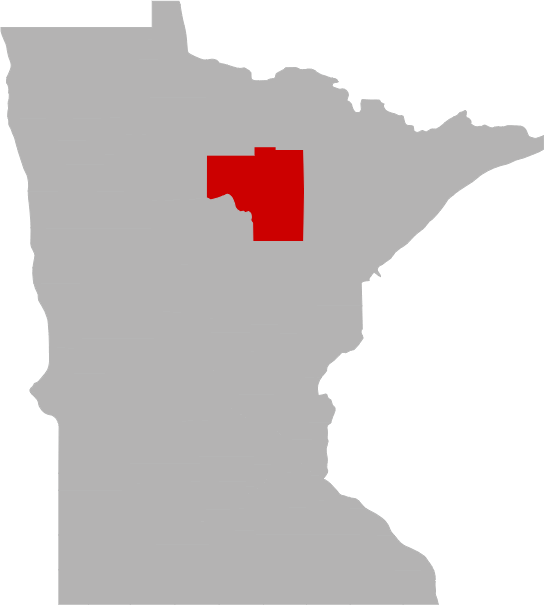
Itasca County, Minnesota

Today's Fishing Forecast
Fishing looks to be moderately active with peak fishing times around 3-5 PM. SEE MORE
Share your catch!
We want to see what you've caught on Horseshoe Lake.Frequently Asked Questions About Horseshoe Lake, MN
- How big is Horseshoe Lake?
- How deep is Horseshoe Lake?
- What kind of fish can you catch in Horseshoe Lake?
- What are the closest cities to Horseshoe Lake?
- Are there places to stay in the Horseshoe Lake area?
- Are there places to eat and drink near Horseshoe Lake?
- What is the average air temp for Horseshoe Lake?
- Are there any state parks near Horseshoe Lake?
How big is Horseshoe Lake?
How deep is Horseshoe Lake?
What kind of fish can you catch in Horseshoe Lake?
Other fish species in the lake include Golden Shiner, Hybrid Sunfish, Johnny Darter, Tadpole Madtom and White Sucker.
What are the closest cities to Horseshoe Lake?
Are there places to stay in the Horseshoe Lake area?
More Lodging Options
Are there places to eat and drink near Horseshoe Lake?
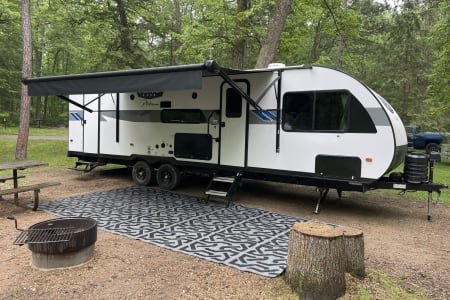
Explore the Horseshoe Lake area in a RV
Are you looking for an adventurous vacation option that won't break the bank? Look no further than renting an RV! Contrary to popular belief, the process is much simpler than you might imagine. With just a few easy steps, you'll soon be experiencing the ultimate freedom and convenience of exploring the open road in your very own recreational vehicle. And the best part? RV travel can save you up to 60% compared to other types of vacations! With the money you'll save, you'll be able to travel even more and create unforgettable memories along the way. So why wait? Start planning your next adventure today with an RV rental. Learn more about renting a RV.
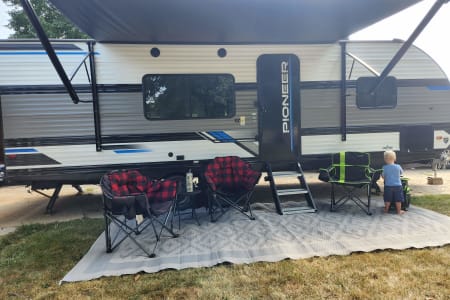

2025 Forest River Cherokee Grey Wolf - Family Friendly & Adventure Ready!
Bemidji, MN

History & Status of the Fishery
Horseshoe Lake is a 270-acre lake in Itasca County near Marcell. Horseshoe Lake is a relatively small, shallow, hardwater lake that has occasionally experienced winterkill. The lake has historically been managed for walleye and centrachids. A population assessment was conducted on Horseshoe Lake in 2007 to determine the status of the fish community.
Black bullhead were the most common fish in the gill nets. The catch rate of 15.0/gill net was within the expected range when compared to similar lakes. Most black bullheads were relatively large with a mean length of 9.3 inches. Bullheads are very resilient to winterkill situations and often dominate the fish community following a winterkill. The current catch rate and lack of smaller individuals suggest stable fish habitat has occurred in recent years.
Northern pike were the second most common fish in the gill nets. The catch of 8.4/gill net falls within the expected range when compared to similar lakes. With the exception of the previous survey in 1997 when the gill net catch was exceptionally high in response to a 1992 winterkill, pike catches from Horseshoe Lake have been about average for the type of lake. Size structure in 2007 was relatively poor as most individuals were less than 21 inches.
Lakes with similar characteristics to Horseshoe do not typically produce large walleye catches and angling potential for this species tends to be limited. Horseshoe Lake has a history of producing walleye in good numbers when compared to similar lakes, however. In 2007, walleye were caught at a rate of 2.4/gill net, which falls within the expected range for this type of lake. Size structure was favorable for anglers as all captured individuals exceeded 19 inches.
Bluegill were the most common fish in the trap net. The catch rate of 18.1/trap net was within the expected range when compared to similar lakes. The bluegill population appears to have increased in recent years as the previous survey in 1997 resulted in a catch of only 0.4/net. In 2007, small size was typical, as most individuals did not exceed 6 inches.
Black crappie have historically occurred in relatively low abundance in Horseshoe Lake and remained in low abundance in 2007. Size distribution was favorable, however, as most captured individuals exceeded 9 inches.
Largemouth bass were sampled in low numbers. Test netting often results in a poor index of bass abundance as bass tend to avoid the nets. Smallmouth bass were sampled in relatively good numbers in the gill nets. The catch of 3.8 is well above average when compared to similar lakes. Size structure of smallmouth bass was favorable to anglers as most individuals exceeded 14 inches.
Other species captured in low numbers include pumpkinseed, rock bass, yellow and brown bullheads, and white sucker.
The protection of water quality and habitat is critical in maintaining or improving fish and wildlife populations. Unfortunately, human activities often negatively impact our lakes. Fertilized turf-grass lawns and failing septic systems along with the removal of shoreline and aquatic vegetation, mowing to the shore, and installing sand blanket beaches result in destabilized shorelines, uncontrolled erosion, and increased run-off, contributing excess nutrients and sediment to the lake and degrading water quality and habitat. By understanding the cumulative impacts of our actions and taking steps to avoid or minimize them, we can help insure our quality water resources can be enjoyed well into the future. Anglers can further help insure quality fishing by practicing selective harvest and catch and release.
What is the average air temp for Horseshoe Lake?
Are there any state parks near Horseshoe Lake?
For more Minnesota State Park information see our State Park Guide.
More Nearby Lakes To Explore
There's more lake's to explore around Horseshoe Lake...| DISTANCE | ACRES | MAX DEPTH | |
| Duck Lake | 1.4 mi | 12 | |
| Bello Lake | 1.5 mi | 527 | 58 ft |
| Pelton Lake | 1.6 mi | 15 | |
| Lundeen Lake | 1.8 mi | 85 | 30 ft |
| Grass Lake | 1.8 mi | 120 | 54 ft |
| Beaver Lake | 1.8 mi | 25 | |
| Rice Lake | 1.8 mi | 32 | |
| Maple Lake | 1.9 mi | 255 | 39 ft |
| Edmund Lake | 2.2 mi | 42 | |
| Thydean Lake | 2.3 mi | 20 |
