


Bolfing Lake
Stearns County, Minnesota

Today's Fishing Forecast
Fishing looks to be very active with peak fishing times around 3-5 PM. SEE MORE


Share Your Catch & Win!
Frequently Asked Questions About Bolfing Lake, MN
- How big is Bolfing Lake?
- How deep is Bolfing Lake?
- What kind of fish can you catch in Bolfing Lake?
- What are the closest cities to Bolfing Lake?
- Are there places to stay in the Bolfing Lake area?
- Are there places to eat and drink near Bolfing Lake?
- What are the fishing regulations for Bolfing Lake?
- What is the average air temp for Bolfing Lake?
How big is Bolfing Lake?
How deep is Bolfing Lake?
What kind of fish can you catch in Bolfing Lake?
Other fish species in the lake include Bluntnose Minnow, Brook Silverside, Common Shiner, Golden Shiner, Greater Redhorse, Green Sunfish, Hybrid Sunfish, Johnny Darter, Shorthead Redhorse, Silver Redhorse, Tadpole Madtom and White Sucker.
What are the closest cities to Bolfing Lake?
Are there places to stay in the Bolfing Lake area?
More Lodging Options
Are there places to eat and drink near Bolfing Lake?
What are the fishing regulations for Bolfing Lake?
 There are specific fishing regulations Bolfing Lake that you need to know. For complete fishing regulations visit the Minnesota Department of Natural Resources. To report a violation call (800) 652-9093. Need a Minnesota fishing license?
Explore the Bolfing Lake area in a RV
Are you looking for an adventurous vacation option that won't break the bank? Look no further than renting an RV! Contrary to popular belief, the process is much simpler than you might imagine. With just a few easy steps, you'll soon be experiencing the ultimate freedom and convenience of exploring the open road in your very own recreational vehicle. And the best part? RV travel can save you up to 60% compared to other types of vacations! With the money you'll save, you'll be able to travel even more and create unforgettable memories along the way. So why wait? Start planning your next adventure today with an RV rental. Learn more about renting a RV.

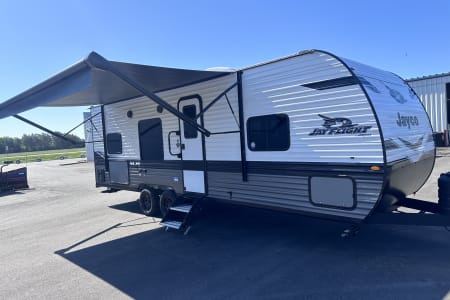
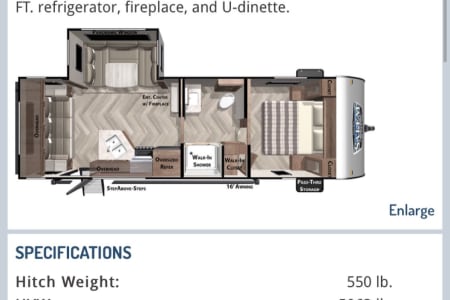
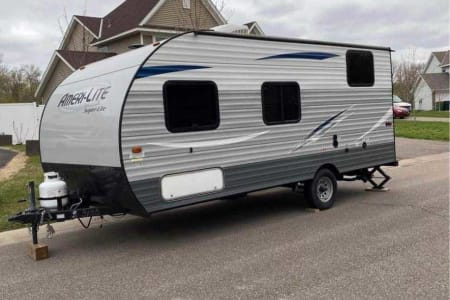
Extremely light, very easy to tow 2019 Gulf Stream Amerilite
Cold spring, MN
What aquatic invasive species are found in Bolfing Lake?
Join us in the fight to prevent the spread of invasive species These sneaky creatures can hitch a ride on boats, clinging onto propellers, anchor lines, and trailers. They can even survive in hidden places like bilge water and ballast tanks, or disguise themselves in dirt and sand that sticks to nets, buckets, anchors, and waders. But don't worry, we have the power to stop them in their tracks with just a few simple steps. So let's do our part and protect our waters from these unwanted invaders.
History & Status of the Fishery
The Sauk River Chain of Lakes (SRCL) is located in south central Stearns County, near the city of Richmond. A dam on the Sauk River at Cold Spring allows users to access over 3,200 acres by water. The Sauk River drains a large portion of central Minnesota before flowing through the chain of lakes. Combined with drainage from the Long Lake sub watershed to the south, the total watershed of the chain is nearly 600,000 acres. Although non-point source pollution (agricultural runoff) continues to be a concern, some major contributors of nutrient loading (such as municipal wastewater discharge) were greatly reduced in the 1980's and 1990's. Efforts continue to be made to address existing non-point pollution sources, but most of the lakes in the chain remain classified as eutrophic.
The Sauk River Chain was re-surveyed will gill nets in 2021, netting results from lakes east of County Road 71 (Zumwalde, Great Northern, Krays, Knaus, Schneider, and Bolfing (East Lakes)) were combined for this report to provide a larger sample size.
From 2000 to 20017, Cedar Island and Horseshoe Lakes were stocked every other year with Walleye fry by the DNR. Beginning in 2015, the DNR started annual fall electrofishing to document the consistency and extent of natural reproduction in the SRCL. After evidence of very strong naturally reproduced year classes in 2014 and 2016, the DNR decided to suspend all Walleye stocking in 2018 to determine if natural reproduction could sustain the Walleye population. Since that time, annual fall electrofishing catch rates of young-of the-year (YOY) in the East lakes have consistently been at or above rates observed during stocked years. The Walleye catch in the East Lakes in 2021 was similar to 2018 but the overall catch rate across all lakes in the SRCL was at an all-time high. Furthermore, 89% of the catch was from non-stocked years. Walleye ranged in length from 10 to 23 inches and averaged 16 inches and 1.4 pounds. Walleye growth was fast reaching 17 inches by age 4.
The catch rate of Northern Pike in 2021 was similar to 2018 and within the range of expected values for lakes similar to the Sauk River Chain. Since 1980, catch rates of Northern Pike in the East Lakes have been relatively stable. Northern Pike ranged in length from 16 to 31 inches with an average length and weight of 22 inches and 2.2 pounds. Nine percent of Northern Pike sampled were longer than 26 inches and two percent were longer than 30 inches.
The Yellow Perch catch rate in 2021 was similar to 2018 but below the expected range for similar lakes. Yellow Perch ranged in length from five to nine inches and averaged seven inches. Prior to the 2003 survey, catch rates of Yellow Perch were significantly higher on these lakes.
Channel Catfish were introduced into the chain in 1976 and have become well established. In the 1985 and 1990 surveys, Channel Catfish were sampled at relatively low numbers in the East Lakes, but the population expanded in the early 1990s, reaching an all-time high of 26.5/ gill net in 2013. The Channel Catfish population appears to have declined as catch rates have decreased for the second consecutive survey, and averaged 14.3/ net in 2021. Channel Catfish ranged in length from 10 to 27 inches with an average length and weight of 20 inches and 3 pounds. Reproduction has been consistent as 17 age classes were sampled however the majority (82%) of the catch were age-10 or older. Catfish growth was slow reaching 17.8 inches by age 5.
The Black Crappie catch in 2021 was similar to 2018 in the East Lakes and still within the range of expected values for the lake class. Black Crappie ranged in length from five to 12 inches with an average length of nine inches. Eight year classes of crappie were sampled but the majority (82%) were age-3 and younger. Growth of crappie was fast, reaching an average length of 9.7 inches in three years.
Gill nets are not normally used to assess relative abundance of Bluegill, but a total of 50 Bluegill were sampled from the East Lakes ranging in length from four to nine inches with an average length of 7.4 inches. Six years classes were represented in the age sample with 84% being age-4 or younger. Bluegill growth was fast, reaching seven inches in three years.
Since 2011, Horseshoe and Cedar Island lakes have each been stocked with 515 Muskellunge fingerlings every other year. Standard summer surveys are not well suited to evaluate Muskellunge populations, they are better evaluated using spring surveys when adult Muskellunge concentrate in the shallows to spawn;. Spring surveys have not been conducted to assess the Muskellunge population yet because the population is still developing. However anglers have reported catching fish in excess of 40 inches in length.
Spring electrofishing is the best gear for sampling bass, but was not conducted in this survey. However, low numbers Largemouth Bass and Smallmouth Bass were caught in the gill nets. Other species sampled in low numbers included: Black and Brown bullhead, Pumpkinseed, Shorthead Redhorse, White Sucker, and Yellow bullhead.
What is the average air temp for Bolfing Lake?
More Nearby Lakes To Explore
There's more lake's to explore around Bolfing Lake...| DISTANCE | ACRES | MAX DEPTH | |
| Krays Lake | 0.5 mi | 95 | 40 ft |
| Great Northern Lake | 0.7 mi | 196 | 16 ft |
| Knaus Lake | 0.8 mi | 216 | 20 ft |
| Zumwalde Lake | 1.1 mi | 128 | 23 ft |
| Schneider Lake | 1.2 mi | 60 | 52 ft |
| Cedar Island Lake | 1.7 mi | 986 | 75 ft |
| Shackman Lake | 2.3 mi | 57 | |
| Thein Lake | 2.4 mi | 35 | |
| Unnamed Lake | 3.0 mi | 12 | |
| Horseshoe Lake | 3.3 mi | 629 | 57 ft |
