


East Hunter Lake
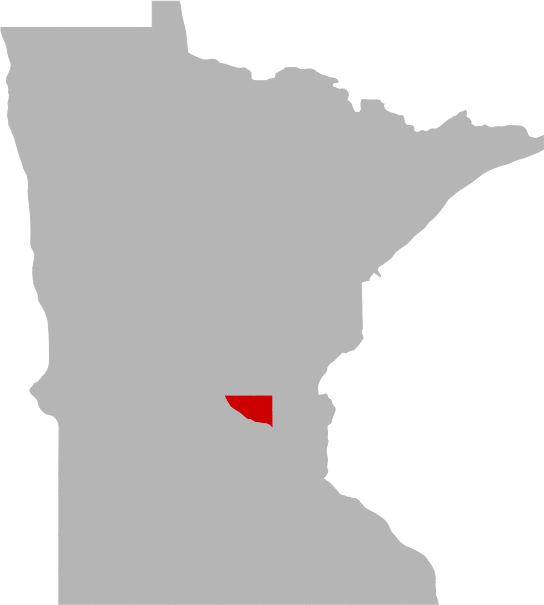
Sherburne County, Minnesota

Today's Fishing Forecast
Fishing looks to be very active with peak fishing times around 7-8 AM and 3-5 PM. SEE MORE

Share Your Catch & Win!
Frequently Asked Questions About East Hunter Lake, MN
- How big is East Hunter Lake?
- How deep is East Hunter Lake?
- What kind of fish can you catch in East Hunter Lake?
- What are the closest cities to East Hunter Lake?
- Are there places to stay in the East Hunter Lake area?
- Are there places to eat and drink near East Hunter Lake?
- What is the average air temp for East Hunter Lake?
How big is East Hunter Lake?
How deep is East Hunter Lake?
What kind of fish can you catch in East Hunter Lake?
Other fish species in the lake include Golden Shiner, Green Sunfish, Hybrid Sunfish and White Sucker.
What are the closest cities to East Hunter Lake?
Are there places to stay in the East Hunter Lake area?
More Lodging Options
Are there places to eat and drink near East Hunter Lake?
Explore the East Hunter Lake area in a RV
Are you looking for an adventurous vacation option that won't break the bank? Look no further than renting an RV! Contrary to popular belief, the process is much simpler than you might imagine. With just a few easy steps, you'll soon be experiencing the ultimate freedom and convenience of exploring the open road in your very own recreational vehicle. And the best part? RV travel can save you up to 60% compared to other types of vacations! With the money you'll save, you'll be able to travel even more and create unforgettable memories along the way. So why wait? Start planning your next adventure today with an RV rental. Learn more about renting a RV.
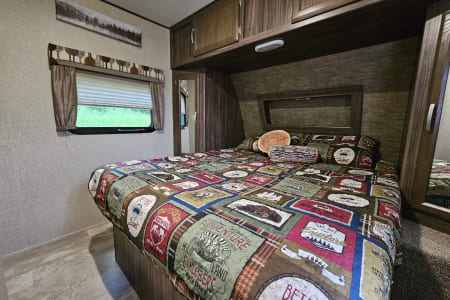


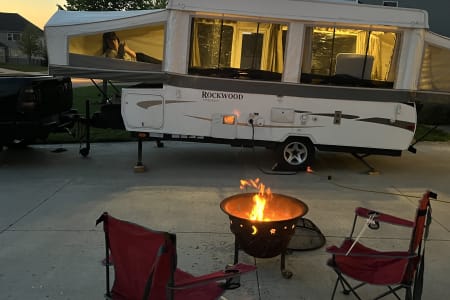
?Poppy? 2009 Forest River Rockwood Premier with heat and AC!
Brooklyn park, MN
History & Status of the Fishery
East and West Hunter Lakes are small, shallow, connected lakes located four miles west of Zimmerman in eastern Sherburne County. In 1986 Livonia Township secured title to a parcel on the northwest shore of West Hunter Lake and made arrangements with DNR for a cooperative access. The Hunter Lakes have a history of oxygen depletion and winterkill of fish has been observed every 5-6 years. Management has been limited to oxygen testing and re-stocking of bluegill and black crappie after winterkill. The most recent stocking was in 2001. This is the first survey since the initial survey in 1987.
Water quality has been an ongoing problem in the lakes with algal blooms common. Curled pondweed was found to grow at or near the surface on 2.8% of the surface area on West Hunter Lake and 92% of the surface area on East Hunter Lake. Twenty-seven species of aquatic plants were noted with coontail and northern water milfoil the most abundant.
Two notable changes from the 1987 survey were catches of northern pike and black bullhead. Northern pike were not taken in the 1987 survey although no gill nets were used. Catch rates are at or above the normal range when compared to similar lakes. Anglers have a good opportunity to catch a three pound northern pike. The golden shiner population appears high and provides forage for northern pike. Black bullheads were still abundant but at much lower levels than in 1987.
A primary management species for the Hunter Lakes is largemouth bass. The Hunter Lakes have an excellent bass population with a wide range of sizes available to anglers including fish up to 18 inches. Little is known about the former condition of the largemouth population as 2007 was the first opportunity to sample with day-time electrofishing.
The Hunter Lakes have abundant populations of bluegills but not black crappies. Few quality size bluegills can be found in the Hunter Lakes and only one black crappie larger than seven inches was captured in the trap nets. The average size of the bluegills was about five inches and the average size of black crappie was six inches. Bluegills in the Hunter Lakes grow slowly. A seven inch bluegill is seven years old.
Other species in the fish community include: hybrid and pumpkinseed sunfish, white sucker.
Improving the water quality in the Hunter Lakes should be a high priority of the county and landowners around the lake. Some effort may be needed to identify any sources of excess phosphorus and plans developed to reduce these sources. Buffer strips along inlets and lakeshore property are encouraged to reduce nutrients entering the lake. Maintaining adequate septic systems and keeping grass clippings and raked leaves out the lake will help reduce the amount of nutrients entering the lake, thus slowing algal and vegetation growth.
What is the average air temp for East Hunter Lake?
More Nearby Lakes To Explore
There's more lake's to explore around East Hunter Lake...| DISTANCE | ACRES | MAX DEPTH | |
| West Hunter Lake | 0.3 mi | 61 | 6 ft |
| Stony Lake | 1.6 mi | 35 | |
| Stone Lake | 2.0 mi | 37 | |
| Lake Fremont | 3.3 mi | 493 | 8 ft |
| Blue Lake | 3.4 mi | 263 | 31 ft |
| Prairie Hill Lake | 3.7 mi | 27 | |
| Sandy Lake | 3.9 mi | 64 | 41 ft |
| Unnamed Lake | 4.0 mi | 10 | |
| Burns Lake | 4.1 mi | 95 | 18 ft |
| Rice Lake | 4.6 mi | 12 |
