


East Silent Lake
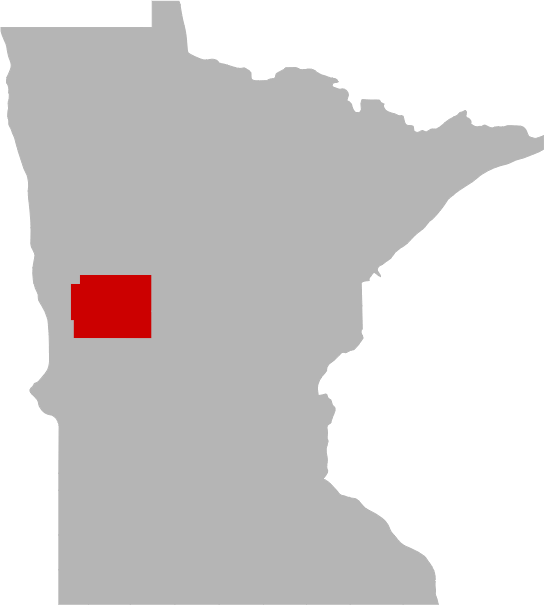
Otter Tail County, Minnesota
Share your catch!
We want to see what you've caught on East Silent Lake.Frequently Asked Questions About East Silent Lake, MN
- How big is East Silent Lake?
- How deep is East Silent Lake?
- What kind of fish can you catch in East Silent Lake?
- What are the closest cities to East Silent Lake?
- Are there places to stay in the East Silent Lake area?
- Are there boat launches on East Silent Lake?
- Are there places to eat and drink near East Silent Lake?
- What is the average air temp for East Silent Lake?
- Are there any state parks near East Silent Lake?
How big is East Silent Lake?
How deep is East Silent Lake?
What kind of fish can you catch in East Silent Lake?
Other fish species in the lake include Banded Killifish, Blacknose Shiner, Bluntnose Minnow, Common Shiner, Fathead Minnow, Golden Shiner, Green Sunfish, Hybrid Sunfish, Iowa Darter, Johnny Darter, Sand Shiner, Shorthead Redhorse, Spottail Shiner and White Sucker.
What are the closest cities to East Silent Lake?
Are there places to stay in the East Silent Lake area?
More Lodging Options
Are there boat launches on East Silent Lake?
Are there places to eat and drink near East Silent Lake?
What aquatic invasive species are found in East Silent Lake?
Join us in the fight to prevent the spread of invasive species These sneaky creatures can hitch a ride on boats, clinging onto propellers, anchor lines, and trailers. They can even survive in hidden places like bilge water and ballast tanks, or disguise themselves in dirt and sand that sticks to nets, buckets, anchors, and waders. But don't worry, we have the power to stop them in their tracks with just a few simple steps. So let's do our part and protect our waters from these unwanted invaders.
History & Status of the Fishery
East Silent Lake is a 310-acre mesotrophic (moderately fertile) lake located in north-central Otter Tail County approximately six miles west of Dent, MN. The immediate watershed is composed primarily of agricultural land interspersed with hardwood woodlots. The maximum depth is 45 feet; however, 18% of the lake is less than 15 feet in depth. The secchi disk reading during the 2022 survey was 14.5 feet. Previous secchi disk readings have ranged from 12.5 to 22.0 feet.
The east shoreline of East Silent Lake has been extensively developed. Development is also scattered along the north and south shorelines. Homes, cabins, and two resorts compose the majority of the development. A DNR owned public water access is located off of County Road 41 along the west shoreline of the lake. The shoal water substrates consist primarily of sand and gravel. Emergent aquatic macrophytes such as hardstem bulrush and common cattail are extremely rare.
Walleye and Northern Pike are the dominant gamefish species in the fish community of East Silent Lake; however, Largemouth Bass, Smallmouth Bass, Bluegill, and Black Crappie abundance has increased in recent surveys.
A special gillnetting survey was conducted to analyze the Walleye and Northern Pike populations.
Walleye abundance has declined over the most recent series of surveys. Walleyes ranged in length from 11.3 to 23.7 inches with an average length and weight of 17.5 inches and 1.9 pounds. Walleyes attain an average length of 15.5 inches at four years of age.
Northern Pike abundance has increased slightly over the most recent series of surveys. Northern Pike ranged in length from 11.8 to 29.5 inches with an average length and weight of 19.0 inches and 1.5 pounds. Northern Pike attain an average length of 25.3 inches at four years of age.
Smallmouth Bass ranged in length from 8.7 to 18.9 inches with an average length and weight of 12.3 inches and 1.3 pounds. Smallmouth Bass attain an average length of 13.8 inches at four years of age.
Black Crappies ranged in length from 4.4 to 12.4 inches with an average length of 9.9 inches. Black Crappies attain an average length of 9.9 at five years of age.
Anglers can maintain the quality fishing that this lake has to offer by practicing selective harvest. Selective harvest encourages the release of medium to large-size fish while allowing the harvest of more abundant smaller fish for table fare. Releasing the medium to large fish will ensure that the lake will have enough spawning age fish on an annual basis and will provide anglers with opportunities to catch more large fish in the future.
East Silent Lake was listed as infested with zebra mussels in 2018. Aquatic invasive species are threatening Minnesota waters. Aquatic invasive species can potentially harm water quality, water recreation, aquatic habitat, native species, and fish populations. Anglers can help prevent the introduction and spread of invasive species by following watercraft transportation laws.
What is the average air temp for East Silent Lake?
Are there any state parks near East Silent Lake?
For more Minnesota State Park information see our State Park Guide.
More Nearby Lakes To Explore
There's more lake's to explore around East Silent Lake...| DISTANCE | ACRES | MAX DEPTH | |
| Warner Lake | 1.0 mi | 40 | |
| Club Lake | 1.2 mi | 20 | |
| Club Lake | 1.3 mi | 27 | |
| Moore Lake | 1.3 mi | 116 | |
| Unnamed Lake | 1.5 mi | 25 | |
| Sunfish Lake | 1.5 mi | 50 | 38 ft |
| Elbow Lake | 1.5 mi | 96 | 85 ft |
| West Silent Lake | 1.7 mi | 347 | 58 ft |
| Ottos Lake | 2.1 mi | 54 | |
| Unnamed Lake | 2.2 mi | 12 |


