


Trident Lake
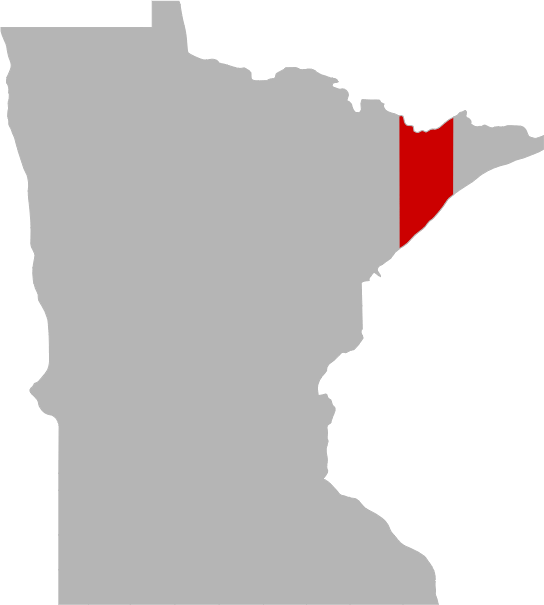
Lake County, Minnesota
Share your catch!
We want to see what you've caught on Trident Lake.Frequently Asked Questions About Trident Lake, MN
- How big is Trident Lake?
- How deep is Trident Lake?
- What kind of fish can you catch in Trident Lake?
- Are there places to stay in the Trident Lake area?
- Are there places to eat and drink near Trident Lake?
- What is the average air temp for Trident Lake?
How big is Trident Lake?
How deep is Trident Lake?
What kind of fish can you catch in Trident Lake?
Other fish species in the lake include Hybrid Sunfish and White Sucker.
Are there places to stay in the Trident Lake area?
More Lodging Options
Are there places to eat and drink near Trident Lake?
History & Status of the Fishery
Trident Lake is in Ecological Lake Class 12, which consists of 90 lakes in northeast Minnesota that are small, shallow, and have soft (unmineralized) water. Trident Lake is ranked as mesotrophic, according to Carlson's Trophic State Index.Trident Lake is entirely within a non-motorized portion of the Boundary Water Canoe Area Wilderness. Portage access trails are from Ensign Lake (50 rods or 100 rods, depending on the route) and from Frog Lake (100 rods). There are two campsites on the lake maintained by the United States Forest Service.Trident Lake was partially thermally stratified on 06/26/2000 and retained 2 ppm oxygen to the bottom, where the temperature (62 F) was five degrees cooler than at the surface. Two small inlets drain marshy beaver impoundments to the east and north. The outlet to Ensign Lake has a beaver dam with a 3 ft head which limits fish movement. Shoal substrates are mostly rubble, boulder, and gravel. Sedges and sweetgale ring much of the lake; other aquatic plants grow to a depth of 6 ft and are mostly restricted to the inlet and outlet bays.Fish sampling in this fisheries lake survey consisted of three gillnet sets. Trapnets were not used due to the difficult portage access, and shoreline seines were not used due to the lack of suitable seining areas.The total catch of fish (all species combined) in Trident Lake of 39.3 fish/gillnet (43.8 lb/gillnet) was in the third quartile for this lake class. Lake Class 12 is one of the most productive lake classes in northeast Minnesota, in terms of gillnet catches of fish. Fish populations in Trident Lake were dominated by bluegill sunfish, northern pike, walleye, white sucker, and yellow perch. Low numbers of other species were captured. In addition to the species listed in the gillnet catch, largemouth bass fry were visually observed by the survey crew. Largemouth and smallmouth bass are "net shy" and their abundance was likely underrepresented in the gillnet catch.Bluegill are usually caught best in trapnets. Although comparative lake class bluegill catch data for gillnets is not available, the catch in Trident Lake of 14.0/gillnet was quite high. Bluegill sizes averaged 6.7" (0.28 lb); the largest was 9.6". Most bluegill were ages three and six, from the 1997 and 1994 year classes. Bluegill growth was in the fourth quartile for area lakes.Northern pike numbers in 2000 (8.7/gillnet) were in the fourth quartile for this lake class. Pike sizes averaged 21.2" (3.2 lb), which was in the fourth quartile for this lake class; the largest pike was 36.0". Pike growth was in the first or second quartiles for area lakes, depending on the age.Walleye numbers in 2000 (3.0/gillnet) were at the first quartile for this lake class. Walleye sizes averaged 15.4" (1.3 lb) which was in the third quartile for this lake class; the largest walleye was 22.0". Walleye scales were difficult to read, but walleye growth appeared to be in the second quartile for area lakes.White sucker numbers in 2000 (5.3/gillnet) were in the second quartile for this lake class. Sucker sizes averaged 14.2" (1.4 lb), which was in the first quartile for this lake class; the largest sucker was 21.3".Yellow perch numbers in 2000 (6.3/gillnet) were near the median for this lake class. Perch sizes averaged 6.2" (0.09 lb), which was in the first quartile for this lake class. Most perch were age four, from the 1996 year class. Perch scales were difficult to read, but perch growth appeared to be in the second quartile for area lakes.Neascus (black spot) was found on a few of the northern pike examined. A few yellow perch had yellow grub, and the single smallmouth bass captured had bass tapeworm. These are all native parasites that are common to the area. They cannot infect humans, are often removed by filleting, and are killed at temperatures used to cook fish.
What is the average air temp for Trident Lake?
More Nearby Lakes To Explore
There's more lake's to explore around Trident Lake...| DISTANCE | ACRES | MAX DEPTH | |
| Unnamed Lake | 0.5 mi | 15 | |
| Frog Lake | 0.5 mi | 53 | 38 ft |
| Ensign Lake | 0.9 mi | 1,411 | 30 ft |
| Birch Lake | 1.7 mi | 836 | 34 ft |
| Perdu Lake | 1.9 mi | 10 | |
| Unnamed Lake | 1.9 mi | 10 | |
| Vera Lake | 2.0 mi | 250 | 55 ft |
| Ashigan Lake | 2.3 mi | 153 | 59 ft |
| Haven Lake | 2.5 mi | 14 | 7 ft |
| Spigot Lake | 2.5 mi | 17 |


