


Wolf Lake
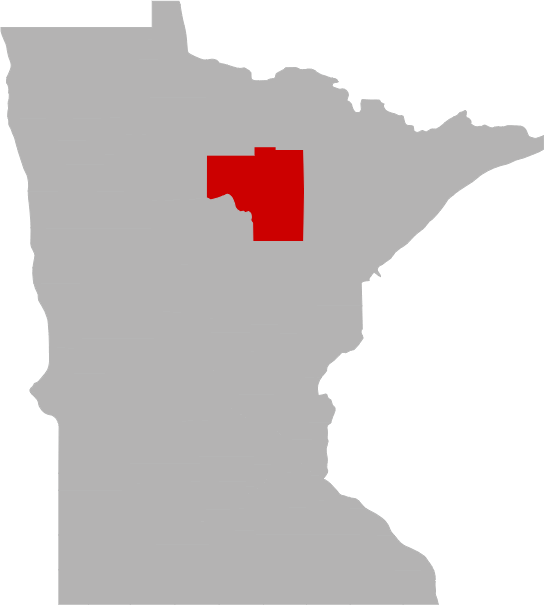
Itasca County, Minnesota

Today's Fishing Forecast
Fishing looks to be fairly active with peak fishing times around 3-4 PM. SEE MORE
Share your catch!
We want to see what you've caught on Wolf Lake.Frequently Asked Questions About Wolf Lake, MN
- How big is Wolf Lake?
- How deep is Wolf Lake?
- What kind of fish can you catch in Wolf Lake?
- Are there places to stay in the Wolf Lake area?
- Are there boat launches on Wolf Lake?
- Are there places to eat and drink near Wolf Lake?
- What is the average air temp for Wolf Lake?
- Are there any state parks near Wolf Lake?
How big is Wolf Lake?
How deep is Wolf Lake?
What kind of fish can you catch in Wolf Lake?
Other fish species in the lake include Blackchin Shiner, Golden Shiner, Johnny Darter, Shorthead Redhorse, Tadpole Madtom and White Sucker.
Are there places to stay in the Wolf Lake area?
More Lodging Options
Are there boat launches on Wolf Lake?
Are there places to eat and drink near Wolf Lake?
Explore the Wolf Lake area in a RV
Are you looking for an adventurous vacation option that won't break the bank? Look no further than renting an RV! Contrary to popular belief, the process is much simpler than you might imagine. With just a few easy steps, you'll soon be experiencing the ultimate freedom and convenience of exploring the open road in your very own recreational vehicle. And the best part? RV travel can save you up to 60% compared to other types of vacations! With the money you'll save, you'll be able to travel even more and create unforgettable memories along the way. So why wait? Start planning your next adventure today with an RV rental. Learn more about renting a RV.

2025 Forest River Cherokee Grey Wolf - Family Friendly & Adventure Ready!
Bemidji, MN


History & Status of the Fishery
Wolf Lake is a class 37 lake located 14 miles north of Nashwauk, MN. The Prairie River flows through the lake and it has a small dam at the outlet. The lake has one earthen public access and low shoreline development. The 2001 lake management plan indicates northern pike and walleye as the primary species of management with black crappie and bluegill as secondary species. The 2010 assessment also included additional sampling of near shore fish species in order to calculate an Index of Biotic Integrity (IBI) score.
Black crappie were sampled with trap nets at a rate of 2.4 fish/net. The catch was above the 1998 catch rate of 1.2/net and between the lake class first quartile and median values. The sampled fish ranged from 8.4 to 13.1 inches and had a mean length of 11.4 inches. Five year-classes from 4 to 8 years old were identified from scales. Growth was good compared to statewide averages with fish averaging 10.2 inches after five years of growth.
Trap-net catch rates for bluegill have been below the lake class first quartile value of 3.1 fish/net in all assessments. The 2010 trap-net catch of 1.8 fish/net equaled the highs observed in 1972 and 1991. Bluegill lengths ranged from 3.9 to 9.3 inches and had a mean length of 8.1 inches. Four age-classes were identified from scales ranging from age 2 to age 6. Growth rates were excellent compared to other class 37 lakes; mean back-calculated length-at-age 5 was 7.5 inches compared to the lake class median of 6.1 inches.
In four of the previous five assessments since 1972, northern pike gill-net catch rates have ranged from 1.6 to 2.8 fish/net. The highest catch occurred in 1978 when 10.2 fish/gill net were captured. In 2010, northern pike gill-net catch was 6.5 fish/net which was above the lake class median of 5.0 and management goal of 2.8 fish/net. The sampled fish ranged from 9.3 to 37.1 inches and had a mean length of 21.4 inches. The length distributions resulted in PSD, RSD-P, and RSD-M values of 68, 32, and 16 respectively. Nine year-classes were identified from cliethra and scales ranging from age 1 to age 10. Northern pike averaged 20.2 inches by age 4 which was similar to the statewide average of 20.5.
Walleye catch rates have ranged from 1.5 to 4.8 since 1972. In 2010, the catch was the highest on record at 4.8 fish/gill net and exceeded the management goal of 2.4 fish/gill net. The walleye gill-net catch rate exceeded the third quartile value of 4.0 fish/net for class 37 lakes. The sampled fish ranged from 6.8 to 17.3 inches and had a mean length of 10.4 inches. Five year classes from age 1 to 6 were identified from scales, opercles and otoliths. The 2009 year class was the largest having 9 of the 16 aged fish. The lake was last stocked with walleye in 1999 indicating all the sampled walleye resulted from natural reproduction. Growth was similar to statewide averages for all ages. Walleye averaged 13.4 inches at age 4.
Yellow perch gill-net catch rates have declined in each assessment since a high of 23.2 fish/net in 1978. In 2010, the catch was the lowest on record at 4.0 fish/net; but still remained above the lake class first quartile value. The sampled fish ranged from 5.3 to 11.3 inches and had a mean length of 8.0 inches. Age and growth information was not collected.
Other species observed during the population assessment included golden shiner, pumpkinseed sunfish, and white sucker. Additional species observed during IBI sampling included blackchin shiner, Johnny darter, tadpole madtom, and two unknown species.
What is the average air temp for Wolf Lake?
Are there any state parks near Wolf Lake?
For more Minnesota State Park information see our State Park Guide.
More Nearby Lakes To Explore
There's more lake's to explore around Wolf Lake...| DISTANCE | ACRES | MAX DEPTH | |
| Scooty Lake | 2.1 mi | 167 | 75 ft |
| Unnamed Lake | 2.1 mi | 22 | |
| Hartley Lake | 2.3 mi | 288 | 49 ft |
| Unnamed Lake | 2.4 mi | 20 | |
| Unnamed Lake | 2.7 mi | 22 | |
| Unnamed Lake | 2.9 mi | 15 | |
| Someman Lake | 3.0 mi | 32 | 13 ft |
| Christmas Lake | 3.2 mi | 27 | |
| O'Leary Lake | 3.5 mi | 140 | 14 ft |
| Stumple Lake | 3.7 mi | 12 |
