


Gull Lake
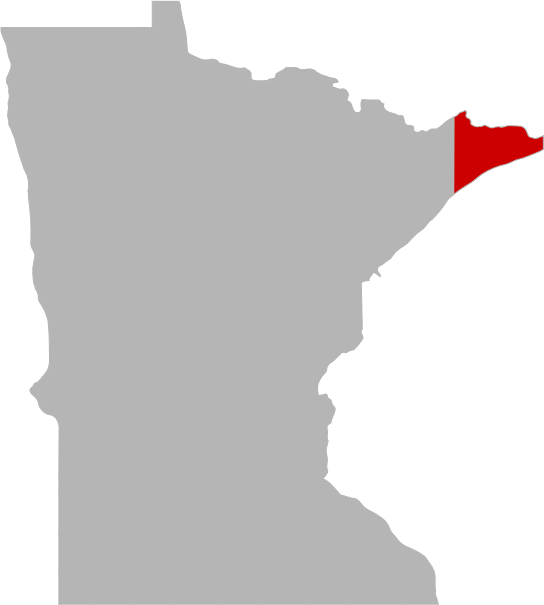
Cook County, Minnesota

Today's Fishing Forecast
Fishing looks to be moderately active with peak fishing times around 2-4 PM. SEE MORE
Share your catch!
We want to see what you've caught on Gull Lake.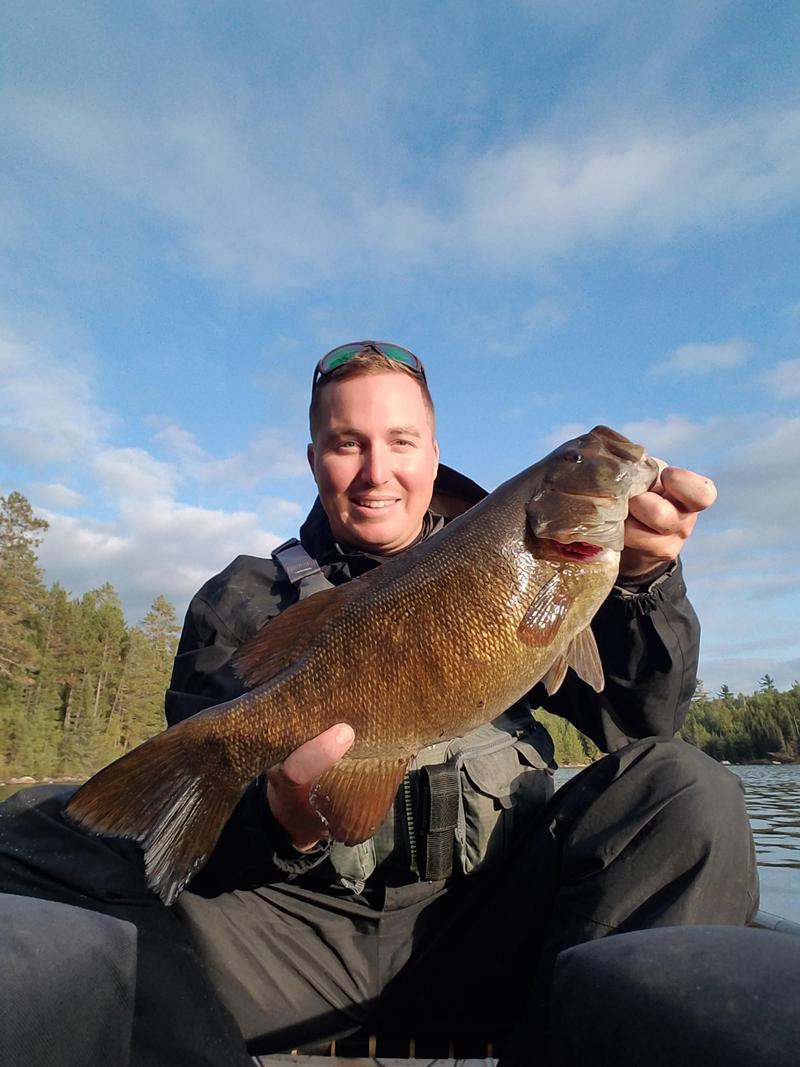
Frequently Asked Questions About Gull Lake, MN
- How big is Gull Lake?
- How deep is Gull Lake?
- What kind of fish can you catch in Gull Lake?
- Are there places to stay in the Gull Lake area?
- Are there topographical lake maps available Gull Lake?
- Are there boat launches on Gull Lake?
- Are there places to eat and drink near Gull Lake?
- What are the fishing regulations for Gull Lake?
- What is the average air temp for Gull Lake?
How big is Gull Lake?
How deep is Gull Lake?
What kind of fish can you catch in Gull Lake?
Other fish species in the lake include Cisco (Tullibee), Green Sunfish, Lake Whitefish, Longnose Sucker and White Sucker.
Are there places to stay in the Gull Lake area?
More Lodging Options
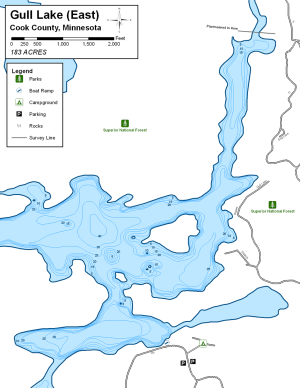
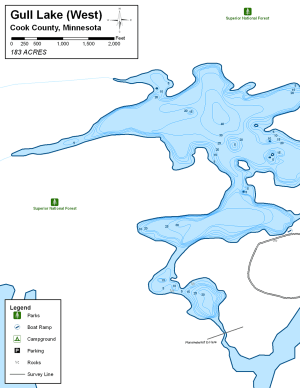
Are there topographical lake maps available Gull Lake?
Are there boat launches on Gull Lake?
Are there places to eat and drink near Gull Lake?
What are the fishing regulations for Gull Lake?
 There are specific fishing regulations Gull Lake that you need to know. For complete fishing regulations visit the Minnesota Department of Natural Resources. To report a violation call (800) 652-9093. Need a Minnesota fishing license?
General Restrictions
- Closed to fishing from April 1, 2017 through May 26, 2017.
History & Status of the Fishery
Gull Lake lies on the Sea Gull River between Sea Gull Lake (upstream) and Saganaga Lake (downstream), and was last surveyed in 1998. Movement of fish between Saganaga and Gull Lakes occurs regularly, while a barrier falls blocks movement of fish (and other organisms) from Gull Lake to Sea Gull Lake. This standard survey was scheduled to assess attainment of goals for Walleye and Northern Pike in Gull Lake, and as part of the evaluation of a special Walleye regulation implemented on all three lakes in 2016. That regulation reduced the Walleye bag limit to three fish, with one fish over 20 inches allowed in possession, and established a minimum size limit of 17 inches in an effort to address a decline in Walleye recruitment in this system.
Fair numbers of Walleye were found in 2017, but most were small. Although the catch was low for a lake of this type, it was similar to past catches in this lake, and met the goal for Walleye established in the current (2008) lake management plan (a minimum gill net catch of 1.6 fish/set, with no size goal set). Only five year classes contributed to the 2017 catch, with the strongest apparently produced in 2015 and 2014. The 2014 year class may have been supplemented by Walleye fry stocking done in Saganaga Lake that year, but the 2015 year class had been produced naturally. Growth of young Walleye had apparently been slow. Fish reached a mean length of 9.1 inches at the end of their third year, compared to an area average of 10.5 inches.
The Walleye special regulation implemented on this lake in 2016 has not been in place long enough to have much influence on the lake's Walleye population. This survey yielded some information on the potential strength of a couple recent year classes. Future surveys will help us determine whether the minimum size limit improves recruitment from these year classes.
The 2017 Northern Pike gill net catch also met the long range goal for the species in the 2008 management plan, and the size goal in that plan (some fish over 25 inches present) was met by the capture of two larger fish in gill nets. Although the gill net catch was low for a lake of this type, it was similar to catches seen in this lake in the past, which have never exceeded 1.7 fish/set. Several year classes, including fish as old as ten years, contributed to the Northern Pike catch, although none of those year classes appeared to have been strong. Growth of young fish had apparently been slow; three-year-old fish reached a average length of 15.8 inches at the end of their third year, compared to an area average of 18.2 inches.
Walleye and Northern Pike had to compete with Black Crappie and Smallmouth Bass for what appeared to have been a very small Yellow Perch forage base. The Yellow Perch gill net catch was low for a lake of this type, and for this lake historically. Only a handful of young-of-year (YOY) Yellow Perch were taken in 0.25-inch-mesh trap nets.
Black Crappie were sampled for the first time in Gull Lake in 2017, after appearing a few years earlier in Sea Gull and Saganaga Lakes. The trap net catch was high for a lake of this type, but most of the fish taken were small (under eight inches in length). Only three year classes contributed to the 2017 catch. At least one angling party reported some success fishing for crappie on Gull Lake over the winter of 2018.
Gull Lake continued to support average numbers of Smallmouth Bass in 2017. The catch included mostly larger fish, suggesting recent recruitment may have been low. However, the catch of YOY Smallmouth Bass in 0.25-inch-mesh trap nets was above normal for a lake of this type, creating the possibility of a stronger year class coming from 2017.
Bluegill were first sampled in Gull Lake in 1993, although none were found in the next (1998) survey. In 2017 only 0.25-in-mesh trap nets captured the species, and all fish taken were very small (YOY or one-year-old fish). As yet there have been no reports of Bluegill being taken by anglers in this lake.
Cisco have not usually been found in lakes of this type, but have often been taken in Gull Lake, where they appeared to have been fairly abundant in 2017. A few Lake Whitefish were also present. Water temperature and dissolved oxygen measurements done as part of this survey suggested that cold-water habitat for both species might be limited, with tolerable conditions found only across a narrow range of depths. Both species could provide high-quality forage for Northern Pike and the larger Walleye sometimes found in this lake.
Gull Lake supported an unsually diverse (for this area) fish community in 2017, with 12 species taken in 0.25-in-mesh trap nets. The catch in that gear included species not usually found in this area, like Tadpole Madtoms and Spottail Shiners.
More Nearby Lakes To Explore
There's more lake's to explore around Gull Lake...| DISTANCE | ACRES | MAX DEPTH | |
| Onagon Lake | 1.0 mi | 22 | |
| Gump Lake | 1.0 mi | 12 | |
| Unnamed Lake | 1.4 mi | 10 | |
| Grandpa Lake | 1.6 mi | 125 | 55 ft |
| Roy Lake | 1.6 mi | 58 | 45 ft |
| Ambush Lake | 1.7 mi | 31 | 15 ft |
| Diamond Lake | 1.7 mi | 17 | |
| Unnamed Lake | 1.8 mi | 15 | |
| Tenor Lake | 2.3 mi | 21 | 11 ft |
| Meditation Lake | 2.4 mi | 28 | 31 ft |
