


East Twin Lake
Anoka County, Minnesota


Share Your Catch & Win!
Frequently Asked Questions About East Twin Lake, MN
- How big is East Twin Lake?
- How deep is East Twin Lake?
- What kind of fish can you catch in East Twin Lake?
- What are the closest cities to East Twin Lake?
- Are there places to stay in the East Twin Lake area?
- Are there topographical lake maps available East Twin Lake?
- Are there boat launches on East Twin Lake?
- Are there places to eat and drink near East Twin Lake?
- What is the average air temp for East Twin Lake?
How big is East Twin Lake?
How deep is East Twin Lake?
What kind of fish can you catch in East Twin Lake?
Other fish species in the lake include Blackchin Shiner, Central Mudminnow, Golden Shiner, Green Sunfish, Hybrid Sunfish and White Sucker.
What are the closest cities to East Twin Lake?
Are there places to stay in the East Twin Lake area?
More Lodging Options
Are there topographical lake maps available East Twin Lake?
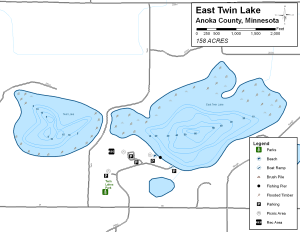
Are there boat launches on East Twin Lake?
Are there places to eat and drink near East Twin Lake?
Explore the East Twin Lake area in a RV
Are you looking for an adventurous vacation option that won't break the bank? Look no further than renting an RV! Contrary to popular belief, the process is much simpler than you might imagine. With just a few easy steps, you'll soon be experiencing the ultimate freedom and convenience of exploring the open road in your very own recreational vehicle. And the best part? RV travel can save you up to 60% compared to other types of vacations! With the money you'll save, you'll be able to travel even more and create unforgettable memories along the way. So why wait? Start planning your next adventure today with an RV rental. Learn more about renting a RV.
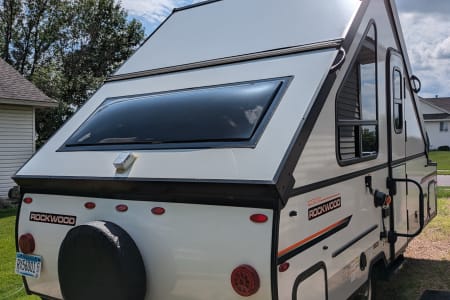
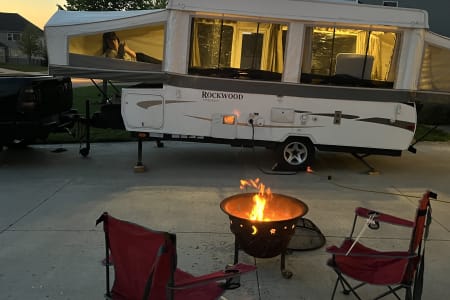
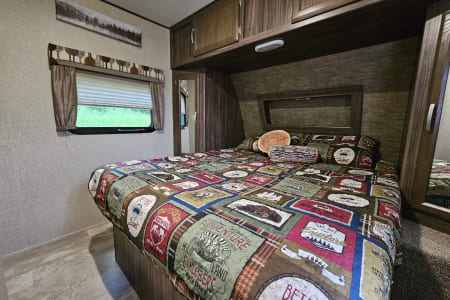
?Poppy? 2009 Forest River Rockwood Premier with heat and AC!
Brooklyn park, MN
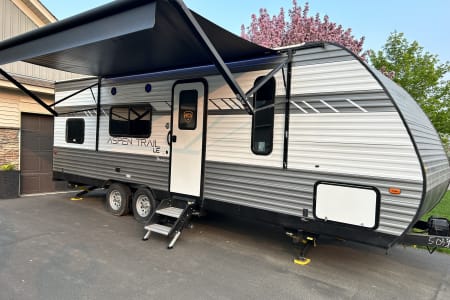
Modern, Clean, Smoke-Free, Pet-Friendly, Family RV w/Add-On Options
ROGERS, MN
History & Status of the Fishery
A targeted survey of the nearshore fish community in East Twin Lake was conducted by Fisheries Index of Biological Integrity (IBI) Program Staff from 30-31 August 2023. Ten sampling sites were evenly spaced around the lake, and each was sampled by backpack electrofishing and seining with a 15-foot or 50-foot seine, where possible. Backpack electrofishing was completed at all 10 sites with four sites sampled from the boat. A 50-foot seine was used to sample 4 sites, a 15-foot seine was used at two sites, and soft sediments with abundant vegetation and deep water prevented the use of seines at four sampling sites. Nearshore sampling captured 11 native species of fish including two species that are intolerant of disturbance (Blackchin Shiner and Iowa Darter) and one species (Green Sunfish) that is tolerant of disturbance.
A concurrent summer trap net survey was conducted on 30-31 August 2023 by IBI Program Staff. Nine trap nets were set along the shoreline that encompassed multiple habitat types. Catches were light. Bluegill and Pumpkinseed comprised most of the trap net catch by number and Bowfin, Brown Bullhead, and Bluegill comprised most of the catch by biomass. The number of Bluegill sampled per net was below the 25% quartile for similar Lake Class 24 lakes and the average length was 5.3 inches, with only 2% over 7 inches.
The nearshore and trap net data will be combined with gill net data from a survey planned in 2024 to describe the fish community and provide a Fish-based IBI (FIBI) score. The FIBI uses fish community data to measure a lake's health, and the types of fish species present can help identify any stressors that may be negatively affecting the lake environment. In Minnesota lakes, certain fish species cannot survive without clean water and a healthy habitat (e.g., Blackchin Shiner, Iowa Darter, and Rock Bass), while other species are tolerant of degraded conditions (e.g., Black Bullhead, Fathead Minnow, and Green Sunfish). The FIBI score, composed of several fish community diversity and composition metrics, indicates the overall health of a lake by comparing it to what is expected for a healthy lake. For additional information on the FIBI, search for "lake index of biological integrity" on the mndnr.gov website.
Data from this survey will contribute biological information about the health of the fish community to the Rum River Watershed assessment process in coordination with MN Pollution Control Agency.
What is the average air temp for East Twin Lake?
More Nearby Lakes To Explore
There's more lake's to explore around East Twin Lake...| DISTANCE | ACRES | MAX DEPTH | |
| Twin Lake | 0.5 mi | 40 | 18 ft |
| Bear Lake | 1.4 mi | 25 | |
| Bass Lake | 1.9 mi | 77 | |
| Pickerel Lake | 2.6 mi | 235 | |
| Goose Lake | 2.9 mi | 67 | |
| Burns Lake | 3.3 mi | 95 | 18 ft |
| McCann Lake | 3.6 mi | 116 | |
| Pinnaker Lake | 3.8 mi | 40 | |
| Stone Lake | 4.7 mi | 37 | |
| Orono Lake | 5.2 mi | 301 | 18 ft |


