Get The Net
Let's ake a closer look at landing nets so that you can ensure yours is up for the job
by Craig Ritchie
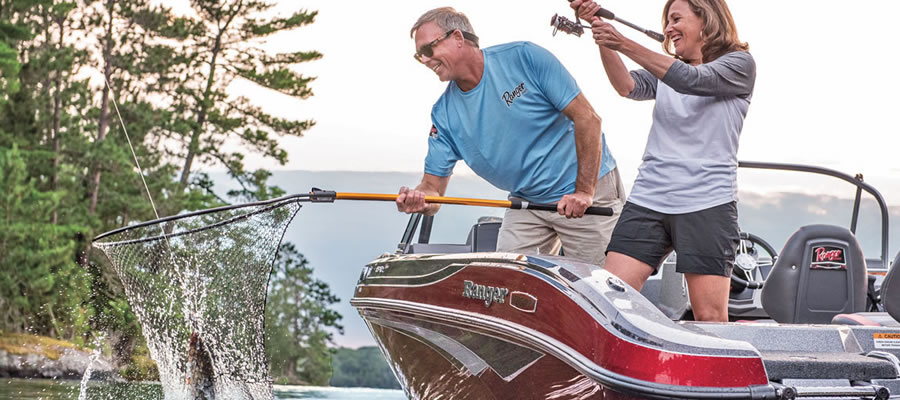
It's always a happy moment when you yell to your fishing partner to get the net. But these stories don't always have a happy ending. Landing nets are an important piece of tackle that far too many anglers neglect. So just in time for the busy fall season and some of the hottest action of the year, let's take a closer look at landing nets so that you can ensure yours is up for the job.
Net Size
It seems obvious, but the first consideration in selecting a landing net is making sure the one you have is right-sized for the fishing you have in mind.Short-handled nets are great when wading, but they can spell trouble in boats by forcing the netting angler to lean dangerously far over the side. On the other hand, an overly-long net handle that might be perfect for scooping salmon on the Great Lakes simply gets in the way onboard a bass boat. In general, you want a net handle that's long enough that you can comfortable submerge the entire hoop from a comfortable standing position - the exact size determined by one's own height, the height of your deck above the water surface, and the amount of freeboard on your boat.
Telescoping net handles are a great innovation and can save a lot of space onboard when they're not being used. High-quality telescopic handles cost a little more than fixed-length handles, but to my mind, they're more than worth the extra. This is one area where it pays to shell out the extra dollars and buy top-quality. Forget the cheapies, which might save you a few bucks at the time of purchase, but will have to be replaced far more often. Besides, the last thing you want in your partner's hands when you have the catch of a lifetime on the line is some flimsy net of dubious quality.
Having the right-sized hoop and the right-sized mesh is also important. The net hoop should be a little bigger than the largest fish you expect to catch. I like to err on the large size because hey, you never know.
For smaller, more delicate fish like trout or whitefish, a mesh with one-inch holes might be perfect, while for most bass, walleye, pike and muskie, a two-inch mesh is more appropriate.
The size of the net bag is a further consideration. A big, deep bag might be useful when dealing with large fish like pike or salmon, but awkward when fishing for shorter species like bass. It's generally appropriate to use a net bag that's equivalent to or just a little bit deeper than the net's hoop size. For bass, a 24-inch hoop and bag is usually sufficient, while a 36-inch hoop and bag might be better for large walleye or channel cats. For pike or salmon, you may find yourself opting for a 40-inch hoop and bag.
Net Materials
With the exception of smaller trout nets, most net frames sold today are made from aluminum - which is ideal since it's tough as nails and requires zero maintenance. Fiberglass composite handles are a bit more expensive, but equally durable and easier on the hands when fishing in cold weather.Net bags come in a variety of materials, with nylon and rubber being the most common.
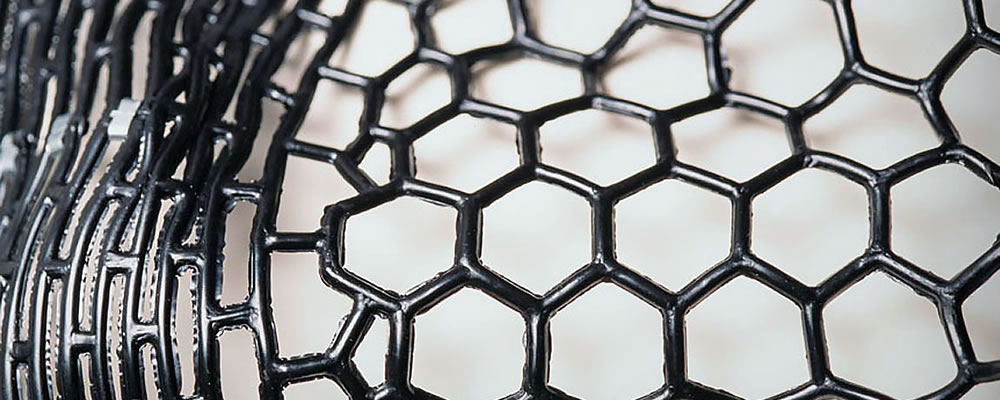
Nylon nets are available in both coated and non-coated varieties, with cost being the biggest difference between them. Coated nets cost a little more than uncoated mesh, but they're worth the extra by being a lot more resistant to tangling with hooks. Uncoated nylon nets feel softer in the hand, but wrap a crankbait in one of them and you'll often be quite a while picking it back out.


Traditional nylon mesh is knotted, but knotless varieties also exist and tend to be gentler on fish, removing less of their slime coating. That's obviously not much of a consideration when you plan to eat the fish you catch. But if you're going to release the majority of them, then a knotless mesh - often called Tangle Free mesh - is a much better choice.

Rubber net bags are also gentle on fish, and highly resistant to getting wrapped around hooks. More importantly, they won't freeze into a solid mass after they get wet when fishing late in the season. Their only real downside is weight, being heavier to handle than a traditional mesh net. The rubber bag will also crack with age and long-term sun exposure, requiring replacement every couple of seasons under average use.
My wife laughs at my collection of different landing nets hanging on the wall in our garage. But nets are a critical piece of equipment and, as with rods and reels, it's important to head out with the right tools for the job. If you're a multi-species angler, you'll probably wind up with three or four nets to suit different scenarios.
Besides, who doesn't like to buy more tackle?
Suggested Nets
- Ranger Big Game - example of coated nylon net
- Frabill Conservation Series - example of knotless nylon net with telescopic handle
- Plussino wooden trout net with fine mesh
- Wakeman rubber net

Over a near 40-year career as a full-time outdoor writer, Craig Ritchie has fished all over the globe for a variety of freshwater and saltwater species. The author of The Complete Guide To Getting Started In Fishing, he has written thousands of articles for magazines, websites and newspapers worldwide, appeared as a guest on several television fishing programs and won numerous awards for his writing and photography. He lives in the Great Lakes region where great fishing is as close as his own back yard.