


Heron Lake (South Heron)
Jackson County, Minnesota

Share Your Catch & Win!
Frequently Asked Questions About Heron Lake (South Heron), MN
- How big is Heron Lake (South Heron)?
- How deep is Heron Lake (South Heron)?
- What kind of fish can you catch in Heron Lake (South Heron)?
- What are the closest cities to Heron Lake (South Heron)?
- Are there places to stay in the Heron Lake (South Heron) area?
- Are there boat launches on Heron Lake (South Heron)?
- Are there places to eat and drink near Heron Lake (South Heron)?
- What is the average air temp for Heron Lake (South Heron)?
- Are there any state parks near Heron Lake (South Heron)?
How big is Heron Lake (South Heron)?
How deep is Heron Lake (South Heron)?
What kind of fish can you catch in Heron Lake (South Heron)?
Other fish species in the lake include Common Shiner, Creek Chub, Fathead Minnow, Golden Shiner, Green Sunfish, Orangespotted Sunfish, River Carpsucker, Tadpole Madtom and White Sucker.
What are the closest cities to Heron Lake (South Heron)?
Are there places to stay in the Heron Lake (South Heron) area?
More Lodging Options
Are there boat launches on Heron Lake (South Heron)?
Are there places to eat and drink near Heron Lake (South Heron)?
History & Status of the Fishery
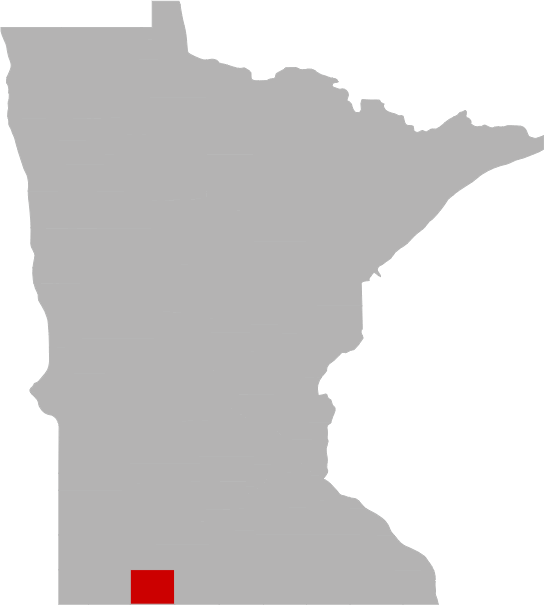
South Heron Lake is a 2,845-acre lake located 2 miles northwest of the City of Lakefield. Heron Lake is a designated wildlife lake, therefore it is managed primarily for wildlife such as waterfowl, furbearers, and other game and non-game species. Water levels are typically lowered during the fall to encourage winterkill of undesirable fish species such as Common Carp and Black Bullheads because they destroy aquatic vegetation which is important for waterfowl. A rotenone rehabilitation project was done during the winter of 1997-1998 to decimate fish populations; however, this effort was not as successful as desired. Because this is a designated wildlife lake that is prone to frequent winterkills because of water level manipulation, fisheries management is focused on providing a "boom or bust" fishery that is predator heavy for control of rough fish populations. From a fisheries perspective, Heron Lake is managed primarily for Northern Pike and secondarily for Walleye and Yellow Perch. Northern Pike fry were stocked in 2016, 2021, and 2022. Walleye fry are stocked if there is a surplus available and have been stocked annually beginning in 2021. A fisheries survey was conducted the week of May 22, 2023 to monitor fish populations using three gill nets and 10 trap nets.
Since 1994, Northern Pike catch rates have exceeded 22.0 per gill net and have averaged 13.9 per gill net since 1987. The 2023 catch rate was significantly lower than historic catches at 1.3 per gill net but was still within the expected range of catch rates for similar lakes (1.2 to 7.8 per gill net). Northern Pike fry were stocked in 2021 and 2022; however, based on the 2023 catch rate the stockings appear to have been unsuccessful. Northern Pike lengths ranged from 13.5 to 26.0 inches and averaged 18.3 inches. Northern Pike will continue to be stocked when available. Be aware that there are zonal regulations for Northern Pike. In order to harvest a Northern Pike in southern Minnesota the fish must be over 24 inches with a limit of 2 fish.
Walleye catch rates have been extremely high in South Heron Lake since 2011 (27.0 per gill net in 2011; 34.0 per gill net in 2017). In 2023, the Walleye catch rate was 13.3 per gill net which is above the long-term average of 11.4 per gill net and is within the expected range of catch rates for similar lakes (3.2 to 15.3 per gill net). Lengths of Walleye ranged from 6.7 to 18.9 inches and averaged 9.4 inches. All of the Walleye were from the 2022 stocking (age-1), except for one age-2 Walleye. Age-1 walleyes ranged from 6.7 to 10.4 inches in length and averaged 9.1 inches, indicating fast growth. If growth continues to be fast, Walleye could be to a harvestable size in a year or two.
Yellow Perch catch rates have varied from 1.7 per gill net in 1991 to 80.2 per gill net in 1993 and have averaged 37.2 per gill net since 1987. In 2023, the South Heron Lake catch rate was 31.7 per gill net which exceeds the expected range of catch rates for similar lakes (3.0 to 22.5 per gill net). Yellow Perch lengths ranged from 4.9 to 9.6 inches and averaged 5.8 inches. Ninety-six percent of Yellow Perch captured were from one year class and were less than 6.3 inches in length. Yellow perch were plump suggesting that they will grow fast and should be harvestable in a couple of years.
Black Bullhead abundance remained below the long-term average of 60.6 per gill net, as it was 44.3 per gill net in 2023. Black Bullhead lengths ranged from 3.9 to 11.1 inches and averaged 6.4 inches. Common Carp abundance remained above the expected range of catch rates for similar lakes (0.5 to 9.1 per gill net) at 10.0 per gill net in 2023. The Bigmouth Buffalo catch rate in 2023 was 16.3 per gill net, exceeding the expected range of catch rates for similar lakes (0.3 to 6.1 per gill net). Other species sampled included Black Crappie, Common Shiner, Orangespotted Sunfish, Tadpole Madtom, and White Sucker.
What is the average air temp for Heron Lake (South Heron)?
Are there any state parks near Heron Lake (South Heron)?
For more Minnesota State Park information see our State Park Guide.
More Nearby Lakes To Explore
There's more lake's to explore around Heron Lake (South Heron)...| DISTANCE | ACRES | MAX DEPTH | |
| Lake Flaherty | 2.3 mi | 457 | 0 ft |
| Heron Lake (Division Bay) | 3.4 mi | 2,142 | |
| Heron Lake (North Heron) | 4.1 mi | 2,142 | |
| Teal Lake | 4.7 mi | 89 | |
| Heron Lake (West Bay) | 5.7 mi | 141 | |
| Heron Lake (North Marsh) | 5.8 mi | 195 | |
| Timber Lake | 6.8 mi | 191 | 8 ft |
| Unnamed Lake | 7.5 mi | 22 | |
| Heron Lake (Duck) | 7.6 mi | 289 | |
| Boot Lake | 7.9 mi | 119 |


