


U.S. Lock & Dam #2 Pool
Dakota County, Minnesota
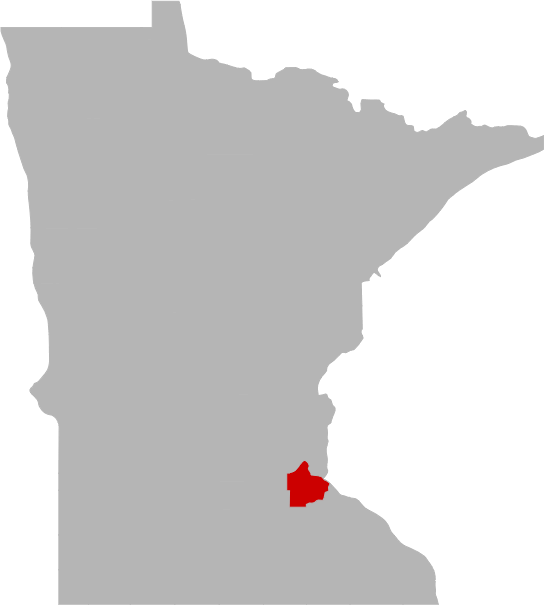
The U.S. Lock & Dam #2 Pool Lake is a popular destination for boating, fishing, and other water-based activities. The lake is home to a variety of fish species, including walleye, northern pike, bass, and catfish, which are popular targets for anglers. The lake has a maximum depth of around 30 feet, which makes it ideal for swimming and other water sports.
The lake is surrounded by several parks, campgrounds, and resorts, making it a popular vacation destination. Visitors can enjoy hiking and biking trails, picnic areas, and other recreational activities in the area.
The U.S. Lock & Dam #2 Pool Lake is located near the Twin Cities metropolitan area, which offers a wide range of attractions and activities for visitors to enjoy. The area is home to several museums, theaters, and sports arenas, as well as numerous parks and outdoor recreational opportunities.
Overall, the U.S. Lock & Dam #2 Pool Lake is a popular and vibrant natural resource in southeastern Minnesota, offering a wide range of recreational opportunities and ecological significance. The lake is also known for its picturesque beauty and peaceful atmosphere, making it a popular destination for those seeking a quiet retreat in nature.
Share your catch!
We want to see what you've caught on U.S. Lock & Dam #2 Pool.Frequently Asked Questions About U.S. Lock & Dam #2 Pool, MN
- How big is U.S. Lock & Dam #2 Pool?
- What kind of fish can you catch in U.S. Lock & Dam #2 Pool?
- Are there places to stay in the U.S. Lock & Dam #2 Pool area?
- Are there boat launches on U.S. Lock & Dam #2 Pool?
- Are there places to eat and drink near U.S. Lock & Dam #2 Pool?
- What are the fishing regulations for U.S. Lock & Dam #2 Pool?
- What is the average air temp for U.S. Lock & Dam #2 Pool?
How big is U.S. Lock & Dam #2 Pool?
What kind of fish can you catch in U.S. Lock & Dam #2 Pool?
Other fish species in the lake include Blue Sucker, Freshwater Drum, Gizzard Shad, Golden Redhorse, Greater Redhorse, Green Sunfish, Highfin Carpsucker, Hybrid Sunfish, Orangespotted Sunfish, Quillback, River Carpsucker, River Redhorse, Shorthead Redhorse, Silver Chub, Silver Redhorse and Smallmouth Buffalo.
Are there places to stay in the U.S. Lock & Dam #2 Pool area?
More Lodging Options
Are there boat launches on U.S. Lock & Dam #2 Pool?
Are there places to eat and drink near U.S. Lock & Dam #2 Pool?
What are the fishing regulations for U.S. Lock & Dam #2 Pool?
 There are specific fishing regulations U.S. Lock & Dam #2 Pool that you need to know. For complete fishing regulations visit the Minnesota Department of Natural Resources. To report a violation call (800) 652-9093. Need a Minnesota fishing license?
What aquatic invasive species are found in U.S. Lock & Dam #2 Pool?
Join us in the fight to prevent the spread of invasive species These sneaky creatures can hitch a ride on boats, clinging onto propellers, anchor lines, and trailers. They can even survive in hidden places like bilge water and ballast tanks, or disguise themselves in dirt and sand that sticks to nets, buckets, anchors, and waders. But don't worry, we have the power to stop them in their tracks with just a few simple steps. So let's do our part and protect our waters from these unwanted invaders.
History & Status of the Fishery
Gill nets and trap nets can be used effectively in too few places in Pool 2 of the Mississippi River. Standardized electrofishing stations were established to be used in future electrofishing surveys and represent the many different habitat types present and are spread throughout the entire 32 river miles. In addition, fall electrofishing was employed in targeted areas to gather walleye, sauger, largemouth bass, and smallmouth bass to evaluate the catch-and-release regulation on those four species. Channel catfish were later collected at the same time to supplement information for aging as few catfish were caught in the standard summer electrofishing assessment.
Twenty-eight different fish species, one hybrid (hybrid sunfish), and one variant (mirror carp) were sampled in Pool 2 during the standard electrofishing survey. Emerald shiners were also observed, but no effort was made to enumerate them as they, and many other minnow species, are typically small enough to pass through the mesh of the dip nets used for electrofishing. The top three species collected during summer sampling were common carp, freshwater drum, and shorthead redhorse, and was almost 43 percent of the entire sample.
The walleye population appeared to be an older population, likely due to the catch-and-release regulation. Few small walleye were sampled, although walleye grow very fast in Pool 2. The average length for a 3-year-old walleye was 19.6 inches long. Sixty-one percent of the walleye sampled were at least 15-inches long, and just over 21 percent were at least 25-inches long.
Very few sauger were sampled as they were likely in deeper water than what the electrofishing boat was able to sample. Most of the sauger sampled were 1-year-old and less than 10-inches long.
A typical size structure was evident for both largemouth and smallmouth bass in that smaller fish were the most abundant, and as size increased, numbers decreased. Pool 2 is not ideal habitat for largemouth and smallmouth bass as the water clarity dramatically decreases after the Minnesota River confluence. Decent bass are present, but the numbers present are relatively low as bass are largely sight predators and are at a disadvantage.
Channel and flathead catfish were sampled in low numbers, though other methods may better assess the catfish population present. A broad range of sizes were sampled for both, though no trophy catfish were sampled.
A fair number of white bass were sampled by electrofishing. Individuals ranged from just under eight-inches long to almost 17-inches long. White bass ages were from 2 to 6-years-old however, recent work on Lake Pepin has shown that white bass may be living much longer than previously thought and aging with scales may be inaccurate, so further work is needed to assess the white bass age structure. Based on size structure, white bass could contribute a fair amount to an anglers catch on Pool 2 and be a quality recreational resource that would also be harvestable.
Other game fish sampled in low abundance were bluegill, black crappie, white crappie, and northern pike. Again, conditions are not optimal in Pool 2 for these other game fish as water clarity in most of Pool 2 is poor, which puts these sight feeding game fish at a disadvantage.


