


Saganaga Lake
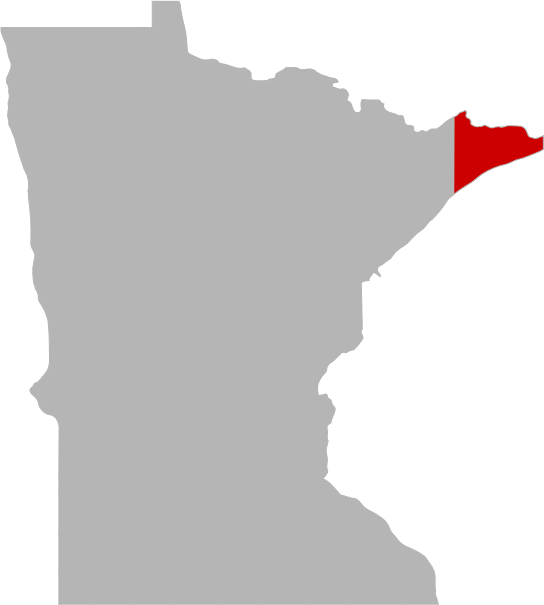
Cook County, Minnesota
Saganaga Lake is known for its excellent fishing opportunities and is home to a variety of fish species, including walleye, northern pike, bass, and lake trout, which are popular targets for anglers. The lake is also popular for boating, canoeing, kayaking, and other water-based activities. The lake has a maximum depth of 280 feet, which makes it ideal for swimming and other water sports.
The lake is surrounded by the rugged wilderness of the Boundary Waters Canoe Area Wilderness, which offers a unique and pristine outdoor experience for visitors. The area is known for its stunning scenery, remote campsites, and abundant wildlife, including moose, black bears, and wolves.
Saganaga Lake is also part of the Voyageurs National Park, which is a protected area that encompasses several lakes and rivers in northern Minnesota. The park offers a variety of recreational opportunities, including camping, hiking, fishing, and boating. Visitors can explore the park's rugged wilderness and observe a wide variety of wildlife, including moose, black bears, and bald eagles.
Overall, Saganaga Lake is a popular and vibrant natural resource in northeastern Minnesota, offering a wide range of recreational opportunities and ecological significance. The lake is also known for its picturesque beauty and peaceful atmosphere, making it a popular destination for those seeking a quiet retreat in nature.
Share your catch!
We want to see what you've caught on Saganaga Lake.
Frequently Asked Questions About Saganaga Lake, MN
- How big is Saganaga Lake?
- How deep is Saganaga Lake?
- What kind of fish can you catch in Saganaga Lake?
- Are there places to stay in the Saganaga Lake area?
- Are there topographical lake maps available Saganaga Lake?
- Are there boat launches on Saganaga Lake?
- Are there places to eat and drink near Saganaga Lake?
- What are the fishing regulations for Saganaga Lake?
- What is the average air temp for Saganaga Lake?
How big is Saganaga Lake?
How deep is Saganaga Lake?
What kind of fish can you catch in Saganaga Lake?
Other fish species in the lake include Blacknose Shiner, Bluntnose Minnow, Cisco (Tullibee), Deepwater Sculpin, Golden Shiner, Green Sunfish, Lake Whitefish, Longnose Sucker, Rainbow Smelt, Tadpole Madtom, Trout-Perch and White Sucker.
Are there places to stay in the Saganaga Lake area?
More Lodging Options
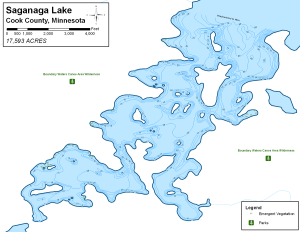
Are there topographical lake maps available Saganaga Lake?
Are there boat launches on Saganaga Lake?
Are there places to eat and drink near Saganaga Lake?
What are the fishing regulations for Saganaga Lake?
 There are specific fishing regulations Saganaga Lake that you need to know. For complete fishing regulations visit the Minnesota Department of Natural Resources. To report a violation call (800) 652-9093. Need a Minnesota fishing license?
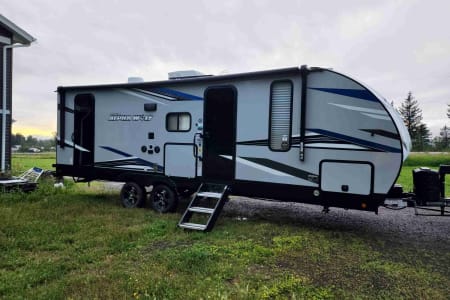
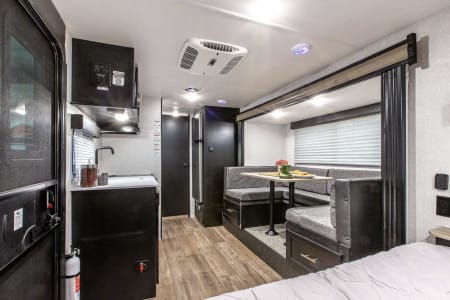
Explore the Saganaga Lake area in a RV
Are you looking for an adventurous vacation option that won't break the bank? Look no further than renting an RV! Contrary to popular belief, the process is much simpler than you might imagine. With just a few easy steps, you'll soon be experiencing the ultimate freedom and convenience of exploring the open road in your very own recreational vehicle. And the best part? RV travel can save you up to 60% compared to other types of vacations! With the money you'll save, you'll be able to travel even more and create unforgettable memories along the way. So why wait? Start planning your next adventure today with an RV rental. Learn more about renting a RV.


What aquatic invasive species are found in Saganaga Lake?
Join us in the fight to prevent the spread of invasive species These sneaky creatures can hitch a ride on boats, clinging onto propellers, anchor lines, and trailers. They can even survive in hidden places like bilge water and ballast tanks, or disguise themselves in dirt and sand that sticks to nets, buckets, anchors, and waders. But don't worry, we have the power to stop them in their tracks with just a few simple steps. So let's do our part and protect our waters from these unwanted invaders.
History & Status of the Fishery
Saganaga Lake is an Ontario border water that is currently managed for Lake Trout and Walleye. The goal for Lake Trout is to maintain a minimum catch in deep gill net sets (GDE) of 1.0 fish/set, with some fish over 25 inches present. The goal for Walleye is to increase the catch in shallow gill net sets (GSH) to 6.0 fish/set, with some fish over 30 inches present.
Minnesota waters of Saganaga Lake are currently covered by an experimental Walleye regulation, implemented in March 2015 with a 2025 end date. That regulation established a bag limit of three fish, with a minimum size limit of 17 inches, and only one fish over 20 inches allowed in possession. The main goal for the regulation was to improve Walleye recruitment. Indicators of success were to have been a gill net catch (deep and shallow sets combined) for Walleye exceeding 5.5 fish/set, with the catch of fish under 17 inches exceeding 3.0 fish/set, and with 10% of Walleye taken exceeding 20 inches in length. To evaluate this regulation, standard surveys were scheduled for 2017, 2020, and 2023, with summer creel surveys planned in 2022 and 2023.
The 2017 standard survey was meant to provide some indication of potential Walleye year class strengths early in the evaluation period. Budget cuts and a staff shortage resulted in the that survey, meant to cover the entire lake, being changed to a targeted survey covering only Minnesota waters (but including all gill net sets used in the past in those waters). Fortunately, a review of past assessment data indicated that Walleye catches in Minnesota waters have generally been about the same, have shown the same trends, and have included fish of about the same size, as catches for the entire lake. In 2020 an even more severe staff shortage, coupled with the closure of the Canadian border during the Covid-19 pandemic, again resulted in a switch from the planned standard survey to a targeted survey covering only Minnesota waters.
Walleye remained present in fair numbers in 2020, although there was no sign those numbers had increased due to stocking or the special regulation. The lake continued to produce some large walleye. The 2020 Walleye catch in shallow gill net sets was similar to other catches seen in that gear since 2004. The catch again fell well short of the goal from the current (2016) lake management plan. No Walleye over 30 inches were taken; however, the catch included several fish close to that size. The 2020 gill net catch (deep and shallow sets combined) was similar to catches seen in Minnesota waters since 2004, but was lower than any catches seen prior to that year. In contrast, the mean weight for Walleye taken in Minnesota waters in 2020 (2.40 lb/fish) was the highest seen in this lake since 1985. Twenty-nine percent of Walleye taken in 2020 exceeded 20 inches in length, and the gill net catch rate for fish of that size (0.80 fish/set) was the highest seen since 1979. The catch of Walleye under 17 inches in length (1.50 fish/set) was low for this lake, and remained well short of the benchmark for success established for the experimental regulation.
One of the purposes of this survey was to continue evaluating Walleye fry stocking that began in 2009. The 2020 catch included some fish from stocked years (not necessarily stocked fish), but the three strongest year classes sampled had been produced naturally (2019, 2016, and 2015). A good natural year class produced in 2012 and seen in the 2014 and 2017 surveys was still contributing to the catch in 2020. Together, unstocked year classes accounted for about 77% of the 2020 walleye catch. In the 2017 survey, fish from unstocked years accounted for about 80% of the catch, and the strongest year classes seen that year had also been produced naturally. While stocking done to date may have contributed some fish to the population, it appeared that natural reproduction remained the most important contributor.
Growth of Walleye collected in 2020 appeared to have been about average for a Class 1 lake in this area. Fish reached a mean length of 17.1 inches at the end of their fifth year, compared to an area average of 16.4 inches. Growth rates of young (six years old or younger) Walleye taken in surveys of Saganaga Lake since 2000 have been slower than those measured in earlier years. At current rates, it typically takes five or six seasons of growth for Walleye to reach a length of 17 inches in this lake.
Lake Trout numbers remained strong in 2020. The Lake Trout catch in deep gill net sets in Minnesota waters in 2020 indicated management goals for the species in Saganaga Lake were probably met. The catch in deep gill net sets was similar to other catches observed in that gear in this lake since 1964, and exceeded the management goal of 1.0 fish/set. The size goal was met by the capture of one 26-inch fish. The total sample size (10 fish) was too low to allow year class strengths or growth rates to be described with any confidence; however, seven naturally-produced year classes contributed to the catch, and fish as old as nineteen years were seen.
The 2020 Northern Pike catch in deep and shallow gill net sets appeared to have bounced back from a low seen in 2017, and was more typical of catches seen in this lake historically. The mean weight for those fish was also more typical of means seen in past surveys. From their length frequency distribution it seemed clear that several year classes had contributed to the 2020 catch; however, no northern pike aging was done in this survey.
Smallmouth Bass remained fairly abundant in Saganaga Lake in 2020. Like past assessments, the 2020 survey provided no evidence for an increase in Smallmouth Bass abundance or size in this lake over the last 30 years, although anglers continue to report that Smallmouth Bass have become much more common. Most of the gill net sets used in surveys of Saganaga Lake have been set well off shore, so might not detect any expansion in bass numbers. The 2020 Smallmouth Bass catch in deep and shallow gill net sets combined was similar to catches seen in Minnesota waters since 1985. Smallmouth Bass collected in gill nets in 2020 ranged in length from 5.1 to 15.5 inches.
The Yellow Perch catch in shallow gill net sets in 2020 was below the normal range for a lake of this type, and was the lowest ever observed in this lake. Yellow Perch were never abundant in Saganaga Lake, but catches since 2001 have been low, even for this lake. With Cisco in a range of sizes, and fair numbers of rainbow smelt, available as forage a lack of Yellow Perch is probably not a factor limiting Walleye or Northern Pike in this lake.
Black Crappie were sampled for the first time in Saganaga Lake in 2014. Although none were collected in this survey, they are certainly still present. A few were collected in a survey of Gull Lake (a connected water) in 2017, and some anglers continue to target the species in the winter in Saganaga Narrows.
In addition to Lake Trout, Saganaga Lake continues to support other cold-water fish species, including Cisco, Lake Whitefish, Burbot, and Rainbow Smelt. In this survey Rainbow Smelt were collected most effectively in small-mesh gill nets used to target the species. That catch was low for this lake, historically. Catches of the other three species in deep gill net sets were similar to catches seen in this lake since 1992. Lake Whitefish and Burbot catches fell within normal ranges for that sampling gear, in the Grand Marais area, while the 2020 Cisco catch exceeded the normal range for the gear in this area. Anglers have been known to target Lake Whitefish and Cisco in this lake, with some success.
Saganaga Lake is infested with spiny waterflea. Anglers leaving the lake should dry and clean their equipment thoroughly before moving to another lake to prevent the spread of this invasive and harmful aquatic invader.
Saganaga Lake Reviews
Below is the word on street about Saganaga Lake.Have you been to Saganaga Lake? Why not share your personal reveiw with others?
Submit Review
roger k.

matt h.
More Nearby Lakes To Explore
There's more lake's to explore around Saganaga Lake...| DISTANCE | ACRES | MAX DEPTH | |
| Unnamed Lake | 3.7 mi | 15 | |
| Tenor Lake | 3.8 mi | 21 | 11 ft |
| Morris Lake | 3.8 mi | 61 | 22 ft |
| Party Lake | 4.0 mi | 30 | |
| Reward Lake | 4.4 mi | 19 | 14 ft |
| Roy Lake | 4.6 mi | 58 | 45 ft |
| Shadow Lake | 4.8 mi | 13 | 23 ft |
| Prayer Lake | 4.9 mi | 42 | 19 ft |
| Lone Lake | 5.3 mi | 94 | |
| Marabaeuf Lake | 5.4 mi | 860 | 55 ft |


