


Deer Lake
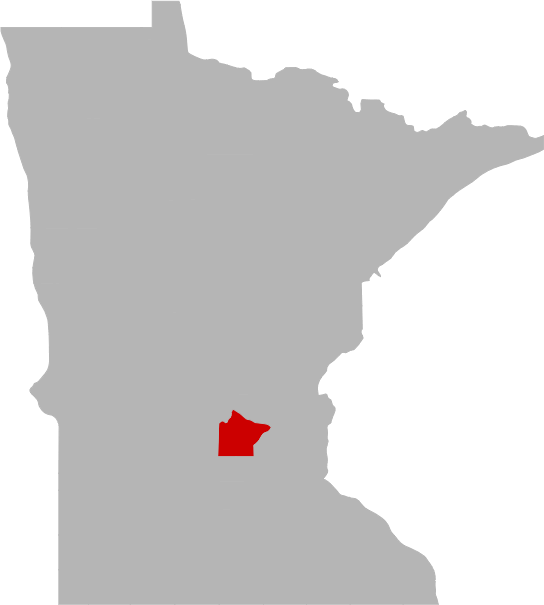
Wright County, Minnesota

Share Your Catch & Win!
Frequently Asked Questions About Deer Lake, MN
- How big is Deer Lake?
- How deep is Deer Lake?
- What kind of fish can you catch in Deer Lake?
- What are the closest cities to Deer Lake?
- Are there places to stay in the Deer Lake area?
- Are there boat launches on Deer Lake?
- Are there places to eat and drink near Deer Lake?
- What is the average air temp for Deer Lake?
How big is Deer Lake?
How deep is Deer Lake?
What kind of fish can you catch in Deer Lake?
Other fish species in the lake include Bluntnose Minnow, Golden Shiner, Green Sunfish, Hybrid Sunfish, Tadpole Madtom and White Sucker.
What are the closest cities to Deer Lake?
Are there places to stay in the Deer Lake area?
More Lodging Options
Are there boat launches on Deer Lake?
Are there places to eat and drink near Deer Lake?
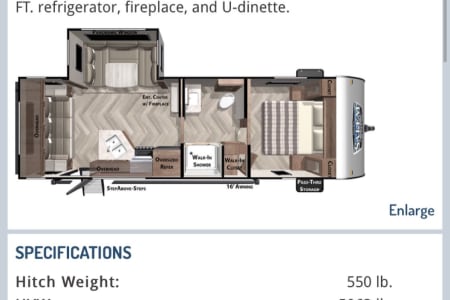
Explore the Deer Lake area in a RV
Are you looking for an adventurous vacation option that won't break the bank? Look no further than renting an RV! Contrary to popular belief, the process is much simpler than you might imagine. With just a few easy steps, you'll soon be experiencing the ultimate freedom and convenience of exploring the open road in your very own recreational vehicle. And the best part? RV travel can save you up to 60% compared to other types of vacations! With the money you'll save, you'll be able to travel even more and create unforgettable memories along the way. So why wait? Start planning your next adventure today with an RV rental. Learn more about renting a RV.


What aquatic invasive species are found in Deer Lake?
Join us in the fight to prevent the spread of invasive species These sneaky creatures can hitch a ride on boats, clinging onto propellers, anchor lines, and trailers. They can even survive in hidden places like bilge water and ballast tanks, or disguise themselves in dirt and sand that sticks to nets, buckets, anchors, and waders. But don't worry, we have the power to stop them in their tracks with just a few simple steps. So let's do our part and protect our waters from these unwanted invaders.
History & Status of the Fishery
Deer Lake is located south of the city of Buffalo in Wright County. The lake is 163 acres and has a maximum depth of 27 feet. Deer Lake has a large watershed with land use dominated by agriculture, development, and pasture. A public access is located on the south end near the outlet. Mill Creek flows through Buffalo Lake into Deer Lake via a navigable channel and flows out of Deer Lake to the North Fork Crow River. Deer Lake was last surveyed in 2013.
Walleye are not stocked, but likely immigrate from Buffalo Lake and the North Fork Crow River. Walleye net catches were within the expected range of values for lakes similar to Deer and have increased since the last survey to a record high for Deer Lake. Walleye ranged in length from 10.4 to 25.0 inches , with an average length and weight of 16.0 inches and 1.7 pounds. Growth was fast compared to the statewide average, taking two years to reach 15 inches. Fifty-three percent of Walleye were longer than 15 inches, and anglers may find themselves encountering more Walleye in Deer Lake for the next few years.
Northern Pike numbers were also higher than 2013, but both catch rate and size were still within the range of expected values for similar lakes. Northern Pike ranged in length from 13.3 to 32.8 inches with an average length and weight of 21.8 inches and 2.4 pounds. Forty-five percent of Northern Pike were longer than 21 inches with nineteen percent longer than 26 inches.
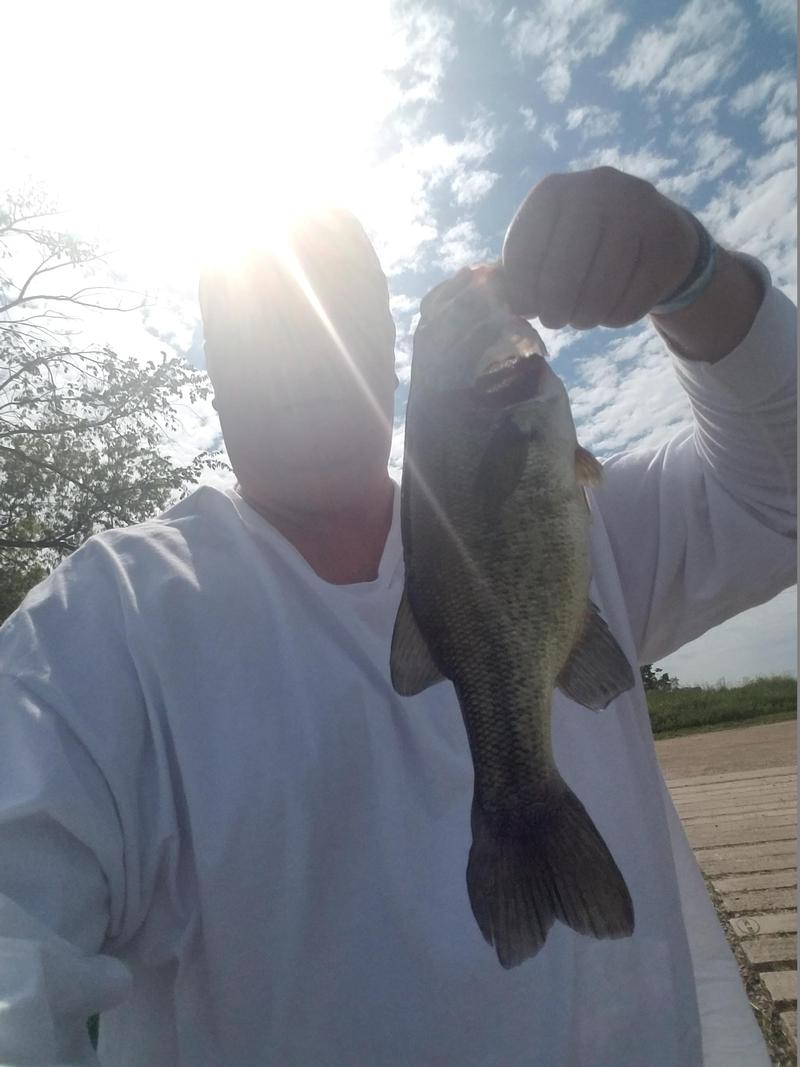
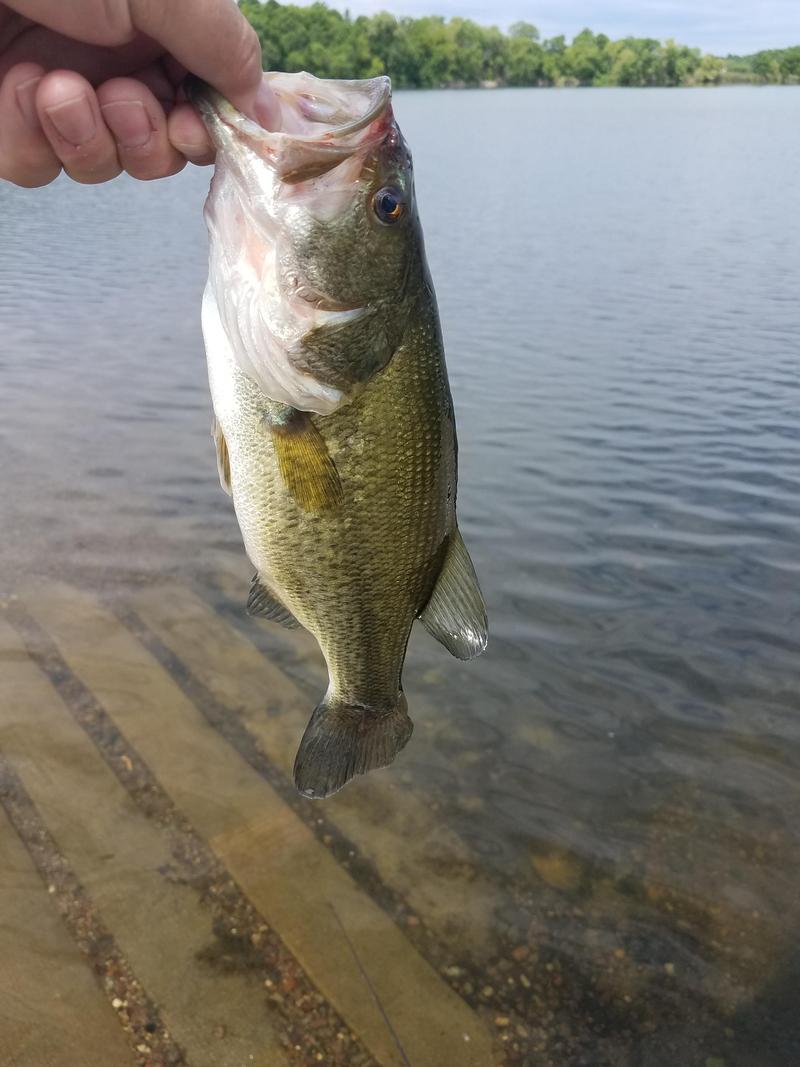
Largemouth bass were sampled by boat electrofishing in the spring and the catch rate was similar to the Sauk Rapid's area average . Largemouth bass lengths ranged from 6.8 to 20.5 inches with an average length and weight of 14.0 inches and 1.8 pounds. Forty-six percent of Largemouth Bass were longer than 15 inches.
Black Crappie net catches were within the range of expected values for lakes similar to Deer, but were higher than 2013 and 1993. Black Crappie lengths ranged from 5.8 to 12.8 inches with an average length and weight of 8.5 inches and 0.4 pounds. Seventy-two percent of Black Crappie were longer than 8 inches and fourteen percent were longer than 10 inches. Anglers may find a higher abundance of Black Crappie in coming years, and larger fish with more opportunity for harvest than in the past.
The Bluegill catch was the highest on record for Deer Lake, consisting of many, smaller fish. Bluegill lengths ranged from 3.1 to 9.1 inches with an average length and weight of 5.4 inches and 0.2 pounds. Yellow perch numbers have been highly variable, possibly due to the fluctuation in Northern Pike numbers, but were higher in 2023 than in 2013. Yellow Perch lengths in 2023 ranged from 4.5 to 7.4 inches with a mean length of 5.9 inches.
Other species captured included: Black Bullhead, Brown Bullhead, Bowfin (Dogfish), Channel Catfish, Common Carp, Golden Shiner, Green Sunfish, Hybrid Sunfish, Pumpkinseed, Bigmouth Buffalo, White Sucker, and Yellow Bullhead. The black bullhead numbers have increased from 2013 to 2023 but remain lower than previous surveys.
What is the average air temp for Deer Lake?
More Nearby Lakes To Explore
There's more lake's to explore around Deer Lake...| DISTANCE | ACRES | MAX DEPTH | |
| Goose Lake | 0.4 mi | 52 | 14 ft |
| Birch Lake | 1.0 mi | 99 | 26 ft |
| Mink Lake | 1.3 mi | 94 | 36 ft |
| Tamarack Lake | 1.3 mi | 62 | 26 ft |
| Fadden Lake | 1.5 mi | 20 | 48 ft |
| Buffalo Lake | 1.6 mi | 1,552 | 33 ft |
| South Berthiaume Lake | 1.9 mi | 20 | 73 ft |
| Abbie Lake | 2.2 mi | 116 | |
| North Berthiaume Lake | 2.2 mi | 24 | 43 ft |
| Lake Mary | 2.8 mi | 329 |


