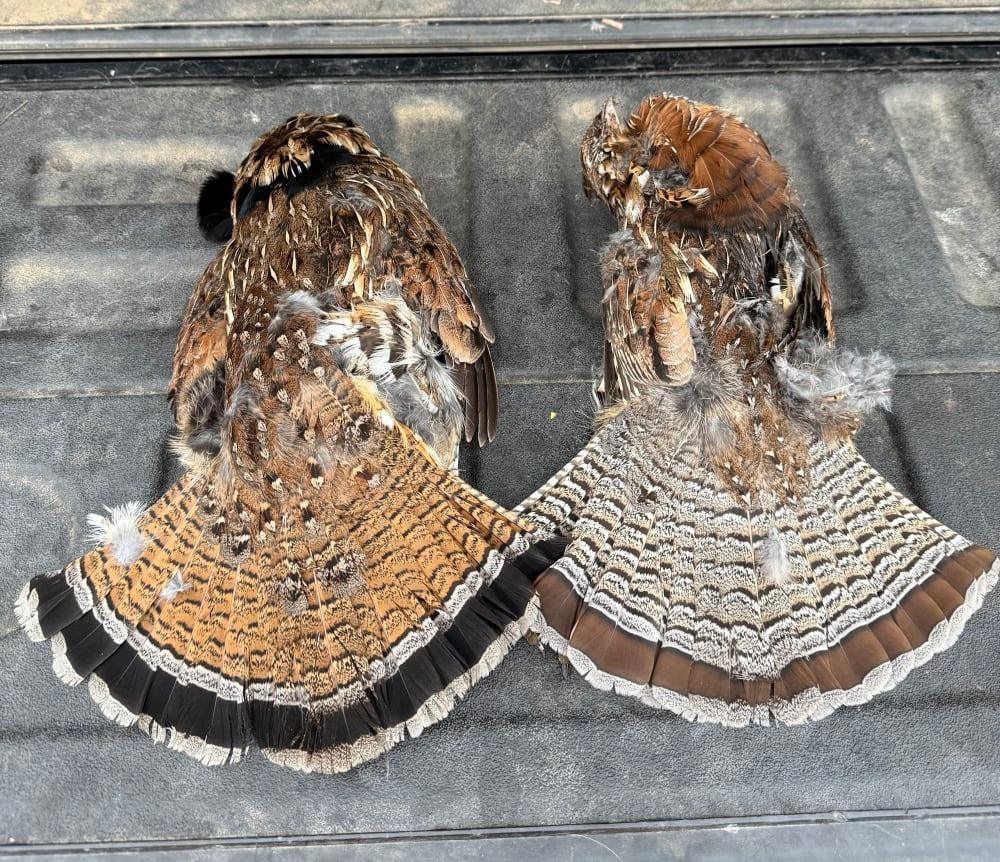
Here is a necropsy report from the DNR. I sent in a bird that was very thin.
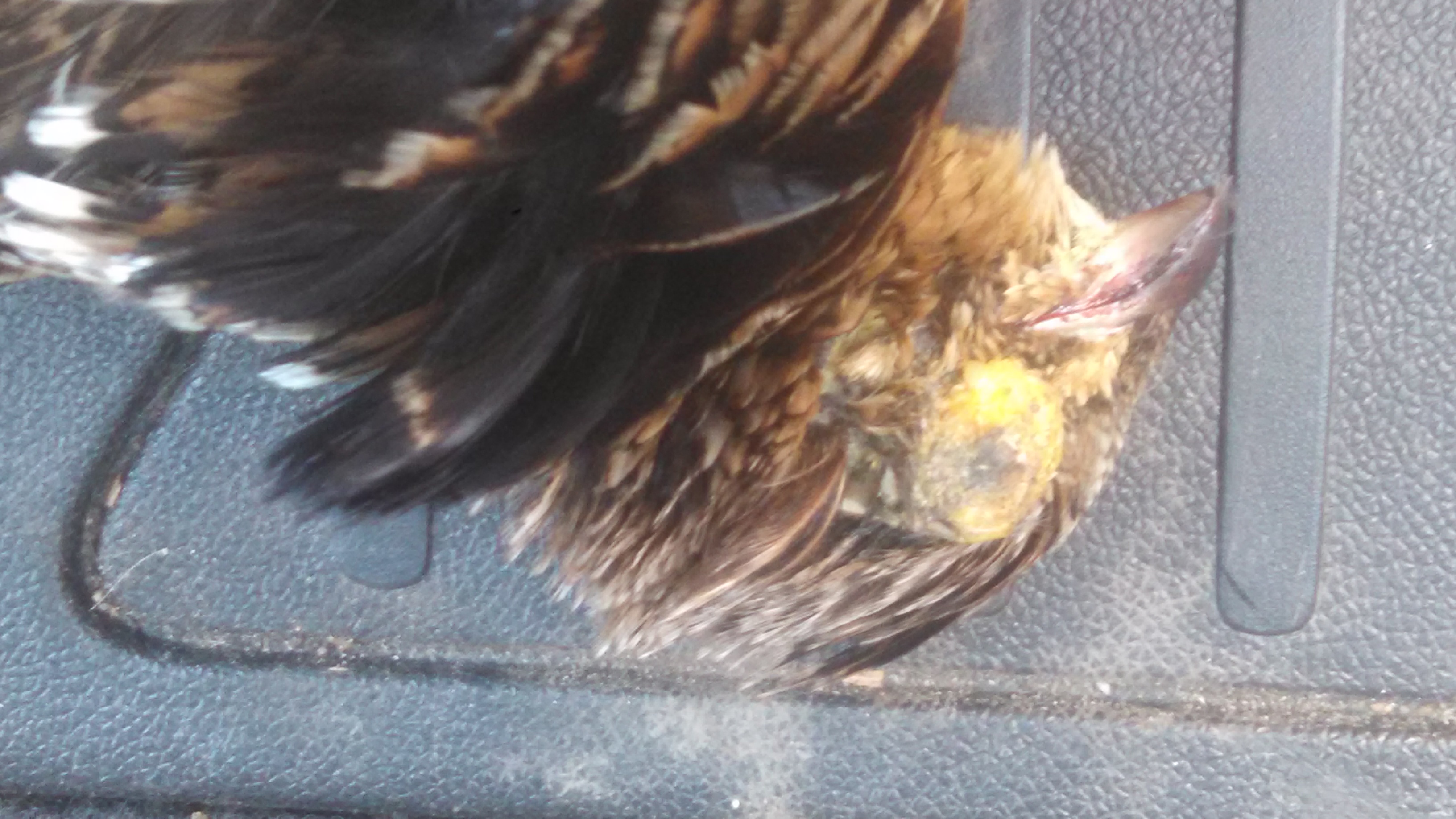
Attached is the final necropsy report for your grouse submission. The bird was harvested in 2018. The picture that was added was from a bird taken in 2016 in Clam Lake. Not sure what happened to the Grouses eye.
This thin, harvested grouse was negative for WNV. It was positive for EEE (eastern equine encephalitis) and had associated clinical disease based on histopath. There were also multiple parasites present which may have contributed to its poor nutritional condition.
Some information on EEE:
-Exposure to EEEV was first detected in grouse and numerous other Wisconsin wildlife in the late 1950s. See attached paper. This historical information suggests that the likelihood of EEEV having population-level impacts on grouse is low.
-EEEV is transmitted by mosquitos and can affect humans and horses in addition to certain species of birds.
-EEEV is considered a native virus. Clinical signs in birds are indistinguishable from those of WNV, and can include tremors, weakness, and loss of coordination.
Since the bird was harvested, we do not know if the bird could have survived the infection of EEE or if it would have progressed to death.