


Monson Lake
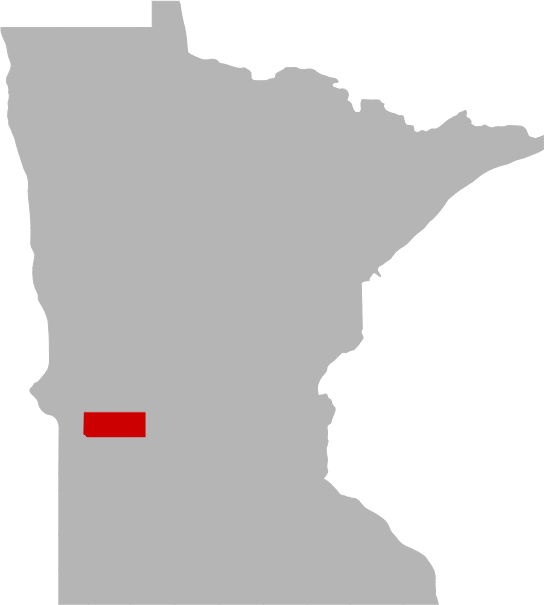
Swift County, Minnesota

Today's Fishing Forecast
Fishing looks to be fairly active with peak fishing times around 7-8 AM and 3-5 PM. SEE MORE
Share your catch!
We want to see what you've caught on Monson Lake.Frequently Asked Questions About Monson Lake, MN
- How big is Monson Lake?
- How deep is Monson Lake?
- What kind of fish can you catch in Monson Lake?
- What are the closest cities to Monson Lake?
- Are there places to stay in the Monson Lake area?
- Are there boat launches on Monson Lake?
- Are there places to eat and drink near Monson Lake?
- Are there any state parks near Monson Lake?
How big is Monson Lake?
How deep is Monson Lake?
What kind of fish can you catch in Monson Lake?
Other fish species in the lake include Brook Stickleback, Central Mudminnow, Fathead Minnow, Golden Shiner, Green Sunfish, Hybrid Sunfish, Iowa Darter and White Sucker.
What are the closest cities to Monson Lake?
Are there places to stay in the Monson Lake area?
More Lodging Options
Are there boat launches on Monson Lake?
Are there places to eat and drink near Monson Lake?
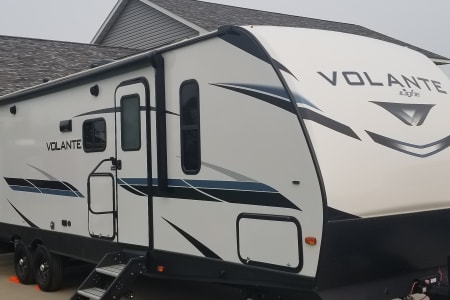
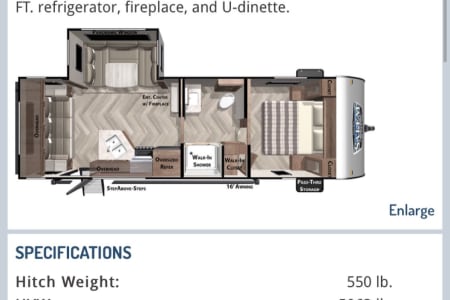
Explore the Monson Lake area in a RV
Are you looking for an adventurous vacation option that won't break the bank? Look no further than renting an RV! Contrary to popular belief, the process is much simpler than you might imagine. With just a few easy steps, you'll soon be experiencing the ultimate freedom and convenience of exploring the open road in your very own recreational vehicle. And the best part? RV travel can save you up to 60% compared to other types of vacations! With the money you'll save, you'll be able to travel even more and create unforgettable memories along the way. So why wait? Start planning your next adventure today with an RV rental. Learn more about renting a RV.


History & Status of the Fishery
A standard survey was conducted during mid-June of 2019 in Monson Lake. A targeted survey is generally used for sampling a specific kind of fish or time of year (i.e. spawning season, fall season, etc.) unlike a standard survey which samples a wider range of fish species during the summer months using standard methodology (i.e. standard time of year, set sampling stations, taking water clarity readings and oxygen/temperature profiles, etc.) and gears (i.e. lake survey gillnets, trapnets and possibly spring electrofishing for Largemouth Bass).
Monson is a small sized (208 acres), shallow (21 feet maximum depth), and moderately productive lake located in Swift County. Monson Lake State Park is located along the east side of the lake. Residential development is limited to 5 homes and 2 recreational vehicles along the south, north and west shore areas. The public access and shore fishing pier are located on the east side in the state park. Usage of Monson State Park and the corresponding public access is generally low compared to nearby Sibley State Park on Lake Andrew. The surrounding watershed is comprised of mostly agricultural row crops with small areas of woodland, grassland, pasture, and wetland areas. The immediate shoreline area consists mostly of undeveloped woodland (hardwood trees) with small to moderate areas of wetlands, row crops, and grassland. Agricultural row crop runoff (via inlets) is the primary source of nutrient pollution into Monson. Nutrient levels were high (total phosphorus=0.063 ppm, Chlorophyll a=53.5 ppb) during 2015 in Monson. There are three small sized inlets (northwest, northeast, and south shores) that flow into Monson. The Monson outlet connects to West Sunburg Lake, which is a shallow, productive and sometimes susceptible winterkill lake. Fish movement is possible between West Sunburg and Monson during high water levels, which has resulted in excellent sunfish growth and good fishing after several mild winters in both lakes. A winterkill probably occurred in the connected West Sunburg Lake in February of 2019. Water levels were above normal during the 2019. Water clarity (secchi reading) was good (12.0 feet) on June 19, 2019. Blue-green algae blooms can be common during the mid to late summer months in Monson Lake. Submergent vegetation is dense and diverse with northern milfoil, various pondweed species (flat-stem, curly-leaf, clasping-leaf, leafy, sago pondweed), coontail, water moss, and filamentous algae present in Monson. Emergent vegetation is also abundant and diverse consisting of various bulrush species, cattail species, duckweed species, burreed, arrowhead, and reed canary grass scattered throughout the bay, shoreline, and island areas. Shoalwater substrates are varied with sand, silt, boulder, gravel, rubble, muck and clay.
Northern Pike numbers were moderate in 2019 (4.00 fish/gillnet). The Northern Pike historical average catch rate is 5.03 fish/gillnet for Monson. The 2019 Northern Pike average size was moderate (3.25 pounds and 24.58 inches) from gillnets. The Northern Pike historical average weight is 2.65 pounds from gillnets. There were no fish over 30.00 inches caught in the 2019 survey nets. Northern Pike growth rates were fair. The 2014 and 2015 year classes each comprised 36% of the 2019 Northern Pike gillnet and trapnet catch. Northern Pike possession limit regulations for Monson in the North-central Zone are as follows: anglers can keep 10 Northern Pike, but not more than two pike longer than 26 inches; and all from 22 to 26 inches must be released. Northern Pike taken by spearing follow the same rules except one pike may be between 22 and 26 inches or two larger than 26 inches.
Black Crappie were absent in 2019 survey nets. The Black Crappie historical average catch rates are 0.70 fish/trapnet and 1.30 fish/gillnet for Monson.
Yellow Perch numbers were low in 2019 (6.50 fish/gillnet). The Yellow Perch historical average catch rate is 11.26 fish/gillnet for Monson Lake. The 2019 Yellow Perch average size was small (0.10 pounds and 6.05 inches) from gillnets. The Yellow Perch historical average weight is 0.22 pounds from gillnets.
Bluegill numbers were uncharacteristically low in 2019 (0.44 fish/trapnet). The Bluegill historical average catch rate is 16.65 fish/trapnet for Monson. The 2019 Bluegill average size was small (0.05 pounds and 4.24 inches) from trapnets. The Bluegill historical average weight is 0.24 pounds from trapnets. There were abundant numbers of large Bluegill captured in the previous 2010 survey (2.67 fish/trapnet of 10.00 inches or larger). The largest Bluegill captured was 11.81 inches (about 2 pounds) in the 2010 survey, but only 6.42 inches in the 2019 survey. Bluegill growth rates were above the Spicer Area normal ranges. The 2017 year class comprised 83% of the 2019 Bluegill gillnet and trapnet catch.
Walleye numbers were low in 2019 (3.50 fish/gillnet) compared to the Monson historical average catch rate of 4.38 fish/gillnet. The 2019 Walleye average size was large (3.68 pounds and 21.69 inches) from gillnets. The Walleye historical average weight is 2.24 pounds from gillnets. Low numbers of small sized Walleye (0.85 pounds, 11.16 inches) were caught in the 2019 trapnets (1.78 fish/trapnet). Walleye growth rates were good. The 2018 year class comprised 35% of the 2019 Walleye gillnet and trapnet catch. It appears that a 2018 Walleye fry stocking contributed to the fishery. Walleye natural reproduction in Monson is generally infrequent and insignificant based on previous fall and summer surveys. Walleye were recently stocked into Monson during 2012 (54 fingerlings, 3 pounds; 1,252 yearlings, 498 pounds), 2014 (100 fingerlings, 10 pounds; 1,472 yearlings, 339 pounds; 219 adults, 94 pounds), 2016 (504 fingerlings, 21 pounds; 640 yearlings, 320 pounds; 112 adults, 155 pounds) and 2018 (231,135 fry; 28 fingerlings, 2 pounds; 1,441 yearlings, 371 pounds; 29 adults, 39 pounds).
Largemouth Bass spring electrofishing survey was not conducted in 2019. A 2015 Largemouth Bass spring electrofishing survey sampled low numbers (17.29 fish/hour). The 2015 Largemouth Bass average size was large (3.07 pounds and 17.33 inches) from spring electrofishing. The 2015 catch rate of preferred size (15.00 inches and larger) Largemouth Bass was high (16.27 fish/hour). Largemouth Bass growth rates were above average in Monson. The 2008 year class comprised 28% of the 2015 Largemouth Bass spring electrofishing catch.
Black Bullhead numbers were moderate in 2019 (23.50 fish/gillnet), but below the Monson historical average catch rate of 92.37 fish/gillnet. Black Bullhead abundance in the 2019 trapnets (5.67 fish/trapnet) was also below the historical average (22.04 fish/trapnet). The 2019 Black Bullhead average size was large (1.13 pounds and 12.50 inches) from gillnets. The Black Bullhead historical average weight is 0.86 pounds from gillnets.
Current fish management activities on Monson include monitoring the fish population on a periodic basis, protecting aquatic vegetation through the permit process, assisting aquatic plant management and enforcement personnel in educating boaters and monitoring access sites for potential invasive species introductions, participating in local watershed initiatives, and stocking various fish species as warranted. The Monson fishery will be sampled in the 2024 summer for all fish species.
Are there any state parks near Monson Lake?
For more Minnesota State Park information see our State Park Guide.
More Nearby Lakes To Explore
There's more lake's to explore around Monson Lake...| DISTANCE | ACRES | MAX DEPTH | |
| Unnamed Lake | 1.0 mi | 86 | |
| Unnamed Lake | 2.8 mi | 17 | |
| Unnamed Lake | 2.9 mi | 30 | |
| Unnamed Lake | 2.9 mi | 17 | |
| Unnamed Lake | 3.0 mi | 67 | |
| Hefta Lake | 4.0 mi | 126 | 10 ft |
| Unnamed Lake | 4.1 mi | 99 | |
| Knutsons Lake | 5.0 mi | 49 | |
| Unnamed Lake | 5.0 mi | 96 | |
| Unnamed Lake | 5.1 mi | 12 |
