


McColl Pond
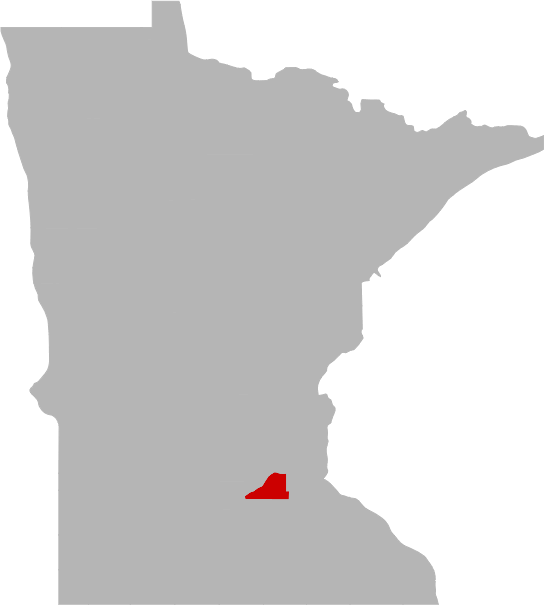
Scott County, Minnesota

Today's Fishing Forecast
Fishing looks to be fairly active with peak fishing times around 7-8 AM and 3-5 PM. SEE MORE

Share Your Catch & Win!
Frequently Asked Questions About McColl Pond, MN
- How big is McColl Pond?
- How deep is McColl Pond?
- What kind of fish can you catch in McColl Pond?
- Are there fishing guides or charters for McColl Pond?
- What are the closest cities to McColl Pond?
- Are there places to stay in the McColl Pond area?
- Are there places to eat and drink near McColl Pond?
- What is the average air temp for McColl Pond?
How big is McColl Pond?
How deep is McColl Pond?
What kind of fish can you catch in McColl Pond?
Other fish species in the lake include Fathead Minnow, Golden Shiner, Green Sunfish and Hybrid Sunfish.
Are there fishing guides or charters for McColl Pond?

What are the closest cities to McColl Pond?
Are there places to stay in the McColl Pond area?
More Lodging Options
Are there places to eat and drink near McColl Pond?
Explore the McColl Pond area in a RV
Are you looking for an adventurous vacation option that won't break the bank? Look no further than renting an RV! Contrary to popular belief, the process is much simpler than you might imagine. With just a few easy steps, you'll soon be experiencing the ultimate freedom and convenience of exploring the open road in your very own recreational vehicle. And the best part? RV travel can save you up to 60% compared to other types of vacations! With the money you'll save, you'll be able to travel even more and create unforgettable memories along the way. So why wait? Start planning your next adventure today with an RV rental. Learn more about renting a RV.

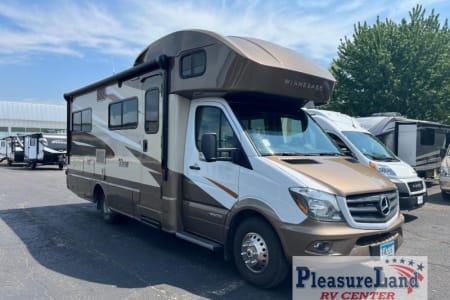

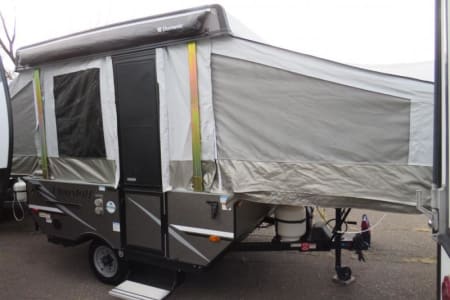
2020 Forest River RV Flagstaff SE 176SE - Popup camper with Solar Panels
Eden Prairie, MN
What aquatic invasive species are found in McColl Pond?
Join us in the fight to prevent the spread of invasive species These sneaky creatures can hitch a ride on boats, clinging onto propellers, anchor lines, and trailers. They can even survive in hidden places like bilge water and ballast tanks, or disguise themselves in dirt and sand that sticks to nets, buckets, anchors, and waders. But don't worry, we have the power to stop them in their tracks with just a few simple steps. So let's do our part and protect our waters from these unwanted invaders.
History & Status of the Fishery
McColl Pond is a 21-acre lake located in Savage, Minnesota and has a maximum depth of 11 feet. The lake has been protected from storm water runoff and has a restored aquatic and prairie buffer growing along the east side of the lake. Homes are present on the north and west sides of the lake. McColl Pond has been managed in the Fishing in the Neighborhood (FiN) program since 2002 and has been stocked with adult Bluegill, Largemouth Bass, and fingerling Channel Catfish historically. In recent years, Channel Catfish management has shifted to stocking adults into McColl Pond. An aeration system is available to aerate the lake during winters when oxygen levels are low. McColl Pond was last surveyed in 2010. Water clarity at the time of the 2016 survey was 4.50 feet.
Two gillnets and nine trap nets were used in the 2016 Standard Lake Survey.
Black Crappie abundance in gillnets was above the second quartile for Lake Class 40 at 9 fish per lift. This was a substantial increase from 0.50 Black Crappie per lift sampled in the 2010 survey. Black Crappie had been stocked into McColl Pond in May 2012 (30 individuals, 9.01 pounds, 3.33 fish per pound). Black Crappie were above median weight for Lake Class 40 at 0.17 pounds per individual in the 2016 survey and had a mean length of 6.54 inches. Three individual Black Crappie measured greater than 8.50 inches with the largest fish measuring 11.22 inches. In trap nets, Black Crappie abundance was above average for Lake Class 40 at 5.89 fish per lift, but average weight per individual was below the first quartile at 0.13 pounds. Black Crappie per trap net lift was up from 2.56 in the 2010 survey but average weight per individual was the same value (0.13 pounds). Black Crappie sampled in trap nets had a mean length of 6.24 inches with 41.5% of the individuals in the 5.50-5.99 inch range. Four individuals measured over 8.50 inches and the largest Black Crappie measured 11.18 inches. In the 2010 survey, only one Black Crappie sampled was greater than 8 inches.
Bluegill abundance in gillnets was 9.5 fish per lift with an average weight of 0.12 pounds. In trap nets, Bluegill were sampled in numbers well above the mean for Lake Class 40, at 30.33 fish per lift, but below the first quartile in weight for this lake class at 0.09 pounds. Bluegill abundance had increased compared to the 2010 survey values (2 per lift in gillnets; 4.11 per lift in trap nets) but showed decreases in average weight down from 0.20 pounds in gillnets and 0.14 pounds in trap nets. Average length of Bluegill sampled in gillnets was 5.72 inches with 68% of fish sampled in the 5.50 to 5.99 inch range. Bluegill sampled in trap nets averaged 5.24 inches in length. The largest Bluegill sampled in the survey was captured by trap net and measured 6.5 inches.
Although electrofishing is the ideal way to sample Largemouth Bass, they were still sampled in both gill nets and trap nets. Three Largemouth Bass were sampled in gillnets (1.5 fish per lift) and averaged 0.94 pounds in weight, a value above the third quartile for Lake Class 40. Two Largemouth Bass (0.22 per lift) were sampled in trap nets a value below average for Lake Class 40, but averaged 2.05 pounds in weight, a value above the third quartile for lake class. Across all gears, Largemouth Bass ranged from 8.35-18.31 inches in length. Four of five Largemouth Bass measured over 11.5 inches.
Five Channel Catfish were sampled in gillnets and two were sampled in trap nets. Channel Catfish had an average weight of 2.17 pounds and mean length of 18.79 inches in gillnets. Channel Catfish ranged in length from 16.54-20.08 inches in McColl Pond (gillnets and trap nets combined).
In the 2010 survey, a total of 1146 hybrid sunfish were sampled (111 in gillnets; 1035 in trap nets). Values were 55.50 per lift in gillnets and 115 per lift in trap nets in McColl Pond. The 2016 survey showed a significant decrease in abundance, as only 40 hybrid sunfish were sampled at a value of 4.44 fish per lift in trap nets only. No hybrid sunfish were sampled in gillnets in the 2016 survey. This could be attributed to a partial winter kill in the winter of 2013-2014.
Walleye fry were stocked into McColl Pond in the spring of 2014 but none were captured in the 2016 survey. This single stocking event was made to take advantage of post-winterkill conditions-a low-risk/low-cost attempt to grow Walleye fingerlings to stock area lakes while providing potential short-term Walleye fishing for McColl.
Other species sampled included Northern Pike (1 individual, 22.13 inches in length). Pumpkinseed, and Golden Shiner.
Eurasian watermilfoil was documented in the lake in 2009 and was the dominant plant species in the lake. Sixty-four painted turtles and ten snapping turtles were captured- all in trap nets.
For more information about McColl Pond and other FiN lakes in your area, please visit http://www.dnr.state.mn.us/fishing/fin/index.html.
What is the average air temp for McColl Pond?
More Nearby Lakes To Explore
There's more lake's to explore around McColl Pond...| DISTANCE | ACRES | MAX DEPTH | |
| Unnamed Lake | 0.4 mi | 12 | |
| South Twin Lake | 0.8 mi | 10 | |
| Sunset Pond | 2.2 mi | 44 | 11 ft |
| Cate's or Hidden Lake | 2.3 mi | 30 | 0 ft |
| Hanrahan Lake | 2.4 mi | 91 | 7 ft |
| Lower Prior Lake | 2.6 mi | 956 | 60 ft |
| Pike Lake | 3.1 mi | 49 | 9 ft |
| Murphy Lake | 3.4 mi | 45 | 15 ft |
| Fisher Lake | 3.5 mi | 259 | |
| Unnamed Lake | 3.8 mi | 32 |
