


Cedar Lake
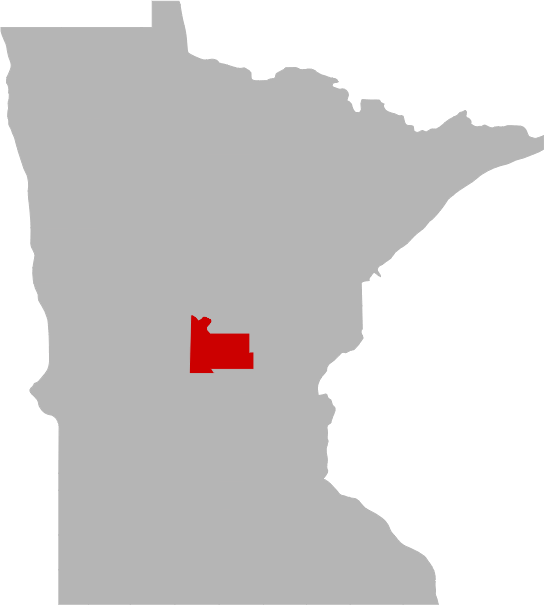
Morrison County, Minnesota

Today's Fishing Forecast
Fishing looks to be moderately active with peak fishing times around 3-5 PM. SEE MORE

Share Your Catch & Win!
Frequently Asked Questions About Cedar Lake, MN
- How big is Cedar Lake?
- How deep is Cedar Lake?
- What kind of fish can you catch in Cedar Lake?
- What are the closest cities to Cedar Lake?
- Are there places to stay in the Cedar Lake area?
- Are there boat launches on Cedar Lake?
- Are there places to eat and drink near Cedar Lake?
- What are the fishing regulations for Cedar Lake?
- What is the average air temp for Cedar Lake?
- Are there any state parks near Cedar Lake?
How big is Cedar Lake?
How deep is Cedar Lake?
What kind of fish can you catch in Cedar Lake?
Other fish species in the lake include Banded Killifish, Blackchin Shiner, Blacknose Shiner, Bluntnose Minnow, Brook Silverside, Brook Stickleback, Central Mudminnow, Cisco (Tullibee), Green Sunfish, Hybrid Sunfish, Iowa Darter, Johnny Darter, Least Darter, Pugnose Shiner, Spottail Shiner, Tadpole Madtom and White Sucker.
What are the closest cities to Cedar Lake?
Are there places to stay in the Cedar Lake area?
More Lodging Options
Are there boat launches on Cedar Lake?
Are there places to eat and drink near Cedar Lake?
What are the fishing regulations for Cedar Lake?
 There are specific fishing regulations Cedar Lake that you need to know. For complete fishing regulations visit the Minnesota Department of Natural Resources. To report a violation call (800) 652-9093. Need a Minnesota fishing license?
What aquatic invasive species are found in Cedar Lake?
Join us in the fight to prevent the spread of invasive species These sneaky creatures can hitch a ride on boats, clinging onto propellers, anchor lines, and trailers. They can even survive in hidden places like bilge water and ballast tanks, or disguise themselves in dirt and sand that sticks to nets, buckets, anchors, and waders. But don't worry, we have the power to stop them in their tracks with just a few simple steps. So let's do our part and protect our waters from these unwanted invaders.
History & Status of the Fishery
In this assessment, six standard lake survey trap nets were used to evaluate the Northern Pike regulation which was modified in 2018 to a 26 inch maximum, three fish bag limit due to an increasing abundance of small pike and an apparent decrease in large pike. The 2023 ice-out resulted in a low catch that appeared to indicate a continuation of the reduced size structure of Northern Pike first observed in 2015. The low sample size obtained in 2023 suggests caution with regard to its accuracy in representing the pike population. It is unlikely the low catch is the product of a reduced pike density. Mean length, mean weight, maximum length, %>24 inches, and %>30 inches were all well below historical levels resulting in record lows for ice-out assessments. No Pike exceeding 30 inches have been observed since 2015. The reasons for the decline in pike size structure characteristics are not well understood, though the past protection of nearly all pike in the lake under the 40 inch minimum appears to have resulted in an increased abundance of small pike. The modification of pike regulations in 2018 to a 26 inch maximum length was designed to protect larger fish while facilitating harvest of smaller pike. Ice-out assessments will be conducted every four years to evaluate changes in pike size structure and progress towards management goals.
Five Walleye were captured in the 2023 ice-out assessment ranging in length from 18.1 to 23.4 inches. Mean weight was fairly large at 2.94 pounds which has been typical for these early spring efforts. Gill nets in 2021 captured 5.83 Walleyes per lift suggesting a favorable population level.
The Black Crappie sample consisted of 66 fish ranging in size from 4.2 to 14 inches. Mean length was 10.3 inches, however the most numerous size group was 11.5-11.99 inches. The larger catches in recent years and the continued presence of crappies in the 14 inch size range are encouraging. Future crappie evaluations may include targeted spring electrofishing. Largemouth Bass and Bluegill were also measured in 2023 with the bass sample comprised of eight fish from 9.5 to 18.1 inches in length. A total of 38 Bluegill were measured which ranged in length from 3.4 to 7.9 inches.
What is the average air temp for Cedar Lake?
Are there any state parks near Cedar Lake?
For more Minnesota State Park information see our State Park Guide.
More Nearby Lakes To Explore
There's more lake's to explore around Cedar Lake...| DISTANCE | ACRES | MAX DEPTH | |
| Pine Lake | 1.2 mi | 178 | 59 ft |
| Rock Lake | 1.3 mi | 10 | |
| Stump Lake | 1.5 mi | 20 | |
| Mound Lake | 2.5 mi | 270 | 57 ft |
| Unnamed Lake | 2.6 mi | 12 | |
| Coon Lake | 2.7 mi | 15 | |
| Goose Lake | 3.2 mi | 188 | |
| Mary Lake | 3.3 mi | 129 | 58 ft |
| Buckhead Lake | 3.4 mi | 52 | |
| Slough Lake | 3.8 mi | 20 |
