


South Silver Lake
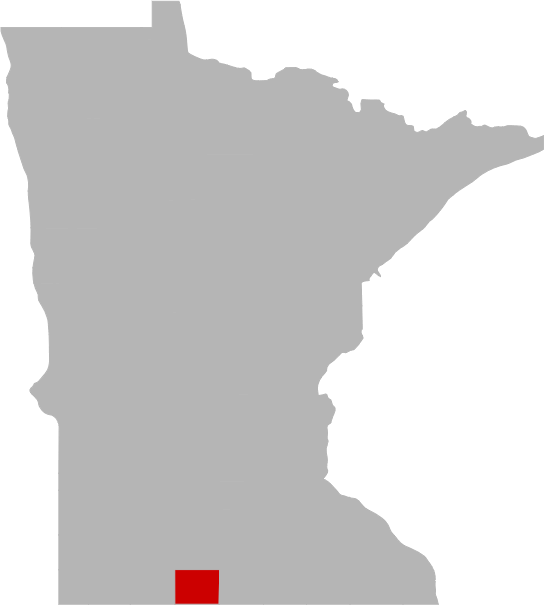
Martin County, Minnesota

Today's Fishing Forecast
Fishing looks to be fairly active with peak fishing times around 3-5 PM. SEE MORE

Share Your Catch & Win!
Frequently Asked Questions About South Silver Lake, MN
- How big is South Silver Lake?
- How deep is South Silver Lake?
- What kind of fish can you catch in South Silver Lake?
- What are the closest cities to South Silver Lake?
- Are there places to stay in the South Silver Lake area?
- Are there boat launches on South Silver Lake?
- Are there places to eat and drink near South Silver Lake?
- What is the average air temp for South Silver Lake?
How big is South Silver Lake?
How deep is South Silver Lake?
What kind of fish can you catch in South Silver Lake?
Other fish species in the lake include Common Shiner, Fathead Minnow, Freshwater Drum, Green Sunfish, Johnny Darter, Spotfin Shiner and White Sucker.
What are the closest cities to South Silver Lake?
Are there places to stay in the South Silver Lake area?
More Lodging Options
Are there boat launches on South Silver Lake?
Are there places to eat and drink near South Silver Lake?
Explore the South Silver Lake area in a RV
Are you looking for an adventurous vacation option that won't break the bank? Look no further than renting an RV! Contrary to popular belief, the process is much simpler than you might imagine. With just a few easy steps, you'll soon be experiencing the ultimate freedom and convenience of exploring the open road in your very own recreational vehicle. And the best part? RV travel can save you up to 60% compared to other types of vacations! With the money you'll save, you'll be able to travel even more and create unforgettable memories along the way. So why wait? Start planning your next adventure today with an RV rental. Learn more about renting a RV.


Pet Friendly Popup Camper for Travel Heat/AC Private Outdoor Bathroom
Brewster, MN

History & Status of the Fishery
South Silver Lake is a 245-acre, deep lake, located in Martin County. The maximum depth is 22 feet, making it one of the deeper lakes in the Windom management area. A survey was conducted the week of August 8, 2022 to monitor the fish population using 3 gill nets and 9 trap nets. Fourteen species of fish were caught during the survey. Common Carp (27.4%), Black Crappie (24.4%), Freshwater Drum (15.7%), Black Bullhead (9.7%), and Bigmouth Buffalo (9.3%) were most abundant by percent of total biomass (pounds). All other species (Walleye, Northern Pike, Largemouth Bass, White Bass, White Crappie, Yellow Bullhead, Yellow Perch, Bluegill, and Channel Catfish) each made up 3% or less of the total biomass. South Silver Lake is managed primarily for Walleye and secondarily for Yellow Perch. Walleye and Yellow Perch will continue to be actively stocked and managed. Additionally, Black Crappie are a species of interest and will be closely monitored as they are popular among local anglers.
Two Walleye were caught in gill nets and 6 Walleye were caught in trap nets. The gill net catch rate was 0.67 per gill net, less than the lower expected range for class 24 lakes (expected range is 1.2 to 6.3 per gill net) and less than the long term average of 2.4 per gill net. Lengths of Walleye ranged from just under 10 inches to 16 inches and averaged nearly 13 inches. Historical Walleye stocking on South Silver shows that fingerlings, yearlings, and adults work best to maintain a fishable population. While our management goal was not met (catch rate of 2.5 per gill net was not attained), we are committed to stocking Walleye in South Silver and any surplus production may be stocked in South Silver to help boost the population. While South Silver is not necessarily considered a top destination in the area for Walleye, we do manage it so that anglers have the opportunity at times for Walleye. Northern Pike should also be considered as a top predator to help thin out natural reproduction of Common Carp, Freshwater Drum, and Bigmouth Buffalo. One Northern Pike, 28 inches, was sampled. Northern Pike have historically occurred at low abundances in South Silver Lake. Occasional stocking of advanced fingerling fish now produced at Warren Lake near Windom may help add an important predator to the lake.
Yellow Perch relative abundance has fluctuated widely since sampling began in 1957. Recently, since 2010, catch rates have fluctuated from 22.25 per net in 2010 to 59.0 per net in 2016 and back down to 4.0 per net in 2022. The current gill net catch rate is the lowest since 2006 (2.25 per net) and the second lowest on record. It appears the decline was due to an aging adult population that is now absent from the lake with most fish currently under 7 inches. Only 1 Yellow Perch was larger than 8 inches (8.3 inches), most ranged from 5 to 7.5 inches and averaged 6.5 inches. A fishable population of Yellow Perch is present, although smaller sized. If needed, Yellow Perch will be stocked, but at this time it does not appear that is necessary as brood sized fish are present.
Black Crappie are the bright spot among all species in South Silver Lake. The trap net catch rate was 16.9 per trap net, the greatest catch rate ever observed in South Silver Lake. Lengths of Black Crappie ranged from 5.5 to 8.5 inches in the gill nets and 5.5 to 10.5 inches in the trap nets with an average of 8 inches. Health of the Black Crappie in the sample was good with many plump fish. Black Crappie angling could be very good with strong year classes approaching 9 to 10 inches in length.
Angling may be tough for Walleye and Yellow Perch over the next several years in South Silver Lake. They will be present in the lake, but relative abundance was lower than desired during sampling in 2022 and may be difficult to target. Stocking will continue in hopes to boost Walleye abundance and subsequent angling catch rates. With that stated, Black Crappie relative abundance has never been greater. Black Crappie are high on the preference list among Minnesota anglers and should provide an excellent angling and harvest opportunity over the next several years in South Silver.
What is the average air temp for South Silver Lake?
More Nearby Lakes To Explore
There's more lake's to explore around South Silver Lake...| DISTANCE | ACRES | MAX DEPTH | |
| North Silver Lake | 1.2 mi | 203 | |
| Iowa Lake | 1.4 mi | 802 | 9 ft |
| Iowa Lake | 1.7 mi | 705 | 9 ft |
| Willmert Lake (South Bay) | 2.2 mi | 361 | |
| Willmert Lake (Main Bay) | 2.9 mi | 335 | 8 ft |
| Burt Lake | 4.2 mi | 200 | |
| Swag Lake | 4.3 mi | 109 | |
| Mud Lake | 4.9 mi | 72 | |
| Clayton Lake | 5.0 mi | 499 | |
| Mud Lake | 5.3 mi | 37 |
