


Bowstring Lake
Itasca County, Minnesota
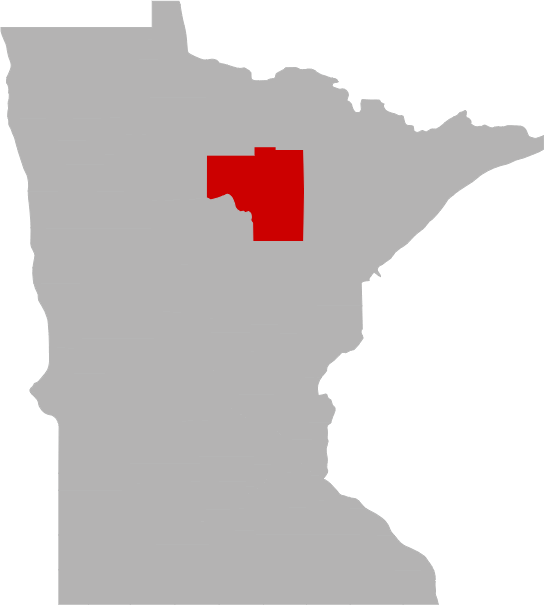
The lake is located in the Chippewa National Forest and is surrounded by a mix of hardwood and coniferous forests, providing a scenic backdrop for outdoor activities such as hiking, camping, and wildlife watching.
Bowstring Lake offers a variety of recreational opportunities, including boating, fishing, swimming, water skiing, and jet skiing. The lake has several public boat launches and a marina, making it easy for visitors to access the water.
There are several resorts, campgrounds, and vacation homes located around Bowstring Lake, making it a popular destination for families, couples, and groups of friends. The area also offers numerous dining options and other tourist attractions, including museums and historical sites.
In the winter, the lake offers ice fishing and snowmobiling opportunities, and there are several snowmobile trails located nearby, including the Bowstring Trail, which runs for over 100 miles through the Chippewa National Forest.
Overall, Bowstring Lake is a scenic and peaceful destination that offers plenty of opportunities for outdoor recreation and relaxation, making it a popular choice for vacationers looking for a quieter, more secluded getaway.
Share your catch!
We want to see what you've caught on Bowstring Lake.
Frequently Asked Questions About Bowstring Lake, MN
- How big is Bowstring Lake?
- How deep is Bowstring Lake?
- What kind of fish can you catch in Bowstring Lake?
- What are the closest cities to Bowstring Lake?
- Are there places to stay in the Bowstring Lake area?
- Are there topographical lake maps available Bowstring Lake?
- Are there boat launches on Bowstring Lake?
- Are there places to eat and drink near Bowstring Lake?
- What is the average air temp for Bowstring Lake?
- Are there any state parks near Bowstring Lake?
How big is Bowstring Lake?
How deep is Bowstring Lake?
What kind of fish can you catch in Bowstring Lake?
Other fish species in the lake include Cisco (Tullibee), Common Shiner, Golden Redhorse, Hybrid Sunfish, Lake Whitefish, Shorthead Redhorse, Silver Redhorse, Tadpole Madtom and White Sucker.
What are the closest cities to Bowstring Lake?
Are there places to stay in the Bowstring Lake area?
More Lodging Options
Lake-Link Featured Lodging


Are there topographical lake maps available Bowstring Lake?
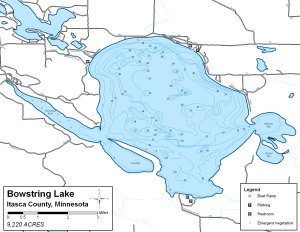
Are there boat launches on Bowstring Lake?
Bowstring Lake area businesses:
Are there places to eat and drink near Bowstring Lake?
Explore the Bowstring Lake area in a RV
Are you looking for an adventurous vacation option that won't break the bank? Look no further than renting an RV! Contrary to popular belief, the process is much simpler than you might imagine. With just a few easy steps, you'll soon be experiencing the ultimate freedom and convenience of exploring the open road in your very own recreational vehicle. And the best part? RV travel can save you up to 60% compared to other types of vacations! With the money you'll save, you'll be able to travel even more and create unforgettable memories along the way. So why wait? Start planning your next adventure today with an RV rental. Learn more about renting a RV.
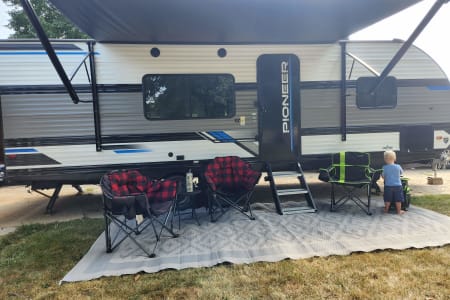

2025 Forest River Cherokee Grey Wolf - Family Friendly & Adventure Ready!
Bemidji, MN

What aquatic invasive species are found in Bowstring Lake?
Join us in the fight to prevent the spread of invasive species These sneaky creatures can hitch a ride on boats, clinging onto propellers, anchor lines, and trailers. They can even survive in hidden places like bilge water and ballast tanks, or disguise themselves in dirt and sand that sticks to nets, buckets, anchors, and waders. But don't worry, we have the power to stop them in their tracks with just a few simple steps. So let's do our part and protect our waters from these unwanted invaders.
History & Status of the Fishery
Bowstring Lake is a productive, shallow, 9,220 acre lake located 12 miles northwest of Deer River, MN. The lake has four public accesses and moderate shoreline development. The 2015 lake management plan (LMP) indicates Walleye and Black Crappie as the primary species of management because they are well-suited to the lake and popular with anglers. Northern Pike and Yellow Perch were considered secondary species for management because they also were suited to the lake, though pike size structure is poor and perch size structure is variable. The LMP goals were to maintain a catch of 8.3 Walleye/gill net, reduce the pike catch to 5.0/gill net, and maintain a catch of 3.0 Black Crappie/gill net.
In the spring of 2007, a special Northern Pike regulation was implemented that required all fish from 22 to 36 inches to be released and only one fish over 36 inches could be possessed. The regulation also had an expanded bag limit of nine fish. In the spring of 2017, the regulation was rescinded and Bowstring moved into the North-central zone regulation for pike (10 fish bag limit, 22 to 26 protected slot with only two over 26 inches).
The targeted survey in August of 2021 was conducted to assess the fish community, with an emphasis on Northern Pike and Walleye management. The survey was the first since Zebra Mussels were found in Bowstring. A total of 15 gill-nets were set during the survey.
Black Crappie catch rates have been variable since 1957, ranging from 0.3 to 9.2 fish/gill net. The catch of 3.4/net in 2021 was average for the lake and above the LMP goal. The sampled fish ranged from 4.3 to 12.2 inches and averaged 8.1 inches. Six age-classes were identified by scale analysis with fish from age 1 to 7 represented. Growth was comparable to other lakes with similar habitat to Bowstring. Crappie likely provide good fishing when a strong year-class grows to a size angler's desire.
Bowstring Lake a history of high pike catches with poor size structures. Northern Pike catches have ranged from 5.7 to 15.8 fish/net since 1957. Catches in the prior three surveys were the lowest on record but the catch of 15.6 fish/gill net in 2021 approached the record high. The catch also was nowhere near meeting the management goal of 5.0 fish/gill net. Lower pike populations are desirable because they have better growth, average size, and have less influence on prey within the fish community than high pike populations. The 2021 sampled fish ranged from 14.1 to 32.1 inches and averaged 18.6 inches. Only 9% of the sampled fish were longer than 21 inches. Unfortunately, neither of the regulations since 2007 appear to have made appreciable gains in pike size structure.
Bowstring Lake has a long history of having a good Walleye fishery maintained by natural reproduction. Walleye catches have ranged from 3.5 to 22.6/net since 1957. The 2021 catch of 10.2 Walleye/net exceeded the management goal of 8.3 fish/net. The sampled fish ranged from 7.7 to 24.0 inches and averaged 14.2 inches. Thirteen age-classes were estimated from bony structures like scales and otoliths (an inner-ear bone) and fish from age 0 to 14 were found. Recruitment appeared good; age-2 fish represented 36% of the sample while another six age-classes represented from 8 to 11% each. Growth was similar to statewide averages for all ages. Walleye averaged 14.6 inches after four years of growth.
Walleye stocking was discontinued in 1991 because natural reproduction had long been considered an important component of the population. Five of the six highest Walleye catches have occurred since stocking was discontinued. Frequent fall electrofishing surveys for young-of-the-year Walleye since 1995 has also documented consistent natural reproduction. Continued electrofishing for young Walleye may be an important tool to monitor the population and changing habitat now that Zebra Mussels are established.
The Yellow Perch population in Bowstring Lake has produced a quality fishery at times. Gill-net catches have fluctuated from a low of 7.8 fish/net in 2021 to a high of 59.0 fish/net in 1980. The record low catch in 2021 reflects declining trends observed throughout the state from 1970 to 2013. There is also some evidence the declining trends in gill-net catches is related to perch maturing at earlier ages than before, resulting in smaller size distributions that are less vulnerable to be captured in the gear. The low perch catches also correspond to high Walleye catches and near record high pike catches in Bowstring. High predator numbers may be directly effecting perch catches because of predation (actually fewer perch) or indirectly by the predation creating a response for perch to mature earlier, resulting in slower growth so the smaller perch are less catchable. The 2021 sampled fish ranged from 5.1 to 11.9 inches and averaged 6.9 inches. Additional research should help us better understand these complex ecosystems.
Other species observed during the targeted survey included Bluegill, Bowfin, Brown Bullhead, Rock Bass, Shorthead Redhorse, Tullibee and White Sucker.
What is the average air temp for Bowstring Lake?
Are there any state parks near Bowstring Lake?
For more Minnesota State Park information see our State Park Guide.
Bowstring Lake Reviews
Below is the word on street about Bowstring Lake.Have you been to Bowstring Lake? Why not share your personal reveiw with others?
Submit Review
trevor d.

mark b.
More Nearby Lakes To Explore
There's more lake's to explore around Bowstring Lake...| DISTANCE | ACRES | MAX DEPTH | |
| Unnamed Lake | 3.1 mi | 42 | |
| Elbow Lake | 3.5 mi | 30 | |
| Taylor Lake | 3.6 mi | 32 | |
| Portage Lake | 4.1 mi | 715 | 60 ft |
| Egg Lake | 4.3 mi | 101 | |
| Two Mile Lake | 4.3 mi | 22 | |
| Little Jessie Lake | 4.7 mi | 628 | 50 ft |
| Mushgee Lake | 4.9 mi | 143 | |
| Minni-Car-Car Lake | 4.9 mi | 27 | |
| Jessie Lake | 5.7 mi | 1,740 | 42 ft |


