


South Twin Lake
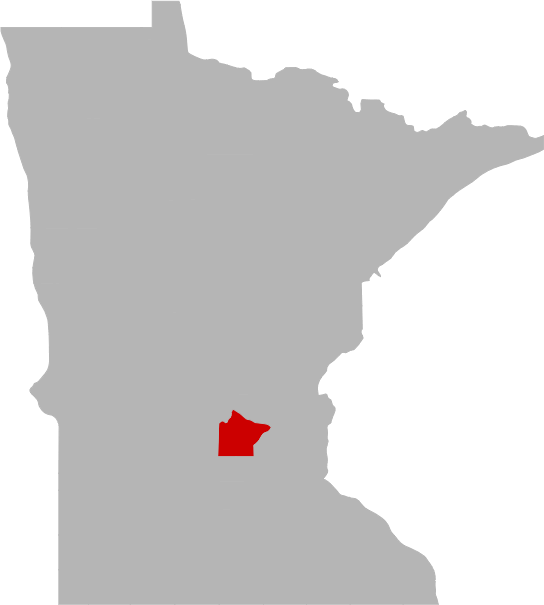
Wright County, Minnesota

Share Your Catch & Win!
Frequently Asked Questions About South Twin Lake, MN
- How big is South Twin Lake?
- How deep is South Twin Lake?
- What kind of fish can you catch in South Twin Lake?
- What are the closest cities to South Twin Lake?
- Are there places to stay in the South Twin Lake area?
- Are there places to eat and drink near South Twin Lake?
- What is the average air temp for South Twin Lake?
How big is South Twin Lake?
How deep is South Twin Lake?
What kind of fish can you catch in South Twin Lake?
Other fish species in the lake include Golden Shiner, Green Sunfish, Hybrid Sunfish and White Sucker.
What are the closest cities to South Twin Lake?
Are there places to stay in the South Twin Lake area?
More Lodging Options
Are there places to eat and drink near South Twin Lake?
Explore the South Twin Lake area in a RV
Are you looking for an adventurous vacation option that won't break the bank? Look no further than renting an RV! Contrary to popular belief, the process is much simpler than you might imagine. With just a few easy steps, you'll soon be experiencing the ultimate freedom and convenience of exploring the open road in your very own recreational vehicle. And the best part? RV travel can save you up to 60% compared to other types of vacations! With the money you'll save, you'll be able to travel even more and create unforgettable memories along the way. So why wait? Start planning your next adventure today with an RV rental. Learn more about renting a RV.
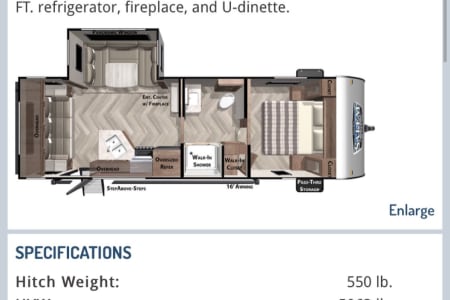


2020 Wildwood X-lite 24RLXL: Couples luxury escape or fun family getaway
Monticello, MN

History & Status of the Fishery
North and South Twin Lakes are located two miles northwest of Buffalo in Wright County. Possibly connected once, fish now move between the lakes by a culvert under CSAH 109 when water levels allow. Shore fishing is done on both lakes from the road right of way in this area since launching a boat is difficult and potentially dangerous. Each lake is small, under 50 acres. The watershed which encompasses Berthiaume, Albert, South Twin, and North Twin Lakes is also small at 1,685 acres. The Twin lakes were previously surveyed in 1983.
Little development has occurred around the lakes or in the watershed. Over half of each shoreline of North and South Twin lakes is either forested or marshland. Only a third of the overall watershed is residential and agricultural land. Lake bottom types are similar as well, composed of silt, muck and sand. Depth is the primary difference. North Twin has a maximum depth of 58 feet, South Twin, a maximum of 19 feet.
Lake depth affects many chemical and biological processes. Mid-July dissolved oxygen levels in North Twin dropped from 2.5 to 0.5 ppm between 22 and 23 feet deep, whereas South Twin dropped from 8.1 to 1.5 ppm between 8 and 9 feet. The shallowness and upstream position of South Twin resulted in high nutrient and blue-green algae levels, which in turn resulted in a secchi depth of only 1.5 feet. Aquatic plants grew to only four feet. North Twin had a secchi depth measurement of 14.5 feet and aquatic plant growth to 16 feet. Both lakes had abundant coontail and some curlyleaf pondweed. Eurasian milfoil was found for the first time in North Twin Lake in 2009.
Overall net catches for both lakes in 2009 were low. North Twin averaged only nine fish per trap net and South Twin, 16. On both lakes catches of black bullhead and yellow perch were very low, and northern pike and bluegill, average. Black crappie catches were different between the two: North Twin averaged 0.5/trap, whereas South Twin averaged 5.3/trap. The latter was the typical catch rate for similar lakes. Lake conditions seem to favor black crappies in South Twin Lake. Only North Twin was electrofished for largemouth bass because of the lack of access on South Twin. Daytime shocking on May 11, 2009 collected eight bass in the 7 to 18 inch range.
In 1983, on both lakes, northern pike populations were average, but black bullheads, yellow perch and black crappie were higher than average. The bluegill catch was high on North Twin (55/trap), but near the average on South (15.5/trap). Differences in net catches between the two surveys are difficult to decipher given the quarter century gap between the two. Possible influences may have been winter kill frequency, particularly on South Twin, timing of high water connection between the two lakes and density of aquatic plant growth limiting fish movement.
What is the average air temp for South Twin Lake?
More Nearby Lakes To Explore
There's more lake's to explore around South Twin Lake...| DISTANCE | ACRES | MAX DEPTH | |
| North Twin Lake | 0.4 mi | 49 | 58 ft |
| Albert Lake | 0.7 mi | 58 | 47 ft |
| Light Foot Lake | 0.9 mi | 69 | 22 ft |
| North Berthiaume Lake | 1.0 mi | 24 | 43 ft |
| Unnamed Lake | 1.1 mi | 10 | |
| South Berthiaume Lake | 1.4 mi | 20 | 73 ft |
| Abbie Lake | 1.8 mi | 116 | |
| Varner Lake | 1.8 mi | 84 | |
| Sullivan Lake | 2.4 mi | 71 | 58 ft |
| Birch Lake | 2.5 mi | 99 | 26 ft |


