


Maple Lake
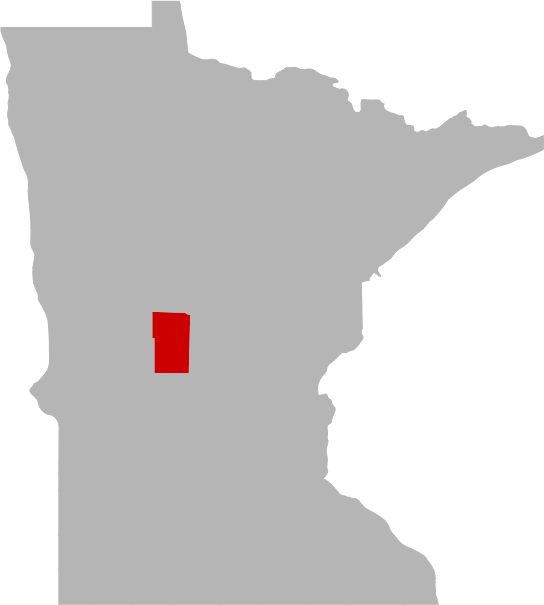
Todd County, Minnesota

Today's Fishing Forecast
Fishing looks to be fairly active with peak fishing times around 3-5 PM. SEE MORE
Share your catch!
We want to see what you've caught on Maple Lake.Frequently Asked Questions About Maple Lake, MN
- How big is Maple Lake?
- How deep is Maple Lake?
- What kind of fish can you catch in Maple Lake?
- What are the closest cities to Maple Lake?
- Are there places to stay in the Maple Lake area?
- Are there boat launches on Maple Lake?
- Are there places to eat and drink near Maple Lake?
- What are the fishing regulations for Maple Lake?
- What is the average air temp for Maple Lake?
- Are there any state parks near Maple Lake?
How big is Maple Lake?
How deep is Maple Lake?
What kind of fish can you catch in Maple Lake?
Other fish species in the lake include Banded Killifish, Blacknose Shiner, Fathead Minnow, Golden Shiner, Green Sunfish, Hybrid Sunfish, Iowa Darter, Johnny Darter, Shorthead Redhorse and White Sucker.
What are the closest cities to Maple Lake?
Are there places to stay in the Maple Lake area?
More Lodging Options
Are there boat launches on Maple Lake?
Are there places to eat and drink near Maple Lake?
What are the fishing regulations for Maple Lake?
 There are specific fishing regulations Maple Lake that you need to know. For complete fishing regulations visit the Minnesota Department of Natural Resources. To report a violation call (800) 652-9093. Need a Minnesota fishing license?
History & Status of the Fishery
Spring Trap netting was performed May 25-27 to provide data on the Bluegill size structure and evaluate effects of a 10 fish bag limit on sunfish which was implemented on March 1, 2016. Spring trap netting is the preferred method for evaluating panfish populations and has been conducted on the lake six previous times since 2003. Future evaluations relating to the 10 sunfish bag limit will incorporate spring trap netting to provide proper comparisons.
Spring trap netting in 2022 captured 184 Bluegill. Spring sample sizes in the past ranged from 292-726 fish, sometimes with fewer lifts. The total number of fish captured and catch rates are not reliable indicators of abundance changes when spring trap nets are used. Spring conditions can be quite variable and the lower catch in 2022 is not likely to represent a true decline in the population. Bluegill in 2022 ranged from 3.9- 8.58 inches and mean length was 6.63 inches. Fish over 7 inches comprised 36% of the catch and fish greater than 8 inches made up 1% of the sample. The trap net assessment completed in 2019 exhibited a similar size structure with 31% exceeding 7 inches, 3.6% over 8 inches and none over 9 inches. Maximum length was 8.78 inches and mean length was 6.3 inches. Bluegill over 9 inches have been absent since 2013. Bluegill size structure goals aim for at least 50% of the sample to exceed 7 inches, 10% to exceed 8 inches, 2% over 9 inches and the presence of fish 10 inches or longer. The 2022 results along with other post-regulation trap net assessments fail to show any progress towards reaching these management goals for size structure. Additional criteria that may be used to measure success of the reduced sunfish bag limit include: mean size, catch rate of fish over 8 inches, and mean length of top 10% of fish. When combining the four pre-regulation spring trap net surveys mean size was 6.57 inches, mean catch rate of fish over 8 inches was 2.14 net, and mean length of the top 10% was 8.06 inches. The catch rate of Bluegill over 8 inches in 2022 was 0.2/net. In 2022, mean length was 6.63 inches and the mean length of the top 10% was 7.67 inches. These metrics also demonstrate that no improvement in size structure has occurred following the implementation of specialized regulations. Most Bluegill display moderate growth up to 7.5 inches and then growth slows considerably with few reaching 8 inches despite attaining Age 9.
Black Crappie spring trap net catches can vary considerably due to sampling conditions and Maple Lake's catches have demonstrated this variability. Spring trap net catches in the lake have ranged from 36 to 562 fish with a mean of 266 fish. As with Bluegills a low overall catch of crappies does not necessarily reflect a lower population. A total of 205 crappies were captured in 2022 ranging in size from 5.9 to 12 inches, no crappies 12 inches or longer had been sampled since 2009. Mean length in 2022 was 9.7 inches and crappie longer than 10 inches comprised over 41% of the sample which was substantially higher than any previous spring trap net effort. Crappies reach 9 inches at Age 5 but growth slows appreciably once the fish reach 10 inches. The most prominent year class in the sample was Age 11 with these fish averaging 10.7 inches long. The oldest fish sampled was 13 years old.
Sixteen Pumpkinseeds were captured but not measured. Five Walleye were also netted and ranged from 10.4 to 27.5 inches. A single Northern Pike measuring 33.1 inches was sampled.
What is the average air temp for Maple Lake?
Are there any state parks near Maple Lake?
For more Minnesota State Park information see our State Park Guide.
More Nearby Lakes To Explore
There's more lake's to explore around Maple Lake...| DISTANCE | ACRES | MAX DEPTH | |
| Platt Lake | 3.2 mi | 15 | |
| Little Sauk Lake | 3.7 mi | 277 | 29 ft |
| Little Osakis Lake | 3.7 mi | 114 | 43 ft |
| Randall Lake | 3.8 mi | 15 | |
| Twin Island Lake | 4.2 mi | 27 | |
| Keller Lake | 4.3 mi | 54 | |
| Juergens Lake | 4.6 mi | 117 | 22 ft |
| Lake Osakis | 5.0 mi | 6,389 | 73 ft |
| McCarrahan Lake | 5.0 mi | 148 | |
| Guernsey Lake | 5.3 mi | 121 | 19 ft |
