


Little Birch Lake
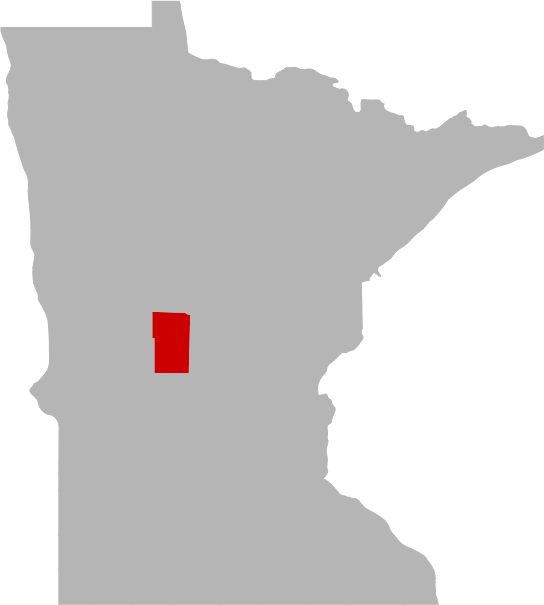
Todd County, Minnesota

Share Your Catch & Win!
Frequently Asked Questions About Little Birch Lake, MN
- How big is Little Birch Lake?
- How deep is Little Birch Lake?
- What kind of fish can you catch in Little Birch Lake?
- What are the closest cities to Little Birch Lake?
- Are there places to stay in the Little Birch Lake area?
- Are there boat launches on Little Birch Lake?
- Are there places to eat and drink near Little Birch Lake?
- What is the average air temp for Little Birch Lake?
- Are there any state parks near Little Birch Lake?
How big is Little Birch Lake?
How deep is Little Birch Lake?
What kind of fish can you catch in Little Birch Lake?
Other fish species in the lake include Banded Killifish, Blackchin Shiner, Blacknose Shiner, Bluntnose Minnow, Brook Silverside, Brook Stickleback, Central Mudminnow, Cisco (Tullibee), Common Shiner, Emerald Shiner, Fathead Minnow, Green Sunfish, Hybrid Sunfish, Iowa Darter, Johnny Darter, Least Darter, Logperch, Mimic Shiner, Mottled Sculpin, Shorthead Redhorse, Spottail Shiner, Tadpole Madtom and White Sucker.
What are the closest cities to Little Birch Lake?
Are there places to stay in the Little Birch Lake area?
More Lodging Options
Are there boat launches on Little Birch Lake?
Are there places to eat and drink near Little Birch Lake?
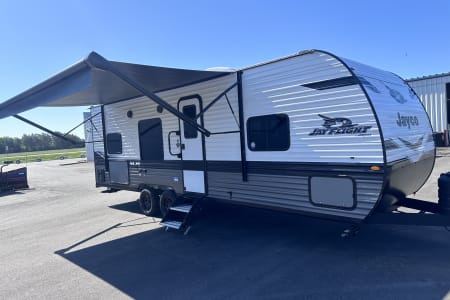
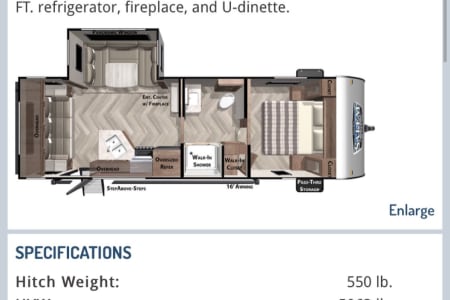
Explore the Little Birch Lake area in a RV
Are you looking for an adventurous vacation option that won't break the bank? Look no further than renting an RV! Contrary to popular belief, the process is much simpler than you might imagine. With just a few easy steps, you'll soon be experiencing the ultimate freedom and convenience of exploring the open road in your very own recreational vehicle. And the best part? RV travel can save you up to 60% compared to other types of vacations! With the money you'll save, you'll be able to travel even more and create unforgettable memories along the way. So why wait? Start planning your next adventure today with an RV rental. Learn more about renting a RV.


What aquatic invasive species are found in Little Birch Lake?
Join us in the fight to prevent the spread of invasive species These sneaky creatures can hitch a ride on boats, clinging onto propellers, anchor lines, and trailers. They can even survive in hidden places like bilge water and ballast tanks, or disguise themselves in dirt and sand that sticks to nets, buckets, anchors, and waders. But don't worry, we have the power to stop them in their tracks with just a few simple steps. So let's do our part and protect our waters from these unwanted invaders.
History & Status of the Fishery
This standard survey is part of the regular survey schedule for Little Birch Lake which is every four years. Twelve gill nets, eight spring trap nets (fished two nights) and one hour of electrofishing was used to assess the relative abundance of targeted species including Walleye, Northern Pike, Yellow Perch, Bluegill, Black Crappie and Black Bass from May through early August 2023. Little Birch is primarily managed for Walleye through artificial stocking however it has a very good Smallmouth Bass fishery.
The 2023 Walleye catch rate has improved since 2017 but is still not satisfactory from a management or angling perspective. Since 1999, catch rates suggest a declining trend in abundance despite a modest improvement from 2019 to 2023. Data summaries from all surveys indicate an increasing trend in the proportion of larger fish while smaller Walleyes are comprising less of the sample. On a positive note, it appears that the 2021 year class survived well and comprised the majority of the 2023 sample (14-16 inches). Also noted from aged fish was that growth rates are fast, suggesting Walleyes are finding adequate prey, possibly small perch (2-3 inch fish). Yellow Perch have been all but absent in our standard gill nets for years on Little Birch Lake which has led us to believe their status as essentially eliminated from the fish community. However, special small-mesh gill nets were employed in 2022 which found high numbers of small perch. All of this suggests these small perch are being utilized by larger predator fish.
Historical stocking analysis indicates fingerling stockings prior to 2012 succeeded in producing decent Walleye fisheries however, fingerling production efficiencies have plummeted and become much more expensive than they used to be. A switch to fry stocking after 2012 showed early promise but has since proven ineffective at achieving Walleye management goals. Fingerling stockings have therefore been restarted (2019, 2022) and are planned to continue as a priority during even numbered years. Walleye fry will be stocked during odd numbered years.
Northern Pike abundance has been trending upward since 2000. Population size structure has remained similar but may be improving in recent years. Number of pike exceeding 28 inches in gill nets is the highest it's been since 1999. At this time however, there are too many small pike in the fish community, and it is hoped that anglers will continue to harvest up to 10 fish less than 22 inches as much as legally possible. Lower Walleye gill catches have coincided with higher pike numbers.
The Smallmouth Bass fishery in Little Birch Lake is considered high-quality and draws considerable interest from anglers, perhaps more so than Largemouth Bass. Smallmouth bass sampled are usually large, averaging about 17 inches. A small, aged sample found that mean length at time of capture for age 5 fish was 15.7 inches. Two, 18 inch fish were aged to be 13 and 20 years old. Largemouth Bass captured ranged from 3.4 to 17.8 inches and averaged 12.4 inches. Data from 2019 and 2023 suggest that between Largemouth and Smallmouth Bass, Smallmouth Bass offer the higher quality fishery.
Panfish populations were mainly assessed using spring trap nets, but data from gill nets and electrofishing were also examined. Bluegill were much more abundant in samples than were Black Crappie. The 2019 year class of crappies was most common in our sampling. These fish averaged 10.1 inches in length. Our largest crappie was 12.1 inches. Trap net catch rates for Bluegill 8 inches and larger were less in 2023 than they were in 2017, however this may be due to sampling variability.
At the time of this survey, water clarity was measured down to 19.0 feet. Habitat for Cisco was determined to be marginal, and this species has not been seen in summer gill nets since 2011. Special sampling with vertical gill nets in 2017 captured 2 adult Cisco.
What is the average air temp for Little Birch Lake?
Are there any state parks near Little Birch Lake?
For more Minnesota State Park information see our State Park Guide.
More Nearby Lakes To Explore
There's more lake's to explore around Little Birch Lake...| DISTANCE | ACRES | MAX DEPTH | |
| Hartnett Lake | 2.0 mi | 25 | |
| Big Birch Lake | 2.1 mi | 2,107 | 81 ft |
| Sylvia Lake | 2.1 mi | 85 | 56 ft |
| Hennessy Lake | 2.4 mi | 52 | 32 ft |
| Unnamed Lake | 2.6 mi | 10 | |
| Stub Lake | 2.8 mi | 35 | |
| Fuller Lake | 2.9 mi | 52 | 47 ft |
| Bunker Lake | 3.0 mi | 30 | |
| Unnamed Lake | 3.8 mi | 17 | |
| Trace Lake | 4.0 mi | 253 | 6 ft |


