


Marion Lake
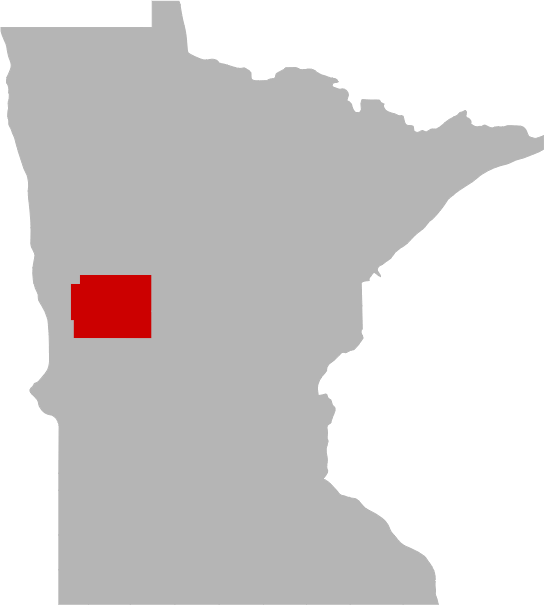
Otter Tail County, Minnesota

Today's Fishing Forecast
Fishing looks to be moderately active with peak fishing times around 4-6 PM. SEE MORE
Share your catch!
We want to see what you've caught on Marion Lake.
Frequently Asked Questions About Marion Lake, MN
- How big is Marion Lake?
- How deep is Marion Lake?
- What kind of fish can you catch in Marion Lake?
- What are the closest cities to Marion Lake?
- Are there places to stay in the Marion Lake area?
- Are there boat launches on Marion Lake?
- Are there places to eat and drink near Marion Lake?
- What is the average air temp for Marion Lake?
- Are there any state parks near Marion Lake?
How big is Marion Lake?
How deep is Marion Lake?
What kind of fish can you catch in Marion Lake?
Other fish species in the lake include Banded Killifish, Bigmouth Shiner, Blackchin Shiner, Blacknose Shiner, Bluntnose Minnow, Cisco (Tullibee), Green Sunfish, Hybrid Sunfish, Iowa Darter, Johnny Darter, Spottail Shiner, Tadpole Madtom, Weed Shiner and White Sucker.
What are the closest cities to Marion Lake?
Are there places to stay in the Marion Lake area?
More Lodging Options
Are there boat launches on Marion Lake?
Are there places to eat and drink near Marion Lake?
What aquatic invasive species are found in Marion Lake?
Join us in the fight to prevent the spread of invasive species These sneaky creatures can hitch a ride on boats, clinging onto propellers, anchor lines, and trailers. They can even survive in hidden places like bilge water and ballast tanks, or disguise themselves in dirt and sand that sticks to nets, buckets, anchors, and waders. But don't worry, we have the power to stop them in their tracks with just a few simple steps. So let's do our part and protect our waters from these unwanted invaders.
History & Status of the Fishery
Marion Lake is a 1,664-acre mesotrophic (moderately fertile) lake located in north-central Otter Tail County approximately four miles southwest of Perham, MN. The immediate watershed is composed of agricultural land interspersed with hardwood woodlots. The lake is composed of two basins which are separated by a peninsula. Boats can navigate between the basins using a narrow channel along the north shore. The west basin has a maximum depth of 30 feet while the east basin has a maximum depth of 62 feet. Forty-one percent of the lake area is 15 feet or less in depth. The secchi disk reading during the 2021 survey was 13.1 feet. Previous secchi disk readings have ranged from 9.0 to 15.0 feet.
The shoreline of Marion Lake has been extensively developed. Homes, cottages, and resorts compose the majority of the development. A state owned public access is located along the southeast shoreline of the lake. Shoal water substrates consist primarily of sand interspersed with areas of gravel and rubble. Stands of emergent vegetation (hardstem bulrush, common cattail, and wild rice) are located in various areas throughout the lake. Emergent plants are important because they provide valuable fish and wildlife habitat and are critical for maintaining good water quality. They protect shorelines and lake bottoms, and can absorb and breakdown polluting chemicals. Emergent plants provide spawning areas for fish such as Northern Pike, Largemouth Bass, and panfish. They also serve as important nursery areas for all species of fish. Because of their ecological value, emergent plants may not be removed without a DNR permit. To maintain the excellent water quality and angling that this lake has to offer, it is imperative to preserve the quality of the aquatic habitat.
Marion Lake can be ecologically classified as a Walleye-Bass-Panfish type of lake and this is reflected in the assemblage of the fish community. Walleye, Northern Pike, Largemouth Bass, and Bluegill are the dominant gamefish species.
Walleye abundance has remained stable over the recent series of surveys. Walleyes ranged in length from 9.1 to 24.3 inches with an average length and weight of 17.1 inches and 2.0 pounds. Walleyes attain an average length of 15.8 inches at four years of age.
Northern Pike abundance has also remained stable. Northern Pike reproduction is consistently good. Pike ranged in length from 17.4 to 32.2 inches with an average length and weight of 23.4 inches and 2.9 pounds. Northern Pike attain an average length of 26.4 inches at five years of age.
An abundant Largemouth Bass population exists. Age data indicate that Largemouth Bass reproduction is consistently good. Largemouth Bass ranged in length from 8.9 to 16.2 inches with an average length and weight of 12.4 inches and 1.1 pounds. Bass attain an average length of 13.4 inches at five years of age.
Catch data indicate that Bluegills are very abundant. Twenty-nine percent of the Bluegills were 7.0 inches or greater in length, while only 2% were 8.0 inches or greater in length. Bluegills attain an average length of 7.0 inches at seven years of age.
Anglers can maintain the quality of angling by practicing selective harvest. Selective harvest encourages the release of medium to large size fish while allowing the harvest of more abundant smaller fish for table fare. Releasing the medium to large fish will ensure that the lake will have enough spawning age fish on an annual basis and will provide anglers with more opportunities to catch large fish in the future.
Marion Lake is not listed as an infested water. Aquatic invasive species are threatening Minnesota waters. The non-native species can potentially harm water quality, water recreation, aquatic habitat, native species, and fish populations. Anglers can help prevent the introduction and spread of invasive species by following watercraft transportation laws.
What is the average air temp for Marion Lake?
Are there any state parks near Marion Lake?
For more Minnesota State Park information see our State Park Guide.
More Nearby Lakes To Explore
There's more lake's to explore around Marion Lake...| DISTANCE | ACRES | MAX DEPTH | |
| Lone Pine Lake | 2.6 mi | 88 | 79 ft |
| Unnamed Lake | 2.7 mi | 35 | |
| Wolf Lake (West Wolf) | 3.1 mi | 73 | 51 ft |
| Boedigheimer Lake | 3.1 mi | 169 | 26 ft |
| Bolton Lake | 3.3 mi | 42 | 0 ft |
| Henry Lake | 3.6 mi | 57 | |
| Head Lake | 3.8 mi | 400 | 26 ft |
| Lake Alice | 4.2 mi | 47 | 39 ft |
| Unnamed Lake | 4.2 mi | 10 | |
| South Rice Lake | 4.2 mi | 121 |


