


Long Lake
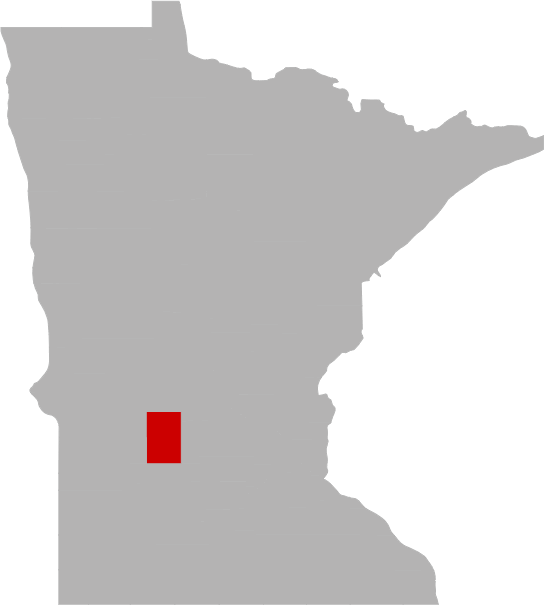
Kandiyohi County, Minnesota

Share Your Catch & Win!
Frequently Asked Questions About Long Lake, MN
- How big is Long Lake?
- How deep is Long Lake?
- What kind of fish can you catch in Long Lake?
- What are the closest cities to Long Lake?
- Are there places to stay in the Long Lake area?
- Are there boat launches on Long Lake?
- Are there places to eat and drink near Long Lake?
- What are the fishing regulations for Long Lake?
- What is the average air temp for Long Lake?
- Are there any state parks near Long Lake?
How big is Long Lake?
How deep is Long Lake?
What kind of fish can you catch in Long Lake?
Other fish species in the lake include Banded Killifish, Blackchin Shiner, Bluntnose Minnow, Brook Silverside, Common Shiner, Golden Shiner, Green Sunfish, Hybrid Sunfish, Logperch, Sand Shiner, Spottail Shiner and White Sucker.
What are the closest cities to Long Lake?
Are there places to stay in the Long Lake area?
More Lodging Options
Are there boat launches on Long Lake?
Are there places to eat and drink near Long Lake?
What are the fishing regulations for Long Lake?
 There are specific fishing regulations Long Lake that you need to know. For complete fishing regulations visit the Minnesota Department of Natural Resources. To report a violation call (800) 652-9093. Need a Minnesota fishing license?
What aquatic invasive species are found in Long Lake?
Join us in the fight to prevent the spread of invasive species These sneaky creatures can hitch a ride on boats, clinging onto propellers, anchor lines, and trailers. They can even survive in hidden places like bilge water and ballast tanks, or disguise themselves in dirt and sand that sticks to nets, buckets, anchors, and waders. But don't worry, we have the power to stop them in their tracks with just a few simple steps. So let's do our part and protect our waters from these unwanted invaders.
History & Status of the Fishery
A standard survey of Long Lake was conducted in late-June of 2023. An aquatic vegetation transect survey was also conducted in 2023. A targeted survey is generally used for sampling a specific kind of fish or time of year (i.e. spawning season, fall season, etc.) unlike a standard survey which samples a wider range of fish species during the summer months using standard methodology (i.e. standard time of year, set sampling stations, taking water clarity readings and oxygen/temperature profiles, etc.) and gears (i.e. lake survey gillnets, trapnets and possibly spring electrofishing for Largemouth Bass).
Long is a small (286 acres) and low to moderately productive lake located in Kandiyohi County. The maximum depth is 46 feet. Invasive species recently found in Long during 2023 include Starry Stonewort (near southwest public access) and Zebra Mussel. Residential development (110 homes/cabins, 2013 resurvey) has occurred around the entire lake except for some south shoreline areas. There are three resort/campgrounds located adjacent to Long Lake. Hardwoods and adjacent wetlands are the dominant cover types within the immediate watershed. Nutrient runoff is limited primarily residential to lawn runoff. The outlet connects to the Middle Fork Crow Reservoir. A new four lane highway will slightly alter the outlet area once completed in 2024. There are two public access sites adjacent to the lake. Various emergent and floating-leaf vegetation (i.e. yellow and white water lilies, hardstem bulrush, cattails, and wild rice) species were present in Long during 2023 and were especially abundant in bay and south shoreline areas. Submergent vegetation consisted mostly of coontail, sago pondweed, muskgrass, northern milfoil, clasping-leaf pondweed, bladderwort and bushy pondweed in the lake during 2023. Filamentous algae densities were moderate in Long. Shoalwater substrates are primarily sand, silt, rubble, boulder and gravel. Water quality is good (total phosphorus=0.011 ppm, June 10, 2023) in Long Lake. Water clarity (secchi=16.0 feet) was excellent on June 20, 2023 for Long Lake. Dissolved oxygen levels were above 5.0 ppm down to 21 feet deep during the survey. An experimental regulation was implemented for bass (12 inch maximum size limit) in 1997 as part of a statewide research study. A public meeting was held at the end of the 2005 fishing season to get public input whether the regulation should remain, be changed, or discontinued. The DNR decided to change the bass regulation in December 2005 to a DNR state toolbox regulation (a 12 inch maximum size limit with one bass over 20 inches allowed). The new bass regulation took effect on May 27, 2006. This regulation was monitored, and a public meeting was held at the end of September 2011 to get public input regarding the special regulation on bass. The DNR decided to change the bass regulation in December 2011 (all Largemouth Bass from 14 inches to 20 inches to be immediately released with one bass over 20 inches allowed in possession). The new bass regulation took effect May 26, 2012 and is currently in effect. Quality Sunfish Initiative "QSI" was recently enacted during 2021. Special regulations for several area lakes (Nest, Long, Diamond, George and Florida) including Long Lake entail reduced bag limits (i.e., 5 or 10 fish) for Sunfish in five lakes and Crappie in one lake. Special regulations for Long entail reduced bag limits of ten fish for Sunfish. These regulations are evaluated by special sampling in May with standard lake survey trapnets. Long was last surveyed by special sampling for Sunfish in mid-May of 2021. Long is a popular fishing lake for Largemouth Bass, Bluegill and Black Crappie, and Northern Pike. Anglers also seek Walleye occasionally.
Largemouth Bass was not surveyed by night spring electrofishing in 2023. The most recent post spawn spring night electrofishing was conducted in 2019 (146.09 fish/hour). The 2019 Largemouth Bass average weight and length were 0.87 pounds and 11.29 inches. Largemouth Bass catch rate of quality size (12.00 inches plus) was moderate (45.52 fish/hour) in 2019. The 2019 Largemouth Bass catch rate of preferred size (15.00 inches plus) was low (6.23 fish/hour). Largemouth Bass catch rate was 92.00 fish/hour (0.53 pounds and 8.90 inches) in the 2016 post spawn night electrofishing survey. A greater variety of Largemouth Bass sizes and ages were captured in a 2016 post spawn night electrofishing survey compared to 2019 and other years.
Black Crappie abundance was low (1.20 fish/trapnet) in 2023. The historical average trapnet catch rate is 1.91 fish/trapnet. No Black Crappie were captured in the 2023 gillnets. The 2023 Black Crappie average size was moderate (0.47 pounds and 9.37 inches) from trapnets. The 2023 Black Crappie catch rate of quality size (8.00 inches plus) was low (1.10 fish/trapnet). The largest Black Crappie captured was 11.46 inches.
Northern Pike abundance was high (13.33 fish/gillnet) in 2023. The Northern Pike historical catch rate is 5.30 fish/gillnet. The 2023 average size was small (1.53 pounds and 19.07 inches) from gillnets. The Northern Pike average weight is 2.43 pounds from gillnets. The 2023 Northern Pike catch rate of quality size (21.00 inches plus) was moderate (2.00 fish/gillnet). The largest Northern Pike captured was 27.95 inches. Northern Pike possession limit regulations for Long in the North-central Zone are as follows: anglers can keep 10 Northern Pike, but not more than two pike longer than 26.0 inches; and all from 22.0 to 26.0 inches must be released. Northern Pike taken by spearing follow the same rules except one pike may be between 22.0 and 26.0 inches or two larger than 26.0 inches.
Walleye abundance was moderate (2.00 fish/gillnet in 2023 for Long. The Walleye historical catch rate is 1.44 fish/gillnet. The 2023 Walleye average weight was moderate (1.62 pounds) from gillnets. Walleye growth rates were good for ages 1-7. Long Lake is managed as a put and take "bonus" Walleye fishery due to minimal/no natural reproduction. The 2019 year class comprised 38% of the total Walleye catch in 2023. The largest Walleye captured was 26.34 inches. Long Lake was recently stocked with Walleye in the fall 2018 (16 adults, 21 pounds; 1,356 yearlings, 375 pounds), 2019 (3,930 fingerlings, 255 pounds), 2020 (36 adults, 72 pounds; 254 yearlings, 169 pounds), 2021 (600 fingerlings, 127 pounds), 2023 (25 adults, 41 pounds; 250 yearlings, 95 pounds). Local anglers report occasionally catching Walleye especially during the winter months.
Yellow Perch were not captured in the 2023 gillnets. Yellow Perch abundance was low in the 2023 trapnets (0.30 fish/trapnet). The Yellow Perch historical catch rates for Long Lake are 1.12 fish/gillnet and 0.22 fish/trapnet. The 2023 Yellow Perch average weight and length were moderate (0.14 pounds and 6.51 inches) from trapnets.
Bluegill abundance was low (15.90 fish/trapnet) in 2023. The Bluegill average historical catch rate is 39.79 fish/trapnet. The 2023 Bluegill average size was large (0.27 pounds and 6.55 inches) from trapnets. The Bluegill historical average weight is 0.14 pounds from trapnets. The 2023 Bluegill catch rate of quality size (6.00 inches plus) Bluegill was low (9.00 fish/trapnet). The 2023 catch rate of preferred size (8.00 inches plus) Bluegill was moderate (4.80 fish/trapnet). Bluegill growth rates were average. Multiple year classes (2019, 2017 and 2016) each comprised approximately 20% of the total 2023 Bluegill catch. The largest Bluegill captured was 9.88 inches.
Pumpkinseed Sunfish numbers were low (1.30 fish/trapnet) in 2023 compared to the historical average (3.75 fish/trapnet). The 2023 Pumpkinseed Sunfish average size was moderate (0.18 pounds and 5.53 inches) from trapnets. The largest Pumpkinseed Sunfish was 8.82 inches.
Hybrid Sunfish numbers were low (2.80 fish/trapnet) in 2023 trapnets compared to the historical average (4.31 fish/trapnet). The 2023 Hybrid Sunfish average size was large (0.24 pounds and 6.26 inches) from trapnets.
Yellow Bullhead numbers were abundant (12.50 fish/trapnet) in 2023 trapnets compared to the historical average (7.18 fish/trapnet). The Yellow Bullhead catch rate was 9.33 fish/gillnet in the 2023 gillnets. The Yellow Bullhead historical gillnet catch rate is 3.79 fish/gillnet for Long Lake. The 2023 Yellow Bullhead average size was large (0.74 pounds and 10.76 inches) from trapnets. The Yellow Bullhead historical average weight and length are 0.61 pounds and 10.68 inches from trapnets for Long Lake. The largest Yellow Bullhead was 14.92 inches.
Current fish management activities on Long Lake include monitoring the fish population on a periodic basis, protecting aquatic vegetation through the permit process, preventing and educating about the spread of invasive species, evaluating the new bass regulation, and stocking various fish species as warranted. The Long Lake fishery will be surveyed in 2024 for Largemouth Bass by spring night electrofishing and Sunfish by May trapnets. A standard survey will be conducted in 2028.
What is the average air temp for Long Lake?
Are there any state parks near Long Lake?
For more Minnesota State Park information see our State Park Guide.
More Nearby Lakes To Explore
There's more lake's to explore around Long Lake...| DISTANCE | ACRES | MAX DEPTH | |
| Unnamed Lake | 2.5 mi | 10 | |
| Unnamed Lake | 2.8 mi | 15 | |
| Lake Monongalia | 3.5 mi | 2,271 | 14 ft |
| Calhoun Lake | 4.0 mi | 647 | 13 ft |
| Unnamed Lake | 4.2 mi | 257 | |
| Unnamed Lake | 4.4 mi | 10 | |
| Unnamed Lake | 4.7 mi | 25 | |
| Green Lake | 5.4 mi | 5,569 | 110 ft |
| Jesse Lake | 6.0 mi | 74 | |
| Unnamed Lake | 6.5 mi | 10 |


