


Lake Monongalia
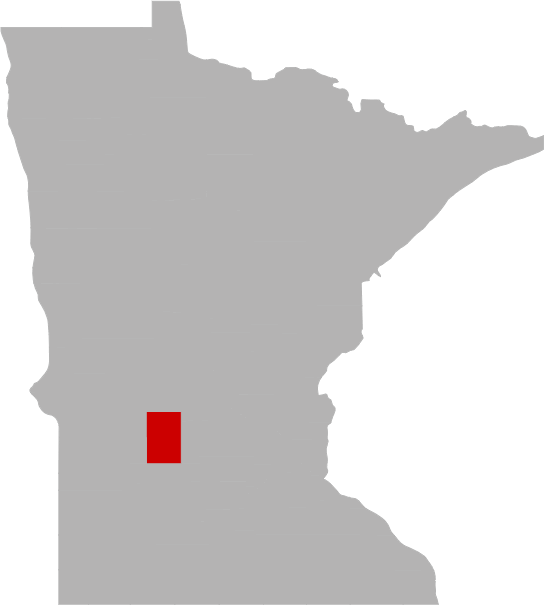
Kandiyohi County, Minnesota

Share Your Catch & Win!
Frequently Asked Questions About Lake Monongalia, MN
- How big is Lake Monongalia?
- How deep is Lake Monongalia?
- What kind of fish can you catch in Lake Monongalia?
- What are the closest cities to Lake Monongalia?
- Are there places to stay in the Lake Monongalia area?
- Are there boat launches on Lake Monongalia?
- Are there places to eat and drink near Lake Monongalia?
- What is the average air temp for Lake Monongalia?
- Are there any state parks near Lake Monongalia?
How big is Lake Monongalia?
How deep is Lake Monongalia?
What kind of fish can you catch in Lake Monongalia?
Other fish species in the lake include Bluntnose Minnow, Golden Shiner, Green Sunfish, Hybrid Sunfish, Tadpole Madtom and White Sucker.
What are the closest cities to Lake Monongalia?
Are there places to stay in the Lake Monongalia area?
More Lodging Options
Are there boat launches on Lake Monongalia?
Are there places to eat and drink near Lake Monongalia?
Explore the Lake Monongalia area in a RV
Are you looking for an adventurous vacation option that won't break the bank? Look no further than renting an RV! Contrary to popular belief, the process is much simpler than you might imagine. With just a few easy steps, you'll soon be experiencing the ultimate freedom and convenience of exploring the open road in your very own recreational vehicle. And the best part? RV travel can save you up to 60% compared to other types of vacations! With the money you'll save, you'll be able to travel even more and create unforgettable memories along the way. So why wait? Start planning your next adventure today with an RV rental. Learn more about renting a RV.


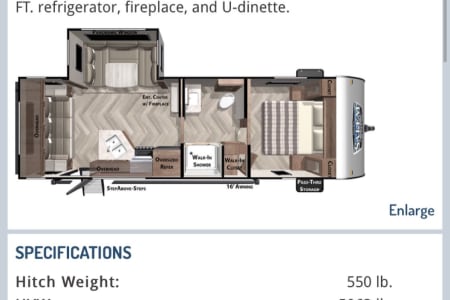
Spacious Family Camper: 5+ People, Fully Furnished, 1/2T towable
New London, MN

History & Status of the Fishery
A targeted trapnet survey of Middle Fork Crow Reservoir "MFCR", also known as Monongalia or Mud Lake, was conducted in early June of 2023. The purpose of the survey was to determine the extent of a partial winterkill in February/March of 2023. Four lake survey trapnets were set at standard stations. At least one trapnet was set in each major basin (Mill Pond, Lower Reservoir, Upper Reservoir and Mud). The surface water temperature was 78.6 F. The water was slightly turbid with a brown stained color. Submergent vegetation density was light. Moderate stands of yellow waterlily were present. Filamentous algae blooms were not apparent during the 2023 early June survey unlike other years. A targeted survey is generally used for sampling a specific kind of fish or time of year (i.e. spawning season, fall season, etc.) unlike a standard survey which samples a wider range of fish species during the summer months using standard methodology (i.e. standard time of year, set sampling stations, taking water clarity readings and oxygen/temperature profiles, etc.) and gears (i.e. lake survey gillnets, trapnets and possibly spring electrofishing for Largemouth Bass).
MFCR is a large (1,565 acres) and productive reservoir located in Kandiyohi County with three distinct basins starting upstream to downstream which includes: Mud Lake also known as Monongalia, the reservoir, and the Mill Pond located within the City of New London. In addition, there are multiple smaller bays within these basins. The MFCR maximum depth is 14 feet, which occurs in the Mill Pond basin near the New London Dam. The depth in Mud Lake basin is usually less than 4 feet. The reservoir basin maximum depth is about 6 feet deep. Water quality (total phosphorus=0.036 mg/l) was moderate during June of 2013 for MFCR. Water clarity was good (6.5 feet) on June 8, 2023. A helixor aeration system operates in the mid-portion of the reservoir basin during the winter months. It is adequate at maintaining oxygen levels during mild or low snowfall winters. However, both partial and significant winterkills have been frequent occurrences during winters with abundant snowfall accumulations. The present aeration system is unable to maintain adequate oxygen during these winters due to the large upstream volume of low/no oxygenated water flowing thru the aeration site and downstream portions of the reservoir. Installing a functional aeration system upstream on the Mud basin that maintains adequate oxygen levels is not feasible due to poor bottom substrates (muck), shallow depth, abundant decaying vegetation, poor accessibility, and large size. Low dissolved oxygen often releases high levels of hydrogen sulfide from the sediments during the late winter/early spring months for MFCR basins. Winter oxygen levels in MFCR were adequate from 2014-2018. However, significant snowfall in February of 2019 resulted in rapid depleted oxygen levels and probable winterkill. Winter dissolved oxygen levels were also low (1-2 ppm) during January/February of 2019, 2020 and 2022. Winter oxygen levels were less than 1 ppm in late February and early March of 2023. Sporadic numbers and species of dead fish were noted after ice out during these same years. The aeration system was operated in 2022-2023 winter. The 2023-24 winter was mild. The aeration system was not operated in 2023-24 winter.
Various fish species were captured in the four standard lake survey trapnets for the MFCR June survey. Yellow Bullhead were the most numerous fish species present with 24.25 fish/trapnet and average size of 8.25 inches. Black Bullhead numbers were low (4.00 fish/trapnet, 7.43 inches). Pumpkinseed were captured in low numbers (4.50 fish/trapnet, 5.73 inches) during 2023. Northern Pike numbers (2.75 fish/trapnet, 21.80 inches) were moderate in the 2023 trapnets. The largest Northern Pike captured was 30.55 inches. Northern Pike possession limit regulations for MFCR in the North-central Zone are as follows: anglers can keep 10 Northern Pike, but not more than two pike longer than 26.0 inches; and all from 22.0 to 26.0 inches must be released. Northern Pike taken by spearing follow the same rules except one pike may be between 22.0 and 26.0 inches or two larger than 26.0 inches. Other species captured included low numbers of Black Crappie and Bowfin. No Bluegill or Largemouth Bass were captured in the 2023 trapnets. Walleye were also absent from the 2023 trapnet survey. A local fishing tournament held on June 10, 2023 yielded moderate numbers of Northern Pike (66 fish, 5.5 pounds average) and low numbers of Largemouth Bass (3 fish, 1.42 pounds average). Although a partial winterkill occurred, it appears that adequate numbers of gamefish survived the 2022-23 winter.
Current fish management activities on MFCR include monitoring the fish population on a periodic basis, monitoring winter dissolved oxygen levels, assisting local residents and Kandiyohi County in the operation of the aeration system, protecting native aquatic vegetation through the permit process, preventing and educating about the spread of invasive species, participating in local watershed initiatives, and stocking various fish species as warranted. The MFCR fishery will be assessed in the 2027 summer for all fish species.
What is the average air temp for Lake Monongalia?
Are there any state parks near Lake Monongalia?
For more Minnesota State Park information see our State Park Guide.
More Nearby Lakes To Explore
There's more lake's to explore around Lake Monongalia...| DISTANCE | ACRES | MAX DEPTH | |
| Unnamed Lake | 1.0 mi | 10 | |
| Unnamed Lake | 2.4 mi | 15 | |
| Unnamed Lake | 3.0 mi | 10 | |
| Unnamed Lake | 3.4 mi | 15 | |
| Long Lake | 3.5 mi | 325 | 46 ft |
| Unnamed Lake | 3.7 mi | 10 | |
| Unnamed Lake | 4.4 mi | 25 | |
| Nest Lake | 4.5 mi | 969 | 40 ft |
| Green Lake | 5.1 mi | 5,569 | 110 ft |
| Andrew Lake | 5.1 mi | 759 | 26 ft |


