


Timber Lake
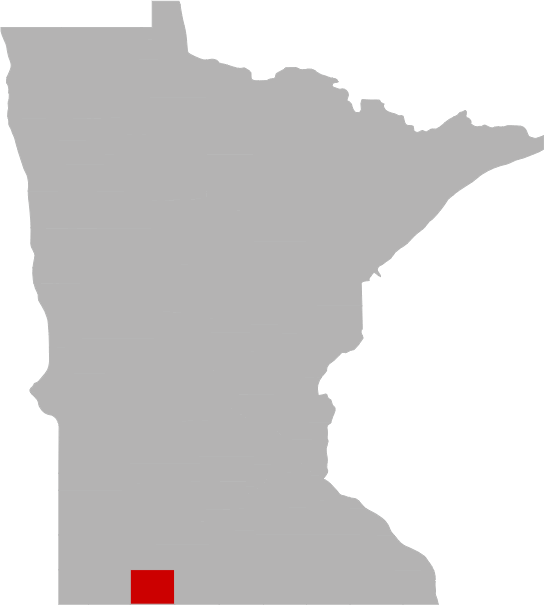
Jackson County, Minnesota

Share Your Catch & Win!
Frequently Asked Questions About Timber Lake, MN
- How big is Timber Lake?
- How deep is Timber Lake?
- What kind of fish can you catch in Timber Lake?
- What are the closest cities to Timber Lake?
- Are there places to stay in the Timber Lake area?
- Are there boat launches on Timber Lake?
- Are there places to eat and drink near Timber Lake?
- What is the average air temp for Timber Lake?
- Are there any state parks near Timber Lake?
How big is Timber Lake?
How deep is Timber Lake?
What kind of fish can you catch in Timber Lake?
Other fish species in the lake include Fathead Minnow, Green Sunfish, Orangespotted Sunfish and White Sucker.
What are the closest cities to Timber Lake?
Are there places to stay in the Timber Lake area?
More Lodging Options
Are there boat launches on Timber Lake?
Are there places to eat and drink near Timber Lake?
Explore the Timber Lake area in a RV
Are you looking for an adventurous vacation option that won't break the bank? Look no further than renting an RV! Contrary to popular belief, the process is much simpler than you might imagine. With just a few easy steps, you'll soon be experiencing the ultimate freedom and convenience of exploring the open road in your very own recreational vehicle. And the best part? RV travel can save you up to 60% compared to other types of vacations! With the money you'll save, you'll be able to travel even more and create unforgettable memories along the way. So why wait? Start planning your next adventure today with an RV rental. Learn more about renting a RV.

Pet Friendly Popup Camper for Travel Heat/AC Private Outdoor Bathroom
Brewster, MN


History & Status of the Fishery
Timber Lake is a 192-acre lake, located in northern Jackson County, near the City of Wilder. The lake has a maximum depth of eight feet. Timber Lake is managed primarily for Northern Pike and Yellow Perch and secondarily for Walleye and Black Crappie. Despite frequent winterkills, the Northern Pike and Yellow Perch populations have been consistently maintained over the last couple of decades. Walleye were first stocked in 2019 to control the highly abundant Yellow Perch and Black Bullhead populations. Northern Pike have been stocked sporadically over the last decade, mostly limited by availability. During the late 1980's and early 1990's, Timber Lake had a decent Black Crappie population, which all but disappeared in the 2004 survey. In an effort to reestablish the Black Crappie population in Timber Lake, it was stocked with adults in 2017. Yellow Perch have not been stocked recently because they sustain themselves through natural reproduction. A survey was conducted the week of July 5, 2022 to monitor the fish population using one gill net and eight trap nets.
Northern Pike catch rates have varied from 0.0 per gill net in 2016 to 11.7 per gill net in 1994, and have averaged 3.4 per gill net since 1985. The 2022 Northern Pike catch rate was 5.0 per gill net which is within the expected range of catch rates for similar lakes (1.1 to 8.0 per gill net). Overall, Northern Pike size structure was small, with lengths ranging from 18.3 to 24.4 inches and averaging 20.4 inches. The Northern Pike that were sampled were likely the result of fingerling stocking in the fall of 2021, when 1,370 fingerlings were stocked, equaling a little over seven Pike per acre. Northern Pike were plump, likely signaling that Pike foraged heavily on the highly abundant Yellow Perch population. Timber Lake should be a great place to target Northern Pike in the near future. Timber Lake is within the "southern zone" of the Northern Pike zone regulations, so two Pike longer than 24 inches can be harvested. Northern Pike under 24 inches must be released.
Yellow Perch have historically been highly abundant in Timber Lake with catch rates up to 245.0 per gill net in 2016. In 2022, the catch rate decreased dramatically to 4.0 per gill net, which is the lowest catch rate observed in survey history. The dramatic decrease could be the result of predation on Yellow Perch by the 2019 Walleye year class and the Northern Pike that were stocked as adults in 2018 and fingerlings in 2021. A second possibility is that Yellow Perch movement was limited during the survey, thus not getting entangled in the gill net. Lengths of Yellow Perch ranged from 4.4 to 7.2 inches and averaged 5.8 inches. Yellow Perch were plump indicating that they are foraging successfully. Abundant predators may help improve the size structure of Yellow Perch in Timber Lake.
Walleye were first stocked in Timber Lake in 2019 with goals of creating a Walleye rearing pond and as an additional predator to control Yellow Perch and Black Bullhead populations. Additional Walleye fry stockings have occurred in 2021 and 2022. In the 2022 survey, the Walleye catch rate was 8.0 per gill net, which is within the expected range of catch rates for similar lakes (2.3 to 18.1 per gill net). All of the Walleye sampled were age-3, indicating that the 2019 stocking was successful. Walleyes ranged in length from 18.2 to 19.8 inches and averaged 19.0 inches. Walleye in Timber Lake grow fast as they averaged 19.0 inches at age-3. Walleye were also foraging effectively and are plump. While Walleye fingerlings were never harvested out of Timber Lake, it appears that predator management may be having an effect on the Yellow Perch population. Additionally, a Walleye fishery has been established which produced a good walleye bite during the winter of 2021-2022.
Timber Lake used to have a Black Crappie population in the late 1980's and the early 1990's, so adult Black Crappie were stocked in 2017 to reestablish a fishable population. Thus far, the Black Crappie have failed to produce a fishery and appear to be very scarce in Timber Lake, as there were zero Black Crappie sampled in the 2022 survey.
The Black Bullhead catch rates was 91.0 per gill net which is within the expected range of catch rates for similar lakes (30.3 to 150.6 per gill net). Lengths of Black Bullheads ranged from 5.0 to 11.5 inches and averaged 6.4 inches. Other species sampled included Bigmouth Buffalo, Common Carp, Green Sunfish, Orangespotted Sunfish, White Crappie, White Sucker, and Yellow Bullhead.
What is the average air temp for Timber Lake?
Are there any state parks near Timber Lake?
For more Minnesota State Park information see our State Park Guide.
More Nearby Lakes To Explore
There's more lake's to explore around Timber Lake...| DISTANCE | ACRES | MAX DEPTH | |
| Unnamed Lake | 1.7 mi | 12 | |
| Teal Lake | 2.3 mi | 89 | |
| String Lake | 3.3 mi | 336 | 0 ft |
| Heron Lake (North Heron) | 4.1 mi | 2,142 | |
| Heron Lake (North Marsh) | 4.2 mi | 195 | |
| Heron Lake (Division Bay) | 4.4 mi | 2,142 | |
| Heron Lake (West Bay) | 4.7 mi | 141 | |
| Heron Lake (Duck) | 5.1 mi | 289 | |
| Lake Flaherty | 5.2 mi | 457 | 0 ft |
| Unnamed Lake | 5.8 mi | 22 |


