


Shamrock Lake
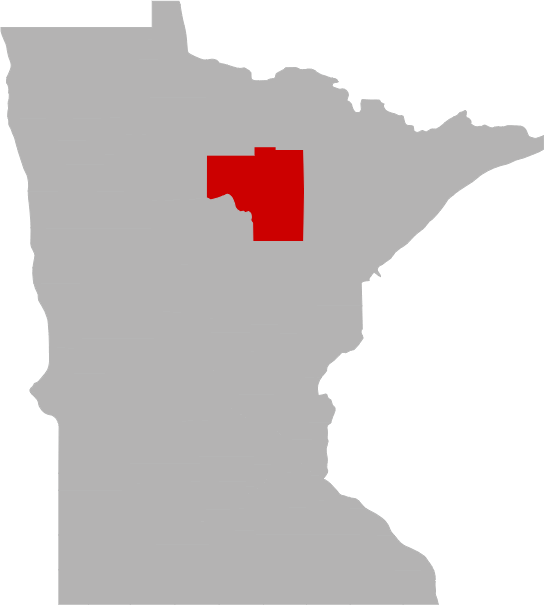
Itasca County, Minnesota
Share your catch!
We want to see what you've caught on Shamrock Lake.Frequently Asked Questions About Shamrock Lake, MN
- How big is Shamrock Lake?
- How deep is Shamrock Lake?
- What kind of fish can you catch in Shamrock Lake?
- What are the closest cities to Shamrock Lake?
- Are there places to stay in the Shamrock Lake area?
- Are there places to eat and drink near Shamrock Lake?
- What is the average air temp for Shamrock Lake?
- Are there any state parks near Shamrock Lake?
How big is Shamrock Lake?
How deep is Shamrock Lake?
What kind of fish can you catch in Shamrock Lake?
Other fish species in the lake include Cisco (Tullibee), Hybrid Sunfish and White Sucker.
What are the closest cities to Shamrock Lake?
Are there places to stay in the Shamrock Lake area?
More Lodging Options
Are there places to eat and drink near Shamrock Lake?
Explore the Shamrock Lake area in a RV
Are you looking for an adventurous vacation option that won't break the bank? Look no further than renting an RV! Contrary to popular belief, the process is much simpler than you might imagine. With just a few easy steps, you'll soon be experiencing the ultimate freedom and convenience of exploring the open road in your very own recreational vehicle. And the best part? RV travel can save you up to 60% compared to other types of vacations! With the money you'll save, you'll be able to travel even more and create unforgettable memories along the way. So why wait? Start planning your next adventure today with an RV rental. Learn more about renting a RV.
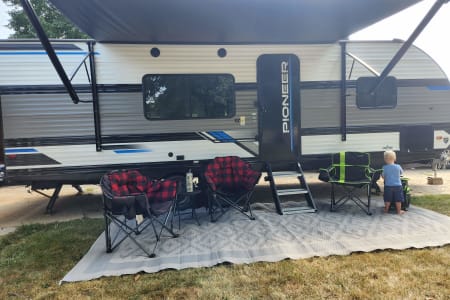


2025 Forest River Cherokee Grey Wolf - Family Friendly & Adventure Ready!
Bemidji, MN
History & Status of the Fishery
The 2012 lake management plan (LMP) indicated Largemouth Bass and Northern Pike were primary management species while Black Crappie and Bluegill were secondary. The LMP goals were to maintain a Northern Pike size distribution with 60% and 10% of the sample longer than 21 and 28 inches, and improve Bluegill size distribution to have more than 40% of the sample longer than 6 inches with some 8-inch fish. The purpose of the 2020 targeted survey was to assess the fish community and provide information to anglers.
Black Crappie catches have ranged from 0/gill net in 1974 to 5.7/gill net in 1986. Despite only three fish being sampled in 2020 (1.0/net) it represented the highest catch since 1992. The fish ranged from 6.2 to 9.3 inches and averaged 7.2 inches. Two age-2 and one age-6 fish were estimated from scales. Growth was slow compared to similar lakes but the sample size was very low.
Bluegill are typically evaluated using trap nets to sample them is late spring or early summer. Though not the primary indicator gear for Bluegill, the gill-net catch was 2.0/net. The sampled fish ranged from 4.1 to 7.4 inches and averaged 4.9 inches. Sample size was too low to evaluate the LMP size distribution goal. No age and growth information was collected.
Largemouth Bass are most efficiently sampled by spring night electrofishing which was not conducted in 2020. The gill-net catch was 0.7/net, which was above average for the lake. The two fish were 14.4 to 18.3 inches. No age and growth information was collected.
Northern Pike gill-net catches have ranged from 2.0/net in 1992 to 7.0/net in 2000. The 2020 catch of 6.7/net was higher than desired. High catches are often associated with slower growth and smaller average sizes. The sampled fish ranged from 14.1 to 33.1 inches and averaged 23.7 inches. The length distributions essentially met the LMP goal as 50 and 20% of the sample were longer than 21 and 28 inches. The seven age-classes had fish from age 1 to 8 represented. Pike averaged 22.9 inches by age 4; which was above the statewide average. It appears the simple predator community and availability of Tullibee as prey has buffered density concerns for now.
Tullibee can be difficult to sample because they frequently live suspended over deep water, an area the survey nets were not designed to sample. This can result in highly variable catches from one survey to the next. Tullibee are important to fish communities as a prey source for large predators. Gill-net catch rates have ranged from 0.7/net in 1982 and 1992 to 26.0/net in 1974. The 2020 catch was the second highest on record at 17.7/net. The sampled fish ranged from 6.7 to 11.8 inches and averaged 9.6 inches. Though aging structures were not collected, it appears multiple age-classes were present based on the length distribution.
Yellow Perch is another important prey species common to northern Minnesota lakes but very few have ever been sampled in Shamrock. In fact, none have been sampled by gill nets since 1992. It is possible some perch smaller than what the survey nets effectively sample exist but it appears they are not important component of the fish community. The entire chain of lakes has consistently had very low catches for perch.
Smaller lakes often have simple fish communities and lower potential for fish production. Consequently, it is relatively easy for anglers to overharvest fish and negatively affect the fish community. Anglers are encouraged to restrict harvest for all species, particularly the larger individuals, in order to maintain or improve size distributions. Harvest of pike under the North-Central Zones 22 to 26 inch protected slot limit is encouraged because these individuals are often overabundant and can have negative effects on other fish species.
What is the average air temp for Shamrock Lake?
Are there any state parks near Shamrock Lake?
For more Minnesota State Park information see our State Park Guide.
More Nearby Lakes To Explore
There's more lake's to explore around Shamrock Lake...| DISTANCE | ACRES | MAX DEPTH | |
| Island Lake | 0.3 mi | 52 | 35 ft |
| Unnamed Lake | 0.7 mi | 15 | |
| O'Reilly Lake | 0.7 mi | 189 | 79 ft |
| Little O'Reilly Lake | 1.0 mi | 38 | 41 ft |
| Dirty Mike Lake | 2.0 mi | 22 | |
| Moonshine Lake | 2.1 mi | 18 | 38 ft |
| Unnamed Lake | 2.3 mi | 10 | |
| Big Rainbarrel Lake | 2.5 mi | 21 | 44 ft |
| Inkey Lake | 2.5 mi | 60 | 68 ft |
| Rainbarrel Lake | 2.5 mi | 12 |


