


Dock Lake
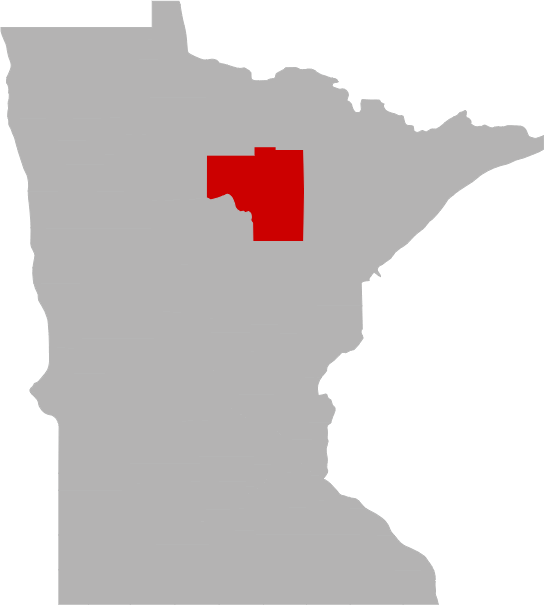
Itasca County, Minnesota

Today's Fishing Forecast
Fishing looks to be moderately active with peak fishing times around 7-8 AM and 3-5 PM. SEE MORE
Share your catch!
We want to see what you've caught on Dock Lake.Frequently Asked Questions About Dock Lake, MN
- How big is Dock Lake?
- How deep is Dock Lake?
- What kind of fish can you catch in Dock Lake?
- Are there places to stay in the Dock Lake area?
- Are there boat launches on Dock Lake?
- Are there places to eat and drink near Dock Lake?
- What is the average air temp for Dock Lake?
- Are there any state parks near Dock Lake?
How big is Dock Lake?
How deep is Dock Lake?
What kind of fish can you catch in Dock Lake?
Other fish species in the lake include Central Mudminnow.
Are there places to stay in the Dock Lake area?
More Lodging Options
Are there boat launches on Dock Lake?
Are there places to eat and drink near Dock Lake?
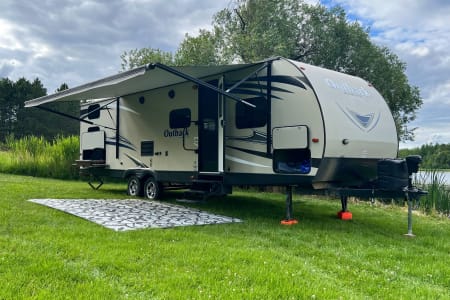
Explore the Dock Lake area in a RV
Are you looking for an adventurous vacation option that won't break the bank? Look no further than renting an RV! Contrary to popular belief, the process is much simpler than you might imagine. With just a few easy steps, you'll soon be experiencing the ultimate freedom and convenience of exploring the open road in your very own recreational vehicle. And the best part? RV travel can save you up to 60% compared to other types of vacations! With the money you'll save, you'll be able to travel even more and create unforgettable memories along the way. So why wait? Start planning your next adventure today with an RV rental. Learn more about renting a RV.
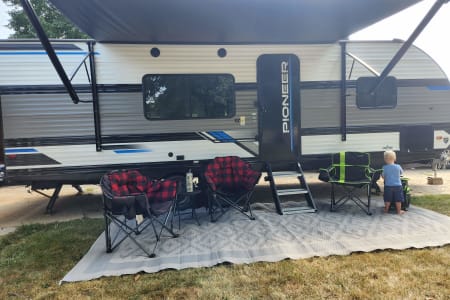

2025 Forest River Cherokee Grey Wolf - Family Friendly & Adventure Ready!
Bemidji, MN

History & Status of the Fishery
Dock Lake is located southeast of Marcell, MN in the Big Fork River Watershed. Dock Lake has 31 surface acres and a maximum depth of 40 feet. The water is soft, which limits fish production and growth rates. The lake is moderately clear, but bog stained. Water clarity allowed visibility down to 12 feet in July 2020. There is a small, earthen boat landing suitable for a small boat or canoe, but parking is limited to one rig.
The previous Fisheries Lake Management Plan was written in 2011. The lake has no inlets or outlets. The lake is one of several lakes in this area where Northern Pike are not present. Bluegill and Largemouth Bass were considered the primary management species because they were naturally occurring and well suited to the lake. Walleye and Black Crappie were secondary species because they are popular with anglers, but are less suited to the lake's habitat. Walleye reproduction is poor, but Walleye were stocked prior to 2009 in a failed effort to improve sunfish size quality. No stocking has occurred since 2009. The lake was surveyed in 2020 to determine the status of the fishery. The survey included 4 gill nets and 6 trap nets.
Bluegill were the most common fish captured. The trap net catch rate was typical for lakes with similar habitats, but below average for Dock Lake. Past surveys suggested relatively high abundance and moderate size quality. Size structure was similar to past surveys, as Bluegill lengths ranged from 3.4 to 9 inches and averaged 5.9 inches. Growth was similar to previous surveys and was typical for lakes with similar habitats. Bluegill growth averaged less than one inch per year, limiting overall size potential. Given the relative abundance and moderated size quality, Bluegill anglers should find good opportunities to catch Bluegill, although size quality may limit the popularity of the fishery. Given the lake's small size, Bluegill quality could be negatively impacted by harvest, so anglers are encouraged to release fish exceeding 8 inches.
Largemouth bass have been sampled in trap and gill nets in all past assessments, but in very low numbers. In 2020, too few bass were captured to characterize the population. Boat electrofishing provides a better means to characterize bass populations but was not conducted in 2020. Past electrofishing surveys resulted in moderate numbers of bass, but poor size quality.
Lakes with similar habitats rarely produce favorable conditions for Walleye. Dock Lake historically produced higher than expected catch rates, however. Walleye were likely introduced when fry were stocked prior to 1942. Early surveys suggested that natural reproduction was adequate to maintain a population. More recent surveys suggest that natural reproduction declined after the late 1970s. In 2020, Walleye were captured at a rate of 1.3 per gill net. Walleye were generally large, ranging from 19.7-22 inches. Most fish were from the stocked 2009 year-class. No younger fish were sampled, suggesting poor natural reproduction in recent years.
Black Crappie catches have typically been low and growth rates have been described as slow. In 2020, too few crappie were captured to characterize the population. White Sucker were the only other species sampled.
Aquatic Invasive Species were not found in Dock Lake. Anglers and boaters are reminded to help stop the spread of invasive species by removing all aquatic plants from boats, trailers, and equipment. All drain plugs must be removed and live and bait wells must be drained before leaving the access. Anglers and boaters are encouraged to power wash and thoroughly dry all equipment prior to use in another water body.
What is the average air temp for Dock Lake?
Are there any state parks near Dock Lake?
For more Minnesota State Park information see our State Park Guide.
More Nearby Lakes To Explore
There's more lake's to explore around Dock Lake...| DISTANCE | ACRES | MAX DEPTH | |
| Baldy Lake | 0.3 mi | 24 | 47 ft |
| Unnamed Lake | 0.9 mi | 17 | |
| East Smith Lake | 0.9 mi | 152 | 38 ft |
| Bluerock Lake | 0.9 mi | 12 | |
| Little McKewen Lake | 1.1 mi | 40 | |
| Big Jack Lake | 1.4 mi | 26 | 46 ft |
| No Man's Lake | 1.4 mi | 57 | |
| McKewen Lake | 1.4 mi | 26 | 31 ft |
| Smith Lake | 1.4 mi | 209 | 32 ft |
| Unnamed Lake | 1.4 mi | 10 |
