


Staring Lake
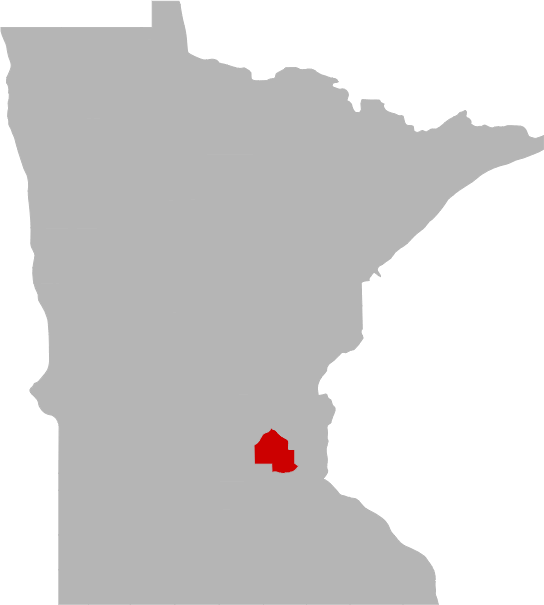
Hennepin County, Minnesota

Share Your Catch & Win!
Frequently Asked Questions About Staring Lake, MN
- How big is Staring Lake?
- How deep is Staring Lake?
- What kind of fish can you catch in Staring Lake?
- Are there fishing guides or charters for Staring Lake?
- What are the closest cities to Staring Lake?
- Are there places to stay in the Staring Lake area?
- Are there boat launches on Staring Lake?
- Are there places to eat and drink near Staring Lake?
- What is the average air temp for Staring Lake?
How big is Staring Lake?
How deep is Staring Lake?
What kind of fish can you catch in Staring Lake?
Other fish species in the lake include Freshwater Drum, Golden Shiner, Green Sunfish, Hybrid Sunfish, Spottail Shiner and White Sucker.
Are there fishing guides or charters for Staring Lake?


What are the closest cities to Staring Lake?
Are there places to stay in the Staring Lake area?
More Lodging Options
Are there boat launches on Staring Lake?
Are there places to eat and drink near Staring Lake?
What aquatic invasive species are found in Staring Lake?
Join us in the fight to prevent the spread of invasive species These sneaky creatures can hitch a ride on boats, clinging onto propellers, anchor lines, and trailers. They can even survive in hidden places like bilge water and ballast tanks, or disguise themselves in dirt and sand that sticks to nets, buckets, anchors, and waders. But don't worry, we have the power to stop them in their tracks with just a few simple steps. So let's do our part and protect our waters from these unwanted invaders.
History & Status of the Fishery
A targeted survey of nearshore fish species in Staring Lake was conducted on June 21, 2022, by Index of Biological Integrity (IBI) Program staff. Sampling sites were evenly spaced around the lake, and each was sampled by backpack electrofishing and seining with a 50-foot or 15-foot seine, where possible. Backpack electrofishing was completed at ten sampling stations. Similarly, a 50-foot seine was used to sample eight stations and site conditions prevented the use of seines at two stations. Nearshore sampling captured ten species of fish including no species that are intolerant of disturbance and three that are tolerant of disturbance (i.e., Black Bullhead, Common Carp, and Green Sunfish).
The nearshore data were combined with trap net and gill net data from a June 2021 survey to describe the fish community and provide a fish-based IBI (FIBI) score. The FIBI uses fish community data to measure a lake's health, and the types of fish species present can help identify any stressors that may be negatively affecting the lake environment. In Minnesota lakes, certain fish species cannot survive without clean water and a healthy habitat (e.g., Blackchin Shiner, Iowa Darter, and Rock Bass), while other species are tolerant of degraded conditions (e.g., Black Bullhead, Common Carp, and Fathead Minnow). The FIBI score, composed of several fish community diversity and composition metrics, indicates the overall health of a lake by comparing it to what is expected for a healthy lake. For additional information on the FIBI, search for "lake index of biological integrity" on the mndnr.gov website.
Results from this survey indicate that the fish community in Staring Lake is healthy as indicated by an FIBI score above the impairment threshold for aquatic life use determined for similar lakes. These results are similar to previous survey findings, which indicated that Staring Lake is fully supporting aquatic life use. These results will be considered when the biological health of the lake is assessed during the Lower Minnesota River Watershed assessment process, which will be completed in coordination with MN Pollution Control Agency.
IBI Program staff also conducted an assessment of lakeshore habitat on June 22, 2022, following the Score the Shore survey protocols. The assessment consisted of 32 survey sites evenly spaced 100 meters around the lake. Assessments were made in three habitat zones: Shoreline Zone (the shore-water interface to the top of the natural bank), Shoreland Zone (land-ward from shoreline to development structure or 100 feet), and Aquatic Zone (lake-ward 50 feet of shoreline). The average lakewide habitat score was 97.0 (+/- 1.0) out of 100 possible, which indicates that lakeshore habitat quality is high overall. Approximately 15 percent of the sites were developed with a mean score of 91.3 (+/- 4.3), while undeveloped sites had a mean score of 98.0 (+/- 0.8).
What is the average air temp for Staring Lake?
Staring Lake Reviews
Below is the word on street about Staring Lake.Have you been to Staring Lake? Why not share your personal reveiw with others?
Submit Review
jake l.

andrew l.
More Nearby Lakes To Explore
There's more lake's to explore around Staring Lake...| DISTANCE | ACRES | MAX DEPTH | |
| McCoy Lake | 0.5 mi | 10 | |
| Red Rock Lake | 1.2 mi | 97 | 16 ft |
| Unnamed Lake | 1.4 mi | 22 | |
| School Lake | 1.5 mi | 10 | |
| Grass Lake | 1.8 mi | 326 | |
| Lake Idlewild | 2.1 mi | 13 | 9 ft |
| Mitchell Lake | 2.4 mi | 114 | 19 ft |
| Blue Lake | 2.5 mi | 166 | |
| Southwest Anderson Lake | 2.5 mi | 183 | |
| North Anderson Lake | 2.6 mi | 158 |


