


Bass Lake
Faribault County, Minnesota

Share Your Catch & Win!
Frequently Asked Questions About Bass Lake, MN
- How big is Bass Lake?
- How deep is Bass Lake?
- What kind of fish can you catch in Bass Lake?
- What are the closest cities to Bass Lake?
- Are there places to stay in the Bass Lake area?
- Are there topographical lake maps available Bass Lake?
- Are there boat launches on Bass Lake?
- Are there places to eat and drink near Bass Lake?
- What is the average air temp for Bass Lake?
- Are there any state parks near Bass Lake?
How big is Bass Lake?
How deep is Bass Lake?
What kind of fish can you catch in Bass Lake?
Other fish species in the lake include Golden Shiner, Green Sunfish and Tadpole Madtom.
What are the closest cities to Bass Lake?
Are there places to stay in the Bass Lake area?
More Lodging Options
Are there topographical lake maps available Bass Lake?
Are there boat launches on Bass Lake?
Are there places to eat and drink near Bass Lake?
Explore the Bass Lake area in a RV
Are you looking for an adventurous vacation option that won't break the bank? Look no further than renting an RV! Contrary to popular belief, the process is much simpler than you might imagine. With just a few easy steps, you'll soon be experiencing the ultimate freedom and convenience of exploring the open road in your very own recreational vehicle. And the best part? RV travel can save you up to 60% compared to other types of vacations! With the money you'll save, you'll be able to travel even more and create unforgettable memories along the way. So why wait? Start planning your next adventure today with an RV rental. Learn more about renting a RV.



What aquatic invasive species are found in Bass Lake?
Join us in the fight to prevent the spread of invasive species These sneaky creatures can hitch a ride on boats, clinging onto propellers, anchor lines, and trailers. They can even survive in hidden places like bilge water and ballast tanks, or disguise themselves in dirt and sand that sticks to nets, buckets, anchors, and waders. But don't worry, we have the power to stop them in their tracks with just a few simple steps. So let's do our part and protect our waters from these unwanted invaders.
History & Status of the Fishery
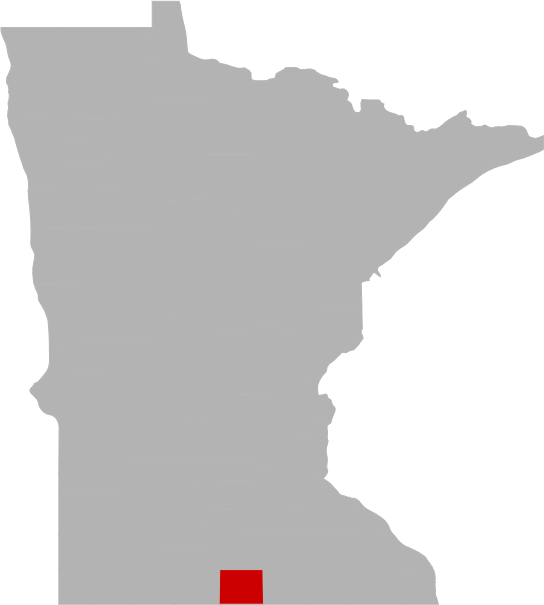
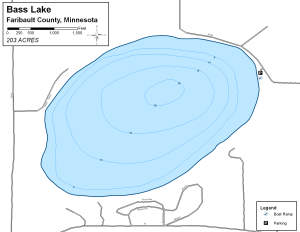
Bass Lake is a 203-acre lake located in Faribault County northwest of the city of Delavan. A public access is located on the northeast side of the lake, just off 400th Avenue. Bass Lake is a small basin with a maximum depth of 20 feet.
A standard survey was performed the week of June 11, 2018 as part of a regular monitoring program conducted by Minnesota Department of Natural Resources (DNR). A standard survey is used for sampling a wide range of fish species during the summer months using standard methods (i.e. standard time of year, set sampling stations, taking water clarity readings and oxygen/temperature profiles, etc.) and gears (i.e. lake survey gillnets, trap nets, and spring electrofishing for Largemouth Bass). This survey consisted of trap nets, gill nets, and electrofishing to monitor the fish community.
Bass Lake has historically produced low numbers of medium sized Black Crappies. Black Crappie in 2018 were sampled at a rate of 16.3/trap net. Black Crappie were also sampled well with gill nets, and were captured at a rate of 18.0/gill net. Black Crappie scales and otoliths were used to estimate age and indicated the presence of 4 year classes in the Bass Lake sample (2014-2017). Age-3 (2015 year class) Black Crappies were the most abundant, accounting for 36% of Black Crappies sampled. Black Crappie size structure was small, indicative of a population dominated by young fish. Black Crappie ranged from 4.0 to 11.2 inches and averaged 6.9 inches in trap nets. Gill nets sampled slightly larger Black Crappies that ranged from 4.1 to 10.6 inches and averaged 8.1 inches.
Bluegills were sampled at a rate of 23.4/trap net in 2018. Which was higher than the median (15.9/trap net) for similar lakes. Bluegills ranged from 2.7 to 8.8 inches in length and averaged 6.5 inches in 2018. Only four year classes of Bluegill were sampled in 2018. The majority of Bluegills aged (67%) were from the 2015 year class (age-3).
Walleye in Bass lake have historically occurred at low numbers (4.3/gillnet). In 2018 Walleye were at an all-time high of 13.0/gillnet. Walleye ages were estimated using scales and otoliths. Six year classes of walleye were present (2004, 2010, 2011, 2013, 2014, and 2016). Walleye in Bass Lake were large and ranged from 16.0 to 27.2 inches while averaging 20.3 inches in gill nets. Walleye growth was fast in Bass Lake as fish averaged 17.0 inches at age-2 and 19.8 inches at age-4.
Largemouth bass were assessed using day-time electrofishing. Relative abundance of Largemouth Bass was 68.2/hour. Average length of Largemouth Bass sampled in 2018 was 11.2 inches and ranged from 4.3 to 19.4 inches. Two primary length groups were sampled in 2018, 31 fish were between 4.3 and 7.0 inches and 41 were captured between 13.0 inches and 19.4 inches. Scales were used to estimate ages of Largemouth Bass, seven age classes were sampled (2009, 2011-2014, 2016, and 2017).
Northern pike have historically had a moderate abundance in Bass Lake, and the trend continued in 2018 with a catch rate of 5.3/gill net. Northern Pike sampled with gill nets ranged from 20.1 to 30.9 inches in length and averaged 25.6 inches. Sixty-seven percent of Northern Pike sampled in 2018 were greater than the 24-inch minimum length limit. Southern Zone Northern Pike regulations are in effect at Bass Lake. Anglers are allowed 2 fish which must be at least 24 inches in length.
The 2018 Yellow Perch catch rate was 23.5/gill net. Yellow Perch exhibited fair size structure, but had no fish exceeding 10.0 inches. Yellow Perch ranged in length from 5.4 to 9.6 inches and averaged 7.1 inches.
Three Channel Catfish were sampled in gillnets during the 2018 survey. These fish ranged from 20.0 to 30.8 inches in length. Pectoral spines were taken from the fish for aging purposes. Two of the fish were from the 2014 year class and one was from the 2010 year class.
Common Carp and Yellow Bullheads were also present but occurred in low numbers.
Anglers can play an important role in maintaining or improving a fish population by practicing selective harvest. Selective harvest allows for the harvest of smaller fish for consumption, while encouraging the release of medium to large fish that may contribute to natural reproduction. This practice helps maintain balance in the fish populations and provides anglers the opportunity to catch more and larger fish in the future. Additionally, smaller fish often taste better and have fewer contaminants than larger, older fish from the same water body.
Shoreline property owners also play an important role in the overall health of an aquatic ecosystem, including the fish population. Natural shorelines, including vegetation, woody debris, and bottom substrates, provide valuable habitat for fish and wildlife, help maintain water quality, and reduce bank erosion. Cattails and bulrushes are particularly beneficial for fish spawning, rearing, and feeding. By leaving natural shorelines unaltered or restoring them to natural conditions, shoreline property owners are doing their part to maintain or improve a healthy ecosystem in the lake and protect the resource for future generations.
-Tyler Fellows, specialist
What is the average air temp for Bass Lake?
Are there any state parks near Bass Lake?
For more Minnesota State Park information see our State Park Guide.
Bass Lake Reviews
Below is the word on street about Bass Lake.Have you been to Bass Lake? Why not share your personal reveiw with others?
Submit Review
ronald r.

More Nearby Lakes To Explore
There's more lake's to explore around Bass Lake...| DISTANCE | ACRES | MAX DEPTH | |
| Lura Lake | 4.3 mi | 1,359 | 9 ft |
| Unnamed Lake | 4.8 mi | 94 | |
| Ida Lake | 7.4 mi | 129 | 8 ft |
| Minnesota Lake | 11.0 mi | 1,913 | |
| Knights Lake | 11.3 mi | 54 | |
| Unnamed Lake | 12.7 mi | 10 | |
| Stockman Lake | 12.9 mi | 40 | |
| Porter Lake | 13.0 mi | 27 | |
| Unnamed Lake | 13.1 mi | 103 | 21 ft |
| Pick Lake | 13.4 mi | 161 |


