


Indian Lake
Douglas County, Minnesota

Today's Fishing Forecast
Fishing looks to be extremely active with peak fishing times around 7-8 AM and 3-5 PM. SEE MORE

Share your catch!
We want to see what you've caught on Indian Lake.Frequently Asked Questions About Indian Lake, MN
- How big is Indian Lake?
- How deep is Indian Lake?
- What kind of fish can you catch in Indian Lake?
- What are the closest cities to Indian Lake?
- Are there places to stay in the Indian Lake area?
- Are there bait or tackle shops near Indian Lake?
- Are there boat launches on Indian Lake?
- Are there places to eat and drink near Indian Lake?
- What is the average air temp for Indian Lake?
- Are there any state parks near Indian Lake?
How big is Indian Lake?
How deep is Indian Lake?
What kind of fish can you catch in Indian Lake?
Other fish species in the lake include Common Shiner, Golden Shiner, Hybrid Sunfish and White Sucker.
What are the closest cities to Indian Lake?
Are there places to stay in the Indian Lake area?
More Lodging Options
Are there bait or tackle shops near Indian Lake?

Are there boat launches on Indian Lake?
Indian Lake area businesses:
Are there places to eat and drink near Indian Lake?
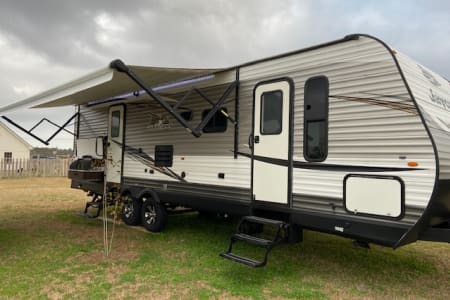
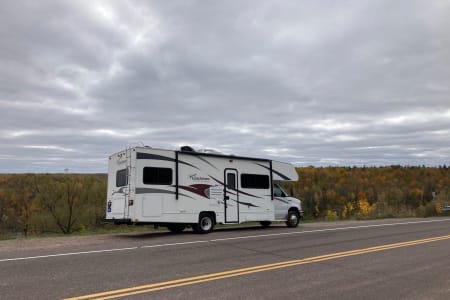
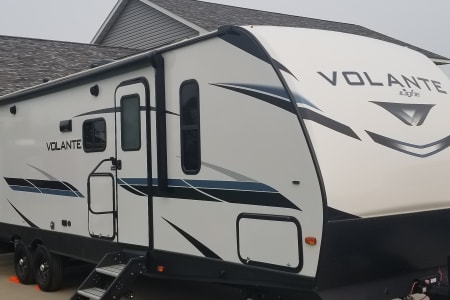
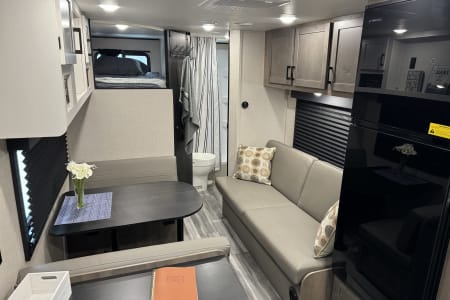
Explore the Indian Lake area in a RV
Are you looking for an adventurous vacation option that won't break the bank? Look no further than renting an RV! Contrary to popular belief, the process is much simpler than you might imagine. With just a few easy steps, you'll soon be experiencing the ultimate freedom and convenience of exploring the open road in your very own recreational vehicle. And the best part? RV travel can save you up to 60% compared to other types of vacations! With the money you'll save, you'll be able to travel even more and create unforgettable memories along the way. So why wait? Start planning your next adventure today with an RV rental. Learn more about renting a RV.
What aquatic invasive species are found in Indian Lake?
Join us in the fight to prevent the spread of invasive species These sneaky creatures can hitch a ride on boats, clinging onto propellers, anchor lines, and trailers. They can even survive in hidden places like bilge water and ballast tanks, or disguise themselves in dirt and sand that sticks to nets, buckets, anchors, and waders. But don't worry, we have the power to stop them in their tracks with just a few simple steps. So let's do our part and protect our waters from these unwanted invaders.
History & Status of the Fishery
Indian Lake is a small (99 acre), fertile basin located in north-central Douglas County between the towns of Garfield and Leaf Valley. The basin has a maximum depth of 38.0 feet. Water clarity was poor (3.5 feet) at time of the August survey.
A standardized fish community assessment was completed on Indian Lake, August 17-20, 2015. A combination of three gill nets and nine trap nets were used. The netting component of the survey was preceded with an electrofishing survey to gain estimates of abundance and size structure of the Largemouth Bass population. This survey was completed on May 22, 2015.
Largemouth Bass proved to be moderately abundant. Length of bass captures ranged from 11.1 to 18.7 inches. Age distribution of the population sample extended from age 5 to age 11. Due to lack of young bass captures, average size of Largemouth Bass caught during the spring electrofishing survey was 16.0 inches. Old bass grow slowly. Few captures exceeded 18.0 inches in total length.
Northern Pike continue to be abundant, but most captures were small with an average length of 21.5 inches. Two 28.0-inch pike were recorded in the gill net catch. Only two Walleyes were caught during the netting survey. This low catch was disappointing given fingerling stocking investments. Survival of stocked Walleye fingerlings and yearlings appeared very poor.
Indian Lake supports a fair panfish fishery. Bluegills and Black Crappies are abundant, but growth rates are too slow to optimize fishing potential. Bluegill captures averaged 6.3 inches. The largest caught measured 8.8 inches. These larger fish were eight- or nine-years-old. Black Crappie catches increased in 2015 in response to elevated and fairly consistent natural recruitment in 2010, 2011, and 2012. Another strong year class was established in 2014. Due to the high proportion of young fish making up the population sample and slow growth, few crappie captures exceeded 8.0 inches in length. Cohorts of a strong 2010 year class should approach 10.0 inches in length in 2017. Yellow Perch abundance has declined in Indian Lake. None of the perch measured during the 2015 survey exceeded 8.0 inches, thus the population contributes very little to the recreational fishery. They do constitute a very important food base for predatory gamefishes, namely Northern Pike, Walleye, and Largemouth Bass.
Anglers are encouraged to harvest moderate-sized (< 21.0 inches) Northern Pike in an effort to reduce surplus pike densities and improve survival, growth, and yields for other sport fish populations.
A DNR public access is located on the northern shoreline of Indian Lake just off of Indian Lake Road.
What is the average air temp for Indian Lake?
Are there any state parks near Indian Lake?
For more Minnesota State Park information see our State Park Guide.
More Nearby Lakes To Explore
There's more lake's to explore around Indian Lake...| DISTANCE | ACRES | MAX DEPTH | |
| Buckskin Lake | 1.6 mi | 47 | |
| Chippewa Lake | 3.7 mi | 1,186 | 95 ft |
| Lake Ida | 3.7 mi | 4,432 | 106 ft |
| Unnamed Lake | 4.0 mi | 15 | |
| Lake Miltona | 5.0 mi | 5,724 | 105 ft |
| Redick Swamp Lake | 5.0 mi | 121 | |
| Unnamed Lake | 5.1 mi | 27 | |
| Devils Lake | 5.3 mi | 234 | 35 ft |
| Mork Pond | 5.8 mi | 27 | |
| Little Chippewa Lake | 5.9 mi | 269 | 24 ft |
