


Sea Gull Lake
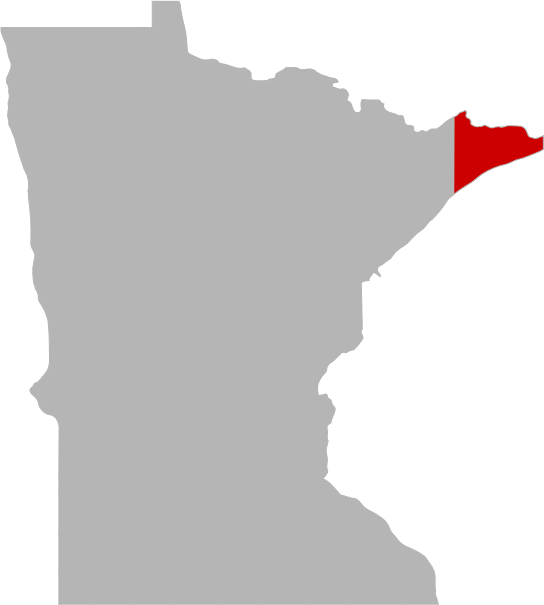
Cook County, Minnesota
Share your catch!
We want to see what you've caught on Sea Gull Lake.Frequently Asked Questions About Sea Gull Lake, MN
- How big is Sea Gull Lake?
- How deep is Sea Gull Lake?
- What kind of fish can you catch in Sea Gull Lake?
- Are there places to stay in the Sea Gull Lake area?
- Are there topographical lake maps available Sea Gull Lake?
- Are there boat launches on Sea Gull Lake?
- Are there places to eat and drink near Sea Gull Lake?
- What are the fishing regulations for Sea Gull Lake?
- What is the average air temp for Sea Gull Lake?
How big is Sea Gull Lake?
How deep is Sea Gull Lake?
What kind of fish can you catch in Sea Gull Lake?
Other fish species in the lake include Cisco (Tullibee), Deepwater Sculpin, Green Sunfish, Lake Whitefish, Longnose Sucker, Shortjaw Cisco and White Sucker.
Are there places to stay in the Sea Gull Lake area?
More Lodging Options
Are there topographical lake maps available Sea Gull Lake?
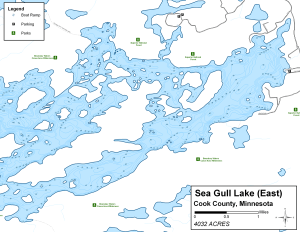
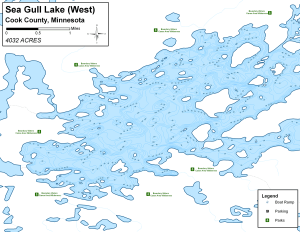
Are there boat launches on Sea Gull Lake?
Are there places to eat and drink near Sea Gull Lake?
What are the fishing regulations for Sea Gull Lake?
 There are specific fishing regulations Sea Gull Lake that you need to know. For complete fishing regulations visit the Minnesota Department of Natural Resources. To report a violation call (800) 652-9093. Need a Minnesota fishing license?
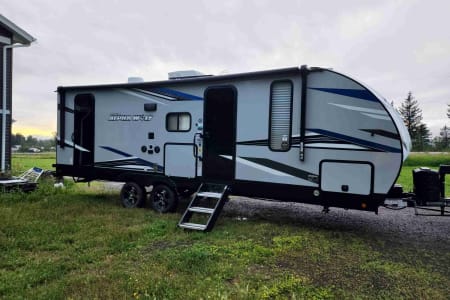
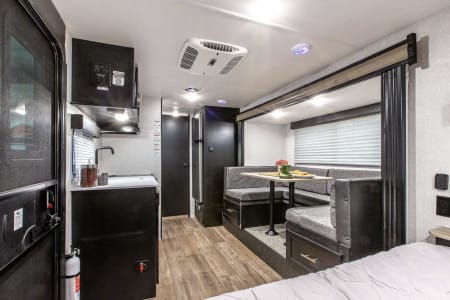
Explore the Sea Gull Lake area in a RV
Are you looking for an adventurous vacation option that won't break the bank? Look no further than renting an RV! Contrary to popular belief, the process is much simpler than you might imagine. With just a few easy steps, you'll soon be experiencing the ultimate freedom and convenience of exploring the open road in your very own recreational vehicle. And the best part? RV travel can save you up to 60% compared to other types of vacations! With the money you'll save, you'll be able to travel even more and create unforgettable memories along the way. So why wait? Start planning your next adventure today with an RV rental. Learn more about renting a RV.


What aquatic invasive species are found in Sea Gull Lake?
Join us in the fight to prevent the spread of invasive species These sneaky creatures can hitch a ride on boats, clinging onto propellers, anchor lines, and trailers. They can even survive in hidden places like bilge water and ballast tanks, or disguise themselves in dirt and sand that sticks to nets, buckets, anchors, and waders. But don't worry, we have the power to stop them in their tracks with just a few simple steps. So let's do our part and protect our waters from these unwanted invaders.
History & Status of the Fishery
Sea Gull is a large, deep Canadian Shield Lake Trout lake, currently managed for Lake Trout (primary species) and Walleye (secondary species). The current (2017) lake management plan established a long range goal for Lake Trout of maintaining a minimum catch in deep gill net sets of 1.0 fish/set. The long range goal set for Walleye was a minimum catch in shallow gill net sets of 3.0 fish/set. Catch goals for larger fish of both species (in deep and shallow gill net sets combined) were also established: a minimum of 0.20 fish/set for Walleye 24-inches or larger, and 0.25 fish/set for Lake Trout 20-inches or larger.
This was the second of three standard surveys scheduled in the 2017 plan to evaluate the Walleye experimental regulation implemented in 2015, and to determine whether a resumption of stocking was needed to improve Walleye recruitment. The first was completed as planned in 2018. The 2015 Walleye regulation established a 17-inch minimum size limit, with a three-fish bag limit, of which only one fish could be more than 20 inches in length. The end date for the regulation was set at March 2025. This survey is the second post-regulation survey in the evaluation of that regulation.
Objectives of the Walleye regulation were to maximize recruitment from natural reproduction or future stocking, maintain or increase the relative abundance of Walleye 20.0 inches or larger, and increase overall Walleye abundance. Maximized recruitment will have been achieved if the gill net catch-per-unit-effort (CPUE) for Walleye smaller than 17 inches exceeds 1.0 fish/set (deep and shallow sets combined) in two of the three assessments scheduled for 2018-2024, and increases significantly compared to pre-implementation catches. The relative abundance of Walleye 20.0 inches or larger will be measured using length frequency distributions to determine the percent of the total gill net catch comprised of Walleye 20.0 inches in length or larger. The relative abundance of Walleye 20-in or larger should equal or exceed 25% (the average from 10 pre-regulation assessments done since 1954). Overall Walleye abundance will be determined using gill net CPUE (deep and shallow sets combined). That combined Walleye gill net CPUE should exceed 1.5 fish/set.
The 2021 Walleye catch was one of the highest catches seen in this lake, and was fairly high for any lake of this type. Goals for the number of young fish found, and the number of larger fish taken, were all met in 2021, for the first time since the regulation was implemented in 2015. The 2021 Walleye catch in shallow gill net sets (GSH) was the second highest catch seen in that gear in this lake, and was above the normal range (1.00-3.91 fish/set) for the gear. The combined catch in deep and shallow sets (2.21 fish/set) was the highest seen in this lake since 1971, and the catch of fish 24 inches or longer (0.29 fish/set) met the 2017 goal for fish of that size. The catch of Walleye under 17 inches in length (1.21 fish/set) met the goal set in the 2015 regulation proposal, and 32% of Walleye taken in gill nets in 2021 were over 20 inches in length, meeting that regulation goal as well. Because Walleye catches were fairly high, and good numbers of younger fish were found, we determined that no stocking was needed at this time..
It appeared that Walleye natural reproduction had been consistent, if not always strong, in this lake. Sixteen year classes (1-20 years of age), all naturally produced, contributed to the 2021 Walleye catch. It appeared that a fairly strong year class had been produced in 2018, with a moderately strong year class also produced in 2019. The presence of those younger fish was what allowed catch goals, and the goal for smaller fish, to be met in 2021. Growth of young Walleye had been fairly fast; fish reached a mean length of 12.6 inches at the end of their third year, compared to an area average of 11.4 inches.
Success of the 17-inch minimum size limit depends on the occasional production of strong year classes that would then be protected until they reach the 17-inch threshold for harvest. Fish from the fairly strong 2019 and 2018 year classes were protected by the 17-inch minimum size regulation in 2021, but will mostly be larger than 17 inches, and vulnerable to harvest, in 2022 and 2023.
Fair numbers of Lake Trout were found in 2021, and the catch included a few larger fish. Although the catch in deep gill net sets (GDE) met the goal from the 2017 LMP and was similar to most catches seen in that gear in this lake since 1994, it still fell below the normal range for the gear (1.20-5.10 fish/net). The combined catch in deep and shallow sets was a little low for this lake historically, and fell below the normal range for a lake of this type, while the catch of fish 20 inches or larger (0.13 fish/set) fell short of the 2017 goal for that size range. Seven year classes (fish four to 23 years of age) contributed to the 2021 catch. A moderately strong year class may have been produced in 2016. Growth of those five-year-old fish appeared to have been slow; they reached a mean length of 11.6 inches at the end of their fifth year, compared to an area average of 13.8 inches.
Northern Pike were relatively abundant in Sea Gull Lake in 2021, and some larger fish were present. The combined catch in deep and shallow gill net sets (1.54 fish/set) exceeded the normal range for a lake of this type and was (by a small margin) the highest catch ever seen in this lake. The lake supported a fairly high-quality population in 2021, with several fish over 24 inches in length (up to 30.8 inches) included in the catch. Northern Pike numbers in this lake appear to have increased significantly between 2003 and 2009, and have remained fairly high since. Recruitment appears to have been low but fairly steady; from the 2021 length-frequency distribution it appeared that several year classes had contributed to the catch. The presence of high-quality forage like dwarf Cisco and small Lake Whitefish gives this lake the potential to produce some truly large Northern Pike.
The 2021 Smallmouth Bass gill net catch was low for a lake of this type, but similar to catches seen in this lake since 1971. Angling reports suggest Smallmouth Bass are more abundant in this lake than our gill net catches would indicate. The Smallmouth Bass catch in shallow gill net sets (GSH) fell below the normal range (0.41-1.50 fish/set) for that gear. The combined catch in deep and shallow sets (0.21 fish/set) was also below the normal range for a lake of this type. Although bass numbers may have been low, the lake seemed to support a high-quality population, with most fish taken in 2021 exceeding 12 inches in length.
Although anglers had reported catching Black Crappie in Sea Gull Lake for several years prior, the 2015 survey was the first DNR Fisheries survey to capture the species. Trap nets have usually not been used to survey this lake, but some were used in 2015, 2018, and 2021 to follow up on crappie reports. Four Black Crappie, 8.2 to 8.5 inches in length, were taken in trap nets in 2021. None were captured in any other sampling gear. All of the Black Crappie sampled in 2018 and 2021 were small, two or three-year-old fish; however, larger fish have been reported by anglers.
Cisco in this lake have been too small in most years to show up in standard gill nets, and only one was taken in that gear in 2021. They can be effectively sampled using small-mesh gill nets, and in 2015, a year in which none were taken in standard gill net sets, large numbers were taken in small-mesh nets. It is likely Cisco remained abundant in Sea Gull Lake in 2021 as well, despite their near absence from the survey catch.
The 2021 Lake Whitefish catch in deep and shallow gill net sets combined (5.88 fish/set) was about average for this lake, historically, and was well within the normal range for a lake of this type. By weight and numbers Lake Whitefish dominated fish catches in deep and shallow gill net sets (combined) in 2021, as has usually been the case in this lake. Many of the Lake Whitefish collected in 2021 were under 12 inches in length, and would have provided additional cold-water forage for Lake Trout and Northern Pike. There were also many that were large enough to have been of some interest to anglers.
More Nearby Lakes To Explore
There's more lake's to explore around Sea Gull Lake...| DISTANCE | ACRES | MAX DEPTH | |
| Unnamed Lake | 1.4 mi | 10 | |
| Flint Lake | 1.6 mi | 25 | |
| Unnamed Lake | 1.7 mi | 10 | |
| Diamond Lake | 1.7 mi | 17 | |
| Unnamed Lake | 1.8 mi | 27 | |
| Jimmy Lake | 1.8 mi | 30 | 5 ft |
| Gump Lake | 1.9 mi | 12 | |
| Meditation Lake | 2.0 mi | 28 | 31 ft |
| Unnamed Lake | 2.1 mi | 10 | |
| Grandpa Lake | 2.1 mi | 125 | 55 ft |


