


Sunset Lake
Aitkin County, Minnesota

Today's Fishing Forecast
Fishing looks to be very active with peak fishing times around 7-8 AM and 3-5 PM. SEE MORE
Share your catch!
We want to see what you've caught on Sunset Lake.Frequently Asked Questions About Sunset Lake, MN
- How big is Sunset Lake?
- How deep is Sunset Lake?
- What kind of fish can you catch in Sunset Lake?
- What are the closest cities to Sunset Lake?
- Are there places to stay in the Sunset Lake area?
- Are there places to eat and drink near Sunset Lake?
- What are the fishing regulations for Sunset Lake?
- What is the average air temp for Sunset Lake?
- Are there any state parks near Sunset Lake?
How big is Sunset Lake?
How deep is Sunset Lake?
What kind of fish can you catch in Sunset Lake?
Other fish species in the lake include Golden Shiner, Hybrid Sunfish, Johnny Darter and White Sucker.
What are the closest cities to Sunset Lake?
Are there places to stay in the Sunset Lake area?
More Lodging Options
Are there places to eat and drink near Sunset Lake?
What are the fishing regulations for Sunset Lake?
 There are specific fishing regulations Sunset Lake that you need to know. For complete fishing regulations visit the Minnesota Department of Natural Resources. To report a violation call (800) 652-9093. Need a Minnesota fishing license?
History & Status of the Fishery
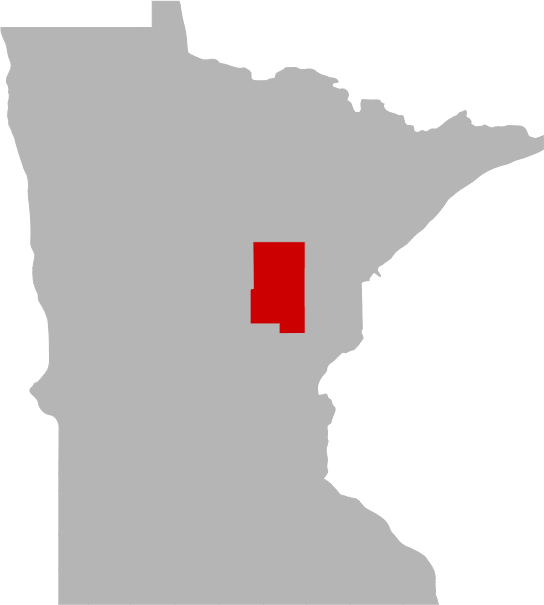
Sunset Lake is a 253 acre lake located on the Aitkin/Crow Wing County line 8 miles southwest of the city of Aitkin. Although there is no designated public access on Sunset Lake, some anglers have accessed the water via the Crow Wing County Road 133 crossing. Eighty-three percent of the lake's surface area is made up of water 15 feet deep or less. Given the shallow depths and good fertility, Sunset Lake can experience partial winterkills, although no significant fish kills have been documented in recent decades. The lake's immediate shoreline is primarily surrounded by mixed hardwood forest covering gently rolling hills, interspersed with residential homes or seasonal cabins. The majority of the residential development is along the east, southeast, and northwest shores. In addition, pasture land and crop land exist along the west shore while marshland is limited to the north and south ends of the lake and small scattered areas along the west shore.
A full lake survey was conducted in 2011 to assess the current status of the fish population. The northern pike catch, 5.6/gill net, was within the normal range for this type of lake. Average weight was below normal at less than 1 pound. Combining all sampling gear, sizes ranged from 9.8 to 27.9 inches and averaged 15.5 inches. Only 5% of all pike sampled were larger than 24 inches indicating a poor size structure. Anglers are encouraged to release northern pike 24 inches and larger to improve the size structure of the population.
Largemouth bass abundance has been increasing tremendously and was well above normal for this type of lake. The bulk of the population is comprised of individuals 12 inches and smaller. A once well balanced largemouth size structure appears to be declining as indicated by data collected in 2011. Growth was slow, with fish needing 6 years to reach 10" in 2010 compared to 4 years in 2001. Largemouth bass lengths extended from 5.7 to 19.0 inches with a mean length of 11.6 inches.
Panfish abundance was within normal ranges. Black crappie sizes ranged from 6.2 to 12.7 inches and averaged about 8 inches. The abundance of bluegill sunfish has fluctuated considerably in surveys dating back to 1970, and has decreased significantly since 2001, while remaining within normal ranges for this lake type. No bluegill longer than 8 inches were measured in 2011, and the average length was 6.2 inches. Other fish sampled in Sunset Lake included brown and yellow bullhead, bowfin, hybrid sunfish, pumpkinseed sunfish, yellow perch, golden shiner and Johnny darter. Based on previous survey data, yellow perch numbers have always been low and yellow bullhead numbers have historically been high, however, bullhead numbers decreased significantly in the 2011test nets.
In addition to the standard summer field work, IBI (Index of Biotic Integrity) sampling was also conducted in 2011. IBI sampling included backpack electrofishing and seining to more broadly sample the nearshore fish community and develop a fish-based index of overall lake health.
Catch and release of the larger game fish and panfish will help maintain or improve the quality of the fishery and provide quality angling opportunities into the future. Land uses within a watershed surrounding a lake can influence a lake's water quality and ultimately its overall health. Shoreline property owners and other land users within the watershed can maintain or improve water quality by protecting or re-establishing buffer strips along the shoreline with native plant species; updating failing or outdated septic systems; using phosphorus free fertilizers on surrounding lawns, gardens or crop land; utilizing farming practices that reduce run-off; limiting aquatic plant removal or disturbance; and limiting construction of impervious surfaces near shorelines.
What is the average air temp for Sunset Lake?
Are there any state parks near Sunset Lake?
For more Minnesota State Park information see our State Park Guide.
More Nearby Lakes To Explore
There's more lake's to explore around Sunset Lake...| DISTANCE | ACRES | MAX DEPTH | |
| Shirt Lake | 1.0 mi | 231 | 38 ft |
| Unnamed Lake | 1.0 mi | 17 | |
| Unnamed Lake | 1.1 mi | 25 | |
| Unnamed Lake | 1.2 mi | 25 | |
| Townline Lake | 1.3 mi | 114 | 69 ft |
| Townline Lake | 1.3 mi | 114 | 69 ft |
| Arbor Lake | 1.3 mi | 104 | |
| Thornton Lake | 1.4 mi | 161 | 21 ft |
| Unnamed Lake | 1.5 mi | 27 | |
| Unnamed Lake | 1.9 mi | 10 |
