


Horseshoe Lake
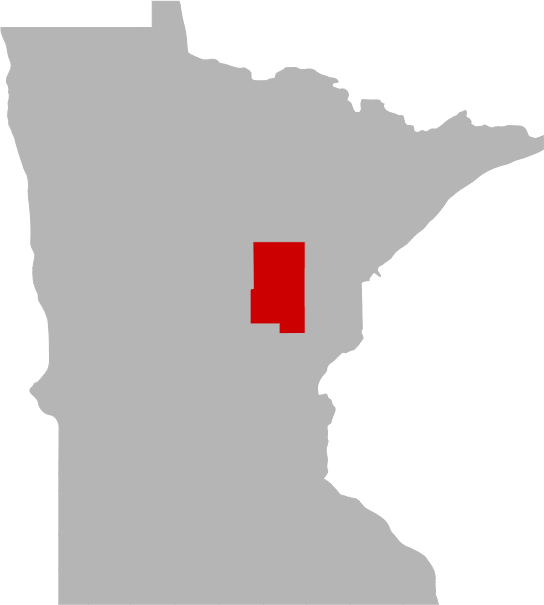
Aitkin County, Minnesota
Share your catch!
We want to see what you've caught on Horseshoe Lake.Frequently Asked Questions About Horseshoe Lake, MN
- How big is Horseshoe Lake?
- How deep is Horseshoe Lake?
- What kind of fish can you catch in Horseshoe Lake?
- What are the closest cities to Horseshoe Lake?
- Are there places to stay in the Horseshoe Lake area?
- Are there topographical lake maps available Horseshoe Lake?
- Are there places to eat and drink near Horseshoe Lake?
- What are the fishing regulations for Horseshoe Lake?
- What is the average air temp for Horseshoe Lake?
- Are there any state parks near Horseshoe Lake?
How big is Horseshoe Lake?
How deep is Horseshoe Lake?
What kind of fish can you catch in Horseshoe Lake?
Other fish species in the lake include Golden Shiner, Hybrid Sunfish, Johnny Darter, Shorthead Redhorse, Spottail Shiner and White Sucker.
What are the closest cities to Horseshoe Lake?
Are there places to stay in the Horseshoe Lake area?
More Lodging Options
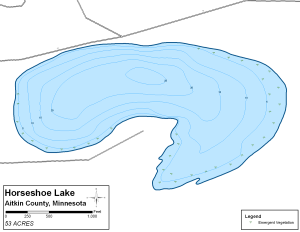
Are there topographical lake maps available Horseshoe Lake?
Are there places to eat and drink near Horseshoe Lake?
What are the fishing regulations for Horseshoe Lake?
 There are specific fishing regulations Horseshoe Lake that you need to know. For complete fishing regulations visit the Minnesota Department of Natural Resources. To report a violation call (800) 652-9093. Need a Minnesota fishing license?
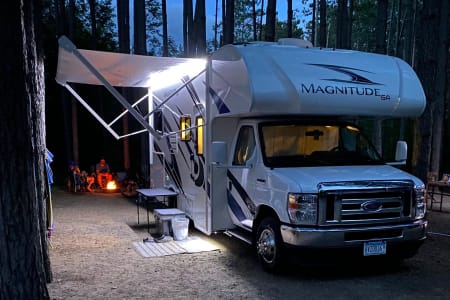
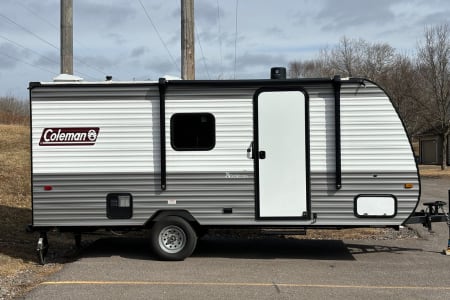
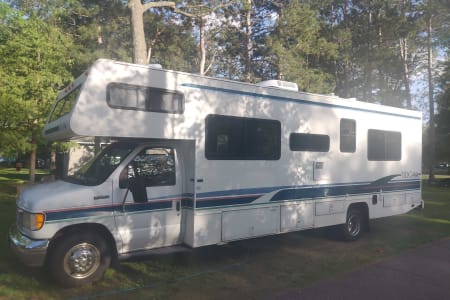
Explore the Horseshoe Lake area in a RV
Are you looking for an adventurous vacation option that won't break the bank? Look no further than renting an RV! Contrary to popular belief, the process is much simpler than you might imagine. With just a few easy steps, you'll soon be experiencing the ultimate freedom and convenience of exploring the open road in your very own recreational vehicle. And the best part? RV travel can save you up to 60% compared to other types of vacations! With the money you'll save, you'll be able to travel even more and create unforgettable memories along the way. So why wait? Start planning your next adventure today with an RV rental. Learn more about renting a RV.
History & Status of the Fishery
Horseshoe Lake is a 237-acre lake located in northeastern Aitkin County approximately 9 miles northeast of McGregor. The lake is shallow with a maximum depth of only 12 ft. and summer algal blooms are relatively common. The water is a tannin stained dark brown in color, limiting the secchi disk reading to only 1.5 ft. Most of the shoreline is ringed with wild rice. Shallow water areas are comprised primarily of sand, silt, and muck with occasional areas of gravel and rubble. Horseshoe Lake does occasionally suffer from partial winterkills, the most recent known was a partial kill in the winter of 2007-2008, although partial kills have probably occurred in other years as well. Access can be gained either through the channel from Lake Minnewawa or through a private access on the northeast corner of the lake . The lake is part of the Quality Sunfish Initiative and has a 10 fish bag limit for sunfish. There is a special regulation for Walleye too where anglers can keep 3 Walleye with 1 over 20 inches.
Historically Walleye have been naturally occurring in Horseshoe Lake. In order to improve an apparent declining natural population, Walleye fry were stocked into Horseshoe Lake, annually from 2012 - 2016 and are now stocked in alternating years concurrent with Lake Minnewawa. The 2022 catch of 2/gill net was identical to 2015 yet below the management goal of 3/net. It appeared there was more natural reproduction in this survey than years past, but some of those may have been stocked fish from Minnewawa that migrated into Horseshoe.
Northern Pike numbers were up a bit, and their size was about average for this type of lake, although overall the size structure has dropped off over the last few surveys. There are still some decent pike to be caught though, fish ranged from 18.5 inches to 30.3 inches. Lower pike densities are generally favorable for Walleye management in this type of lake.
Perhaps what is most notable is the lake's panfish population. Bluegill and Black Crappie populations are healthy, and both maintain decent size structures for the area. There has been improvements in Black Crappie and Bluegill sizes in recent years. Black crappie averaged over 8 inches, while Bluegills averaged about 7.5 inches. Yellow Perch numbers are in the normal range for this lake class but are probably too small to be of interest to anglers with no fish over 8 inches sampled in 2022. With an average length of 6.2 inches, the perch should provide good forage for the lake's Northern Pike and Walleye.
Although abundance is low, Largemouth Bass are present, and quality sized fish do exist. Only one was caught in this survey but it was nearly 16 inches and in previous surveys we have observed them to nearly 20 inches.
Horseshoe Lake maintains a healthy aquatic plant community with much of the shoreline rimmed with emergent and floating plants. Maintaining healthy plant communities is important for maintaining good water quality and fish habitat.
What is the average air temp for Horseshoe Lake?
Are there any state parks near Horseshoe Lake?
For more Minnesota State Park information see our State Park Guide.
More Nearby Lakes To Explore
There's more lake's to explore around Horseshoe Lake...| DISTANCE | ACRES | MAX DEPTH | |
| Camp Lake | 1.2 mi | 12 | |
| Island Lake | 1.5 mi | 244 | 25 ft |
| Round Lake | 1.6 mi | 554 | 27 ft |
| Anderson Lake | 1.8 mi | 91 | 16 ft |
| Lake Minnewawa | 2.4 mi | 2,351 | 21 ft |
| Mud Lake | 3.5 mi | 49 | |
| Big Sandy Lake | 3.9 mi | 6,125 | 84 ft |
| Unnamed Lake | 4.0 mi | 10 | |
| Mud Lake | 4.4 mi | 605 | |
| Glacier Lake | 5.2 mi | 135 | 60 ft |


