Early-Season Ice Fishing Safety
We all love first ice, but staying safe is what keeps us fishing all season long. Here's a must-read guide on early-season ice safety, plus the essential gear to bring on those first trips out.
by Lake-Link Staff
Why Early Ice Is Especially Risky
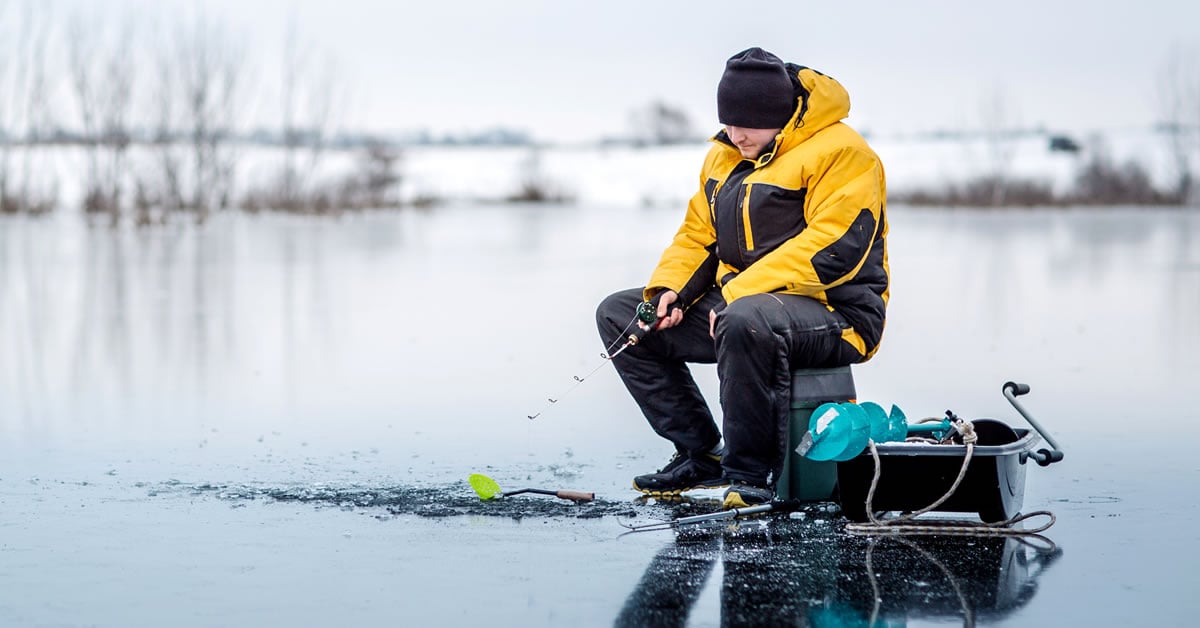
There's an old saying that "there's no such thing as completely safe ice." That's even more true in early winter. Unlike the consistent freeze of your home freezer, lake ice forms unevenly. One spot might have a solid 4–5 inches, while just a few feet away it's barely an inch thick. Wind, underwater springs, currents, depth changes, and even decaying weeds can keep certain spots from freezing solid.
Springs releasing warmer water or rotting vegetation on the lake bottom can create thin ice even in cold weather. In southern parts of the region, frequent freeze–thaw cycles make early ice even more inconsistent. What looks safe in one area can be dangerously thin in another.
Snow cover is another factor. A blanket of snow insulates the ice, slowing down the freezing process and hiding cracks, holes, or weak spots. Early in the year we often get clear black ice with no snow (which is strong if it's thick enough), but once snow shows up, visibility drops and risk goes up.
Also be careful around partially submerged objects like logs, docks, cattails, and rocks. These absorb sunlight and heat, so the ice nearby is usually weaker. Areas with moving water—near inlets, outlets, river channels, or bridge openings—can be especially dangerous because current erodes ice from below.
Bottom line: early ice is volatile. One day it might be fine, and the next day a warm spell or strong wind could weaken it. Always treat every frozen lake or pond with caution and respect.
Top 8 Early Ice Safety Tips
Here are some crucial safety tips for those first-ice trips. Share them with your fishing buddies and new anglers. We want everyone in the Lake-Link community to come home safe.
-
Test Ice Thickness Frequently
Early-season ice requires constant checking. Don't just walk out blindly. As you venture onto a newly frozen lake, test the ice every few steps.
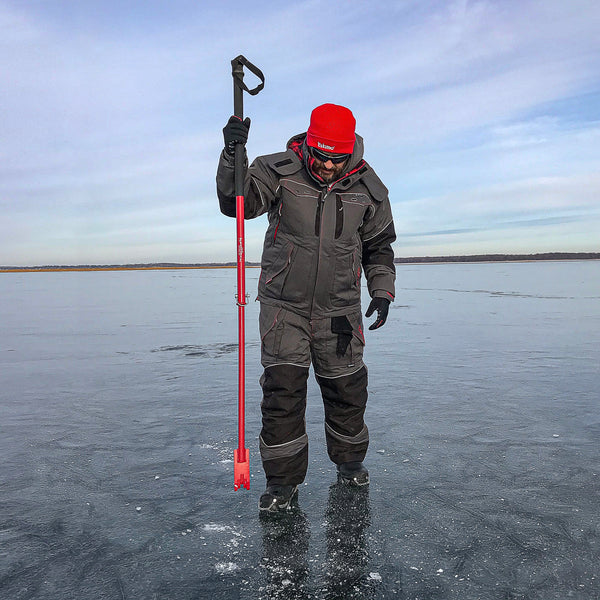
Use a spud bar (ice chisel) as your primary tool. It's essentially a heavy steel rod with a chipping blade. Use it like a walking stick, stabbing the ice in front of you before each step. If the spud goes through on one hard jab, stop immediately—the ice is too thin. Turn back and retrace the path that already held your weight.
You can also drill test holes with an auger or cordless drill and measure thickness. As a general guideline, look for:
- 4" of clear, solid ice for one person on foot
- More for groups, machines, and vehicles later in the season
If you find inconsistent readings—say 3" in one hole and 5" in another—assume the worst and be cautious or call it a day. Always err on the side of safety.
-
Never Go Alone – Use the Buddy System (and Bring a Rope)
Early ice is not the time for solo missions. Always bring a friend or fishing partner. It's more fun, and it could save your life. If one of you falls through, the other can call for help or attempt a rescue safely.
Carry a rescue rope or throw line that's easy to access. A simple 50-foot length of rope in a throw bag or tied to a small float works great. In an emergency, you can toss it to someone in the water without getting too close to the edge of the hole.
As you walk out, spread out instead of walking shoulder to shoulder. Keep some distance (for example, 20–30 feet apart) so if one person goes through, the other isn't standing on the same weak spot.
Even with a buddy, let someone at home know where you're going and when you plan to be back.

-
Carry Ice Picks – and Keep Them Handy
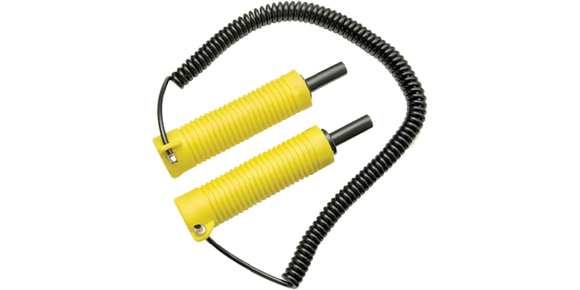
Ice picks (also called ice claws or spikes) are an absolute must on early ice. They're two short handles with spikes that help you grip and pull yourself onto the ice if you fall through. They're inexpensive and could literally save your life.
The key is to wear them where you can reach them. Don't bury them in a bucket or sled. Wear them on a cord around your neck or in a chest pocket you can access quickly. If you're in the water, you won't be able to dig through gear for them.
If you do break through, try to stay calm, grab your picks, jab them into the ice, and kick your feet while pulling yourself up onto the surface. Once you're out, roll away from the hole toward the direction you came from, then get to shore and into dry clothes.
Examples of products: basic ice safety spikes from brands like Rapala, Frabill, HT, and others. Even a pair of screwdrivers tied together with a cord is better than nothing, but dedicated ice picks are more comfortable and effective.
-
Wear a Flotation Suit or Life Jacket
One of the best safety upgrades for ice anglers is the floatation ice suit. These jackets and bibs have built-in buoyant material that helps keep you at the surface if you fall through. They're warm, waterproof, and designed for ice fishing.
If a full suit is out of your budget or feels too warm early in the season, consider:
- A floatation vest made for ice fishing
- A standard life jacket worn over or under your coat
Yes, it might not look as "cool" in pictures, but what's really cool is coming home safe. You can always remove the life jacket once you're set up on thick, proven ice.
Examples of products: Striker, Clam, Eskimo, and other brands make float suits and float vests designed specifically for ice anglers.
-
Put On Ice Cleats for Traction
Early ice is often slick with little or no snow cover. Falling on hard, clear ice is a quick way to get injured, especially when you're carrying augers, heaters, and rods.
Slip-on ice cleats or traction aids for your boots make a huge difference. They act like winter tires for your feet and can prevent painful spills.
Examples of products: Yaktrax-style cleats, chain-style cleats, and spike-style traction devices. Many outdoor and farm stores carry affordable options that stretch over your boots and can be taken off quickly when you're back on bare ground.

-
Avoid High-Risk Areas and Conditions
Not all parts of a lake freeze equally. Avoid known danger spots such as:
- Areas with current (inlets, outlets, narrows, rivers feeding or leaving the lake)
- Places with springs or visible flow
- Spots around docks, rocks, stumps, cattails, or other objects sticking up through the ice
- Pressure ridges, cracks, and jumbled or uplifted ice
If there's snow on early ice, be extra cautious since it hides cracks and thin spots. Also, try to avoid venturing out in the dark during early ice—it's much harder to see dangerous areas and stay oriented.
And absolutely no vehicles on early ice. Wait until the ice is well into the season and thickness guidelines for ATVs, sleds, and trucks are clearly met.
-
Be Prepared with an Emergency Plan and Kit
Hope for the best, but plan for the worst. Along with a spud bar, picks, and rope, keep a small emergency kit in your sled or bucket. Consider packing:
- A dry change of clothes (base layers, socks, hat) in a waterproof bag
- A towel and a compact thermal blanket or bivvy
- A loud whistle on a lanyard
- A fully charged cell phone in a waterproof case or bag
Talk through an emergency plan with your fishing partner before you spread out on the ice. Decide who calls for help, where the spare clothes are, and how you'll use the rope or picks if someone falls through. It may feel unnecessary—until the moment it isn't.
-
When in Doubt, Stay Off the Ice
This might be the most important tip of all. If you're not sure, don't go. If your gut is telling you the ice doesn't feel right, listen to it. The fish will still be there in a few days.
Early ice is tempting, especially when you hear reports of people already catching fish. But one thing we all agree on: we'd rather see you posting pictures of fish on Lake-Link all winter long than reading about a close call or worse.
No fish, no limit, and no hotspot is worth risking your life.
Conclusion
Early ice fishing can be some of the most exciting fishing of the year. The fish are active, the lakes are quiet, and the season feels fresh and full of possibility. By following these safety tips and gearing up properly, you can make sure your first trips onto the ice are memorable for all the right reasons.
As a Lake-Link community, let's keep looking out for each other. Share your ice reports, talk about conditions, and don't be shy about reminding others to grab their picks or spud bar. The more we normalize good safety habits, the safer all of us will be.
So as you step onto that first ice of the season, do it smart: check the ice, bring your safety gear, fish with a buddy, and listen to your instincts. Here's to a fun, safe, and fish-filled hardwater season ahead. Tight lines!