Jigging Success for Winter Pike
by Steve Ryan
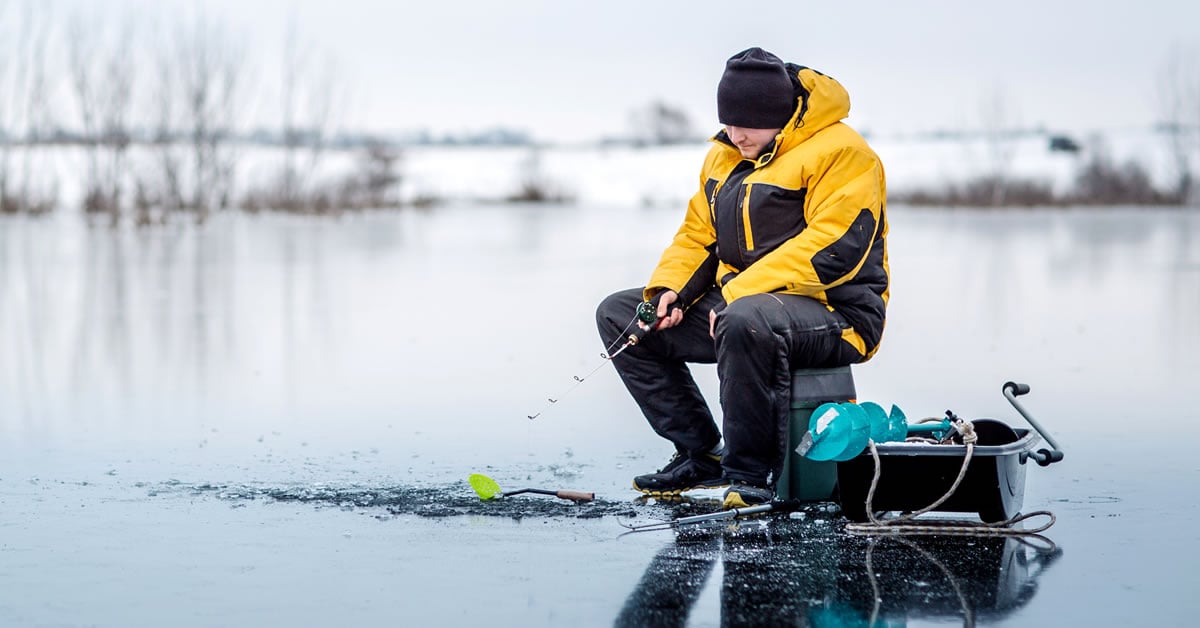
Pack away the tip-ups. Grab a jig rod in one hand, a small box of lures in the other and set off on the ice for a full day of pike action. No bait necessary. With a basic understanding of the movement of pike throughout the ice season and a few simple jigging techniques and tackle requirements, winter pike are easy prey.
Sure, everyone has enjoyed some good days of pike fishing while monitoring a full allotment of tip-ups. Tip-ups are set early in the morning along a weed edge. You clear the holes of ice once or twice throughout the day and maybe even check on the bait. The tip-ups are never moved the entire day. The only fish that you have a chance to catch are those few pike patrolling the area immediately surrounding the tip-ups. Sometimes this is enough but often it means simply a short flurry of action early in the day and a few more flags late in the afternoon. Even if one has a spectacular day, the bite typically turns cold after a day or two. Yet anglers continue to fish the same area, in the same fashion, all winter long.
The Truth about Winter Pike:
 The truth is that pike never go on an extended hunger strike during the ice season. Pike are a cold water specie that must feed throughout the winter to prepare for the rigors of spring spawning. By understanding the dynamics of changing lake conditions under the ice and how these changes affect pike, anglers can catch pike all ice season long.
With first ice, lakes are at their most fertile. Green weeds remain. Oxygen levels are good throughout the water column. Forage populations are at their highest. Minimum snow cover means maximum light penetration. Pike, like other gamefish, are on the prowl. They search the shallows looking for baitfish holding beneath the ice around the last remnants of cover. During this prime time, tip-ups set above the weed flats produce, but when the weed flats stop producing, anglers incorrectly protest that the big pike have stopped feeding.
As the season progresses, light penetration, weed growth and oxygen levels all decrease in the shallows. Forage becomes less available and more widely scattered. Big pike abandon the shallows by mid-season and follow the forage. Pike suspend off structure over deeper water and follow the remaining baitfish. Before winter draws to a close, pike return to areas adjacent to shallow dark bottom spawning locations. With forage becoming increasingly scarce, pike take advantage of dead bait that has not survived the harsh winter conditions and has settled to the bottom. To catch these big pike, one must actively pursue them. Be mobile. Cover a lot of water. Locate concentrations of remaining forage in the system and actively jig lures to trigger pike.
The Lures:
Remember back to summer when pike hit everything in sight. Big crankbaits, flashy spinnerbaits and noisy topwaters lures. No matter what size or color they all provoked strikes. Just put the lure in front of a pike and their curious nature made them hit it. The nature of pike does not change once ice covers the lake. Since ice fishing does not permit a conventional cast and retrieve approach, lure selection is limited to lures that can be fished vertically. These include spoons, lipless crankbaits and blade baits.
Spoons:
 Spoons come in two basic varieties: light flutter spoons and heavy slab spoons. Both can be fished either plain or with a plastic tail as a trailer. Flutter spoons, like Bad Dog Lures' One Eyed Wiggler, have a baitfish profile and unique concave shape which impart a fluttering action on the fall and a wobbling action on the rise. The One Eyed Wiggler produces big pike in both shallow and deep water. Accordingly, it is a prime lure to use early in the season to search pockets in the weeds for big pike waiting in ambush and off the edges of deep-water humps and points as the season progresses.
With its slow descent rate, the One Eyed Wiggler can be fished in water as shallow as three or four feet. This makes the One Eyed Wiggler a great search bait to quickly cover expansive shallow weed flats. Fish each hole for only five or ten minutes without a strike before moving to the next hole. To impart the most action on the lure, use a quick lift and fall jigging motion. Do not try to follow the lure back down with the rod tip while it falls since this impairs the free fluttering action of the spoon. Jigging strokes can be as short as two inches and as long as two feet. Shorter strokes create a more subtle action and longer strokes a more exaggerated action.
If the One Eyed Wiggler is fished with a quick jigging motion, then step up the speed one more notch to effectively fish heavy spoons for pike. Spoons like Bad Dog's Deadly Darter come equip with jeweled trebles to attract more strikes. The Deadly Darter sinks quickly and shows up well on the locator. The spoon has slight wobbling action on the upswing but has an enticing crippled baitfish wobble on the fall.
Slab spoons are best fished in water depths of six feet or more. Use this lure to catch big suspended pike over deep water. Increase the lure's effectiveness by replacing the treble hook with a Gamakatsu size two octopus hook and thread a three-inch grub tail onto the hook. Also, add a strong minnow based scent to the spoon for increased attractiveness.
Lipless Crankbaits:
 While bass fishing legend Bill Dance may have never imaged as much, rattling crankbaits, like the Cotton Cordell Dance's Super Spot, are a natural for winter pike. The sight, sound and vibration of this lure draws in curious pike from great distances. Even if pike are not actively feeding, the commotion made by this lure provokes strikes. The Dance's Super Spot descends quickly and can be fished over deep water to cover a lot of territory. Start by allowing the lure to sink to the bottom and quickly lift the rod causing the bait to make a loud pronounced rattle and a tight wobbling vibration. Repeat several times with only a short pause in between rod sweeps. Next, retrieve a few feet of line and repeat the process until the lure nears the surface. Employ less and less aggressive jigging motions until a successful pattern is determined. This lure remains a prime choice to fish above the tops of weed flats and outside weed edges through the entire ice season. Pike hit the lure with abandon.
Blade Baits:
 Some angler only associate blade baits with muddy water river fishing. However, baits like the Heddon Sonar or Zip Lures are one of the most effect lures for pike through the ice. Blade baits shine in clear and slightly stained water conditions where color and vibration work to attract curious pike without the strong noise of a rattling bait. Sonars work best with a moderate jigging action. Raise the rod four to eight inches at a moderate pace. Use a graphite jigging rod, such as Frabill's medium heavy Sensive XL Rod, that transmits the action of the bait into the handle of the rod. By feeling the vibration of the lure, one immediately knows how various jigging techniques affect the lure's action. Blade blades should be fished with varying retrieves. Allow the lure to sit motionlessly between each new jigging motion. Although always curious, pike can be cautious at times and often wait for the lure to stay at rest for a moment before striking it.
To withstand the stress that large pike put on tackle and the abrasiveness of the ice, avoid using monofilament while jigging lures. Instead, use a spectra based microfilament superline. Lines like PowerPro Ice Line are woven with such a thin diameter and specially coated to minimize water absorption and subsequent line freezing. With its incredibly thin diameter, enough twenty-pound test PowerPro Ice Line, with the diameter of six-pound test monofilament, can be loaded on a small spinning reel and allow plenty of line to land any size pike. To reduce bite offs from truly huge fish that take additional time to battle, wire leaders are a necessity.
Conclusion
Search out big pike this winter. Understand their seasonal movements and focus on areas that concentrate large pike as the season progresses. Avoid getting stuck in the rut of fishing tip-ups in the shallows the entire ice fishing season. Jigging artificial lures allows one to cover more water, both shallow and deep in the same day. The wide range of visual, sound and vibration stimuli created by lures attracts pike from greater distances than live bait, and triggers their predatory nature even when pike are in a neutral or negative mood.

Steve Ryan is an outdoor writer and avid angler who enjoys targeting trophy fish throughout the Midwest and beyond.